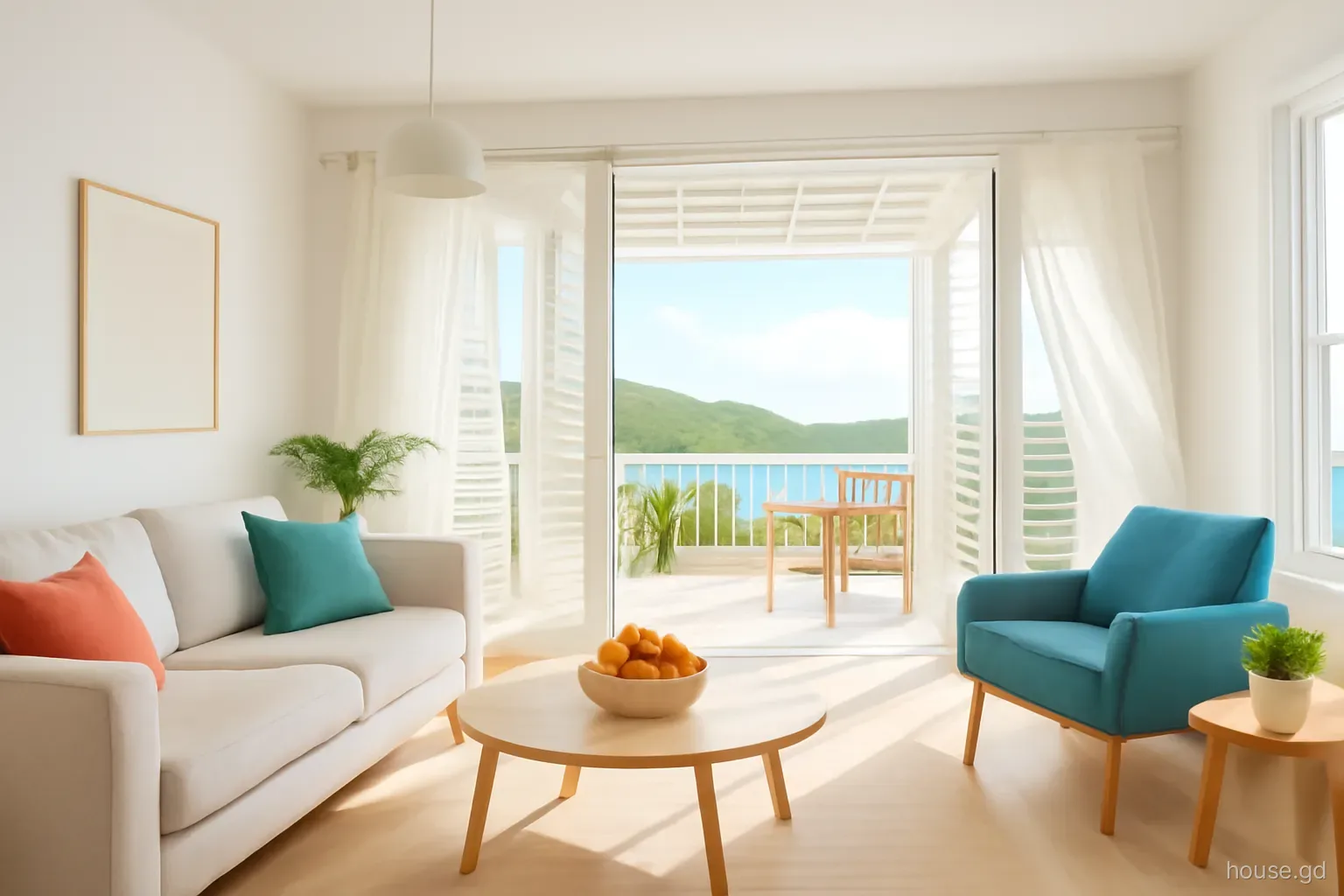
Electricity in Grenada is expensive compared with North America, and air-conditioning running all day in a poorly designed house can produce bills that shock new owners. The good news is that the island hands designers a free cooling system: the north-east trade winds that blow for most of the year, plus the shade of deep roofs and verandas that traditional Caribbean houses used long before air-conditioning existed.
A house designed to breathe can be comfortable for most of the day with ceiling fans alone, keeping air-conditioning for bedrooms on still, humid nights. A house designed like a sealed suburban box, with small windows, a low ceiling and an uninsulated roof facing the afternoon sun, will need cooling almost constantly.
This article covers the design decisions that make the biggest difference to comfort in Grenada: orientation, openings, roof heat, shade, materials and how to plan for air-conditioning so that it is the backup rather than the main strategy.
Start with the wind and the sun
For most of the year Grenada's prevailing breeze comes from the east and north-east, steadiest in the dry season from roughly January to May and more variable in the rainy months, when calm, humid days are common. On the west coast and in sheltered valleys, the land itself can block the breeze, so every site is different. Spend time on the plot at different times of day, note where the wind actually comes from and how hills, trees and neighbouring buildings affect it.
Orient the longest sides of the house to catch that breeze, with the main living spaces on the windward side if the view allows. Where the best view faces west, as it does on much of the Caribbean coast, plan for shading on that elevation, because the low afternoon sun will pour heat through glass and into walls just as the day is hottest.
Close to the equator the sun passes high overhead for much of the year, so the roof receives more solar heat than any wall. East and west walls get low-angle morning and afternoon sun, while north and south walls are easier to shade with overhangs. That simple geometry should shape where you put large windows and where you put storage, bathrooms and the stair.
Openings that move air through every room
Cross-ventilation. Each main room should have openings on two sides, ideally opposite or adjacent walls, so air can flow in one side and out the other. A single window in a room produces little air movement however large it is.
Size and position. Openings on the windward side can be slightly smaller than those on the leeward side, which helps draw air through. Low inlets and high outlets help warm air escape.
Louvres and jalousies. Adjustable glass or timber louvres let air through while giving some shade and privacy, and can be partly closed against rain. They are a long-standing Caribbean solution, though they need storm protection in a hurricane.
Open plans. Fewer internal walls let breeze reach the whole living area. Where privacy is needed, high-level vents or louvred panels above doors keep air moving between rooms.
Security without sealing. Decorative grilles or security screens allow windows to stay open at night, which is when a well-ventilated house cools down.
The roof is the biggest heater in the house
In a tropical climate the roof absorbs more sun than any other part of the building, and an uninsulated sheet roof directly above a ceiling can radiate heat into the rooms below all afternoon. Getting the roof right is the single most effective step in keeping a house cool.
Light-coloured or reflective roof finishes reflect a large share of the sun's heat and are a cheap first step. Beneath them, a radiant barrier or reflective foil, insulation over the ceiling and a ventilated roof space, with vents at the eaves and near the ridge, stop heat building up. High ceilings, whether flat or following the roof slope, give hot air somewhere to rise above head height, where ceiling fans and high vents can move it out.
Concrete roof slabs, increasingly chosen for their hurricane resistance, store heat. If you choose a concrete roof, plan for a reflective coating or an insulating layer on top and generous ventilation below, or the upper rooms may stay warm well into the night.
Gutters and roof drainage also deserve thought in a cool-house design. A roof that sheds water cleanly into gutters feeding the cistern keeps walls dry and limits the damp, musty conditions that make a humid house feel hotter than it is. Damp walls and stale air are as much a comfort problem in the rainy season as heat, and the same ventilation that moves warm air out also carries moisture away.
Shade, materials and landscaping
Once the roof and openings are right, the next gains come from keeping sun off walls and glass and choosing surfaces that do not store heat. Effective measures include:
- deep roof overhangs and verandas on the sunniest sides, designed with the engineer so that they do not become a wind-uplift weak point;
- external shading such as fixed louvres, pergolas or planting on west-facing elevations, which stops heat before it reaches the glass;
- light-coloured external walls and paving, which absorb less heat than dark finishes;
- trees and planting on the west and south sides, chosen and placed so that they do not threaten the roof in a storm or block the breeze;
- permeable, planted ground near the house instead of large expanses of concrete, which radiate heat in the evening;
- pools and water features placed upwind of living areas, where breeze crossing them feels cooler;
- interior finishes such as tile floors, which feel cool underfoot and are easy to keep clean in a humid climate.
Planning for fans and air-conditioning
Ceiling fans are the workhorses of a comfortable Grenadian house. Air moving across the skin makes a room feel several degrees cooler at a fraction of the energy cost of air-conditioning. Plan a fan for every main room and the veranda, with proper ceiling height and secure fixings, and wire them during construction rather than adding them later.
Most owners still want air-conditioning in bedrooms, and sometimes in a study. Treat those rooms differently: they can have better-sealed windows, insulation and shading, so the units you install can be smaller and run less. Inverter-type split units are widely used because they are more efficient at part load. Place outdoor units where they are shaded, accessible for servicing and protected from salt spray, and plan their brackets so they can be secured or removed before a storm.
Designing a house so that most rooms are comfortable without cooling also makes it more resilient. After a hurricane, when mains power can be out for days or longer, a house that breathes remains habitable.
Common design mistakes in hot climates
Copying a temperate-climate plan. Small windows, low ceilings, dark roofs and large unshaded glass work against the climate. A plan from a cool country rarely transplants well.
Picture windows facing west. A wall of glass toward the sunset view becomes a heat trap in the afternoon unless it is shaded.
Ignoring the breeze direction. Placing a garage, store or neighbour-facing blank wall on the windward side blocks the cooling breeze from the whole house.
Forgetting rain. Openings that must close every time it rains defeat the purpose. Overhangs and louvres let windows stay open during showers.
Treating comfort and storms as rivals. Large openings and deep verandas are sometimes dropped for fear of hurricanes. The better answer is to keep them and design proper shutters, tie-downs and veranda connections, so the house is comfortable for the many calm months and protected for the few dangerous days.
Frequently asked questions
Which direction should a house face in Grenada?
Ideally, the longer sides face roughly north and south, with good openings toward the east and north-east to catch the trade winds. Views often pull a design toward the west, which is fine if those elevations are well shaded against the strong afternoon sun.
Is air-conditioning necessary in a Grenada house?
Not in every room. A well-ventilated, well-shaded house with ceiling fans can be comfortable for most of the day. Many owners air-condition bedrooms only, for still, humid nights in the rainy season. Designing for natural cooling first keeps electricity bills and equipment costs down.
Do concrete roofs make houses hotter?
They can, because concrete stores heat and releases it in the evening. A reflective coating, insulation and good ventilation in the rooms beneath reduce the effect. Many owners accept that trade-off because concrete roofs perform well in hurricanes.
What ceiling height works best in the tropics?
Higher ceilings help, because warm air rises above the occupied zone and fans have space to work. Many tropical designs use ceilings well above standard suburban heights, or sloping ceilings that follow the roof, combined with high-level vents to let hot air escape.
Are jalousie windows secure and storm-proof?
Louvred windows give excellent ventilation, but the blades can be removed from outside on some designs and are vulnerable in hurricanes. Pair them with security grilles and with shutters or storm panels for the hurricane season.
Do trees near the house help keep it cool?
Yes, well-placed trees shade walls and the ground. Choose species that do not drop large limbs, keep them a sensible distance from the roof and foundations, and avoid planting dense hedges on the windward side where they would block the breeze.