A cistern is only as good as the water that goes into it and the system that brings it back out. Plenty of Grenadian homes have generous storage that delivers cloudy water at a weak trickle, because the gutters overflow in every heavy shower, leaves and bird droppings wash straight in, and a tired pump cycles on and off every time someone washes their hands.
A well-designed rainwater system has five parts working together: a clean catchment, gutters and downpipes sized for tropical downpours, a first-flush device and screens, storage, and a delivery system of pump, pressure tank and treatment. None is complicated or especially expensive, and most can be added to an existing house. This article goes through them in the order water travels, with the checks that keep the system healthy.
The roof and gutters: catching tropical rain
Roof surface. Galvanised and coated metal sheeting gives clean, fast run-off and is the standard catchment across the islands. Concrete roofs work but hold more dust and can grow algae. Avoid collecting from roofs with flaking old paint, lead flashing, asphalt shingles in poor condition or treated timber near the edge.
Overhanging trees. Mango, breadfruit and almond trees drop leaves and fruit, and they give birds, rats and lizards a route onto the roof. Cutting branches back from the roofline improves water quality more than any filter.
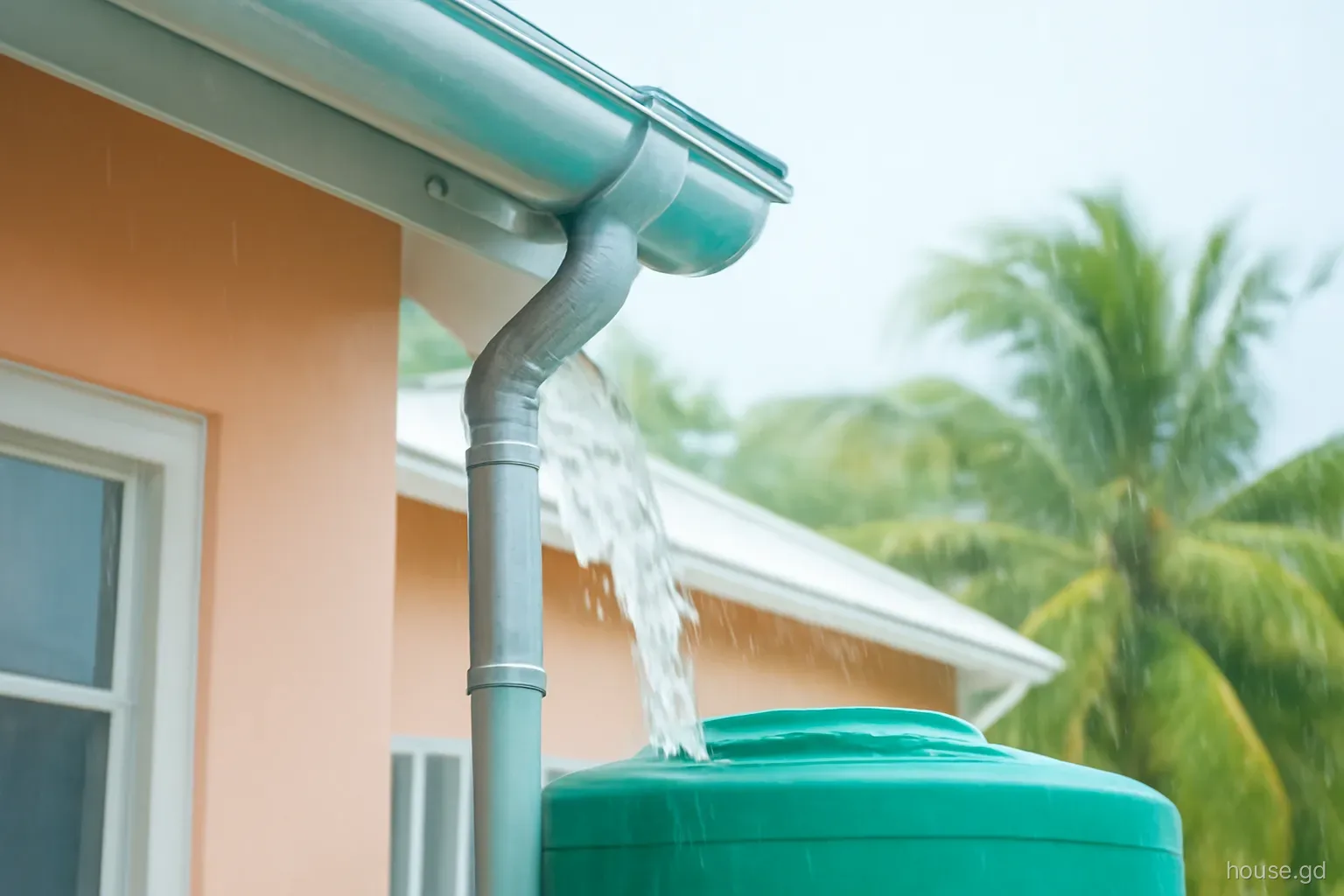
Gutters sized for downpours. A Grenadian shower can deliver more water in ten minutes than gutters designed for temperate climates can carry. Wide gutters, laid with a steady fall and enough downpipes, keep water flowing into storage instead of over the front edge. Overflowing gutters are the most common reason well-sized cisterns never fill.
Fixings and corrosion. Near the sea, use corrosion-resistant brackets and fasteners. Gutters are also the first thing torn away in a storm, so strong brackets at close spacing pay off twice.
Leaf guards and gutter mesh. Mesh over the gutters, or leaf-shedding heads at the top of each downpipe, keep the bulk of debris out. They need clearing too, but far less often than open gutters.
First flush and screens: keeping the dirt out
The first few minutes of rain after a dry spell carry most of the dust, salt, droppings and pollen that have settled on the roof. A first-flush diverter catches that initial volume in a separate pipe or chamber and sends only the cleaner water that follows into storage. Simple versions are a vertical pipe with a floating ball that seals once full, emptying slowly through a small outlet before the next rain.
A common rule of thumb is to divert somewhere between 0.5 and 2 litres per square metre of roof, more after long dry periods or near the coast where salt builds up. On a 150-square-metre roof that means roughly 75 to 300 litres per rain event, which seems wasteful until you see what comes out of the diverter in March.
Every opening into the cistern or tank must be screened with fine, corrosion-resistant mesh: inlets, overflows and vents. This keeps out mosquitoes, frogs, lizards and rodents. Aedes aegypti, the mosquito that spreads dengue, breeds readily in still water in containers and badly sealed tanks, and Grenada has experienced dengue outbreaks. A sealed, screened system protects the household and the neighbourhood.
Treatment: making stored water safe to use
How far to treat depends on what the water is used for. Many households in Grenada run a two-tier approach: treated cistern water for showers, laundry and toilets, and filtered or bottled water for drinking. If cistern water will be drunk, treat it in stages like this.
- Sediment filtration. A cartridge filter after the pump, often in the region of 20 to 5 microns, removes grit and particles. It protects the pump's check valve, taps and water heater, and makes later stages work better.
- Carbon filtration. An activated carbon cartridge improves taste and odour and reduces some organic compounds. It also removes chlorine, so place it after any chlorination step or only on the drinking-water line.
- Disinfection. Either dose the cistern with chlorine at a measured rate, or fit an ultraviolet steriliser on the supply line. UV works well on clear water and leaves no taste, but it needs electricity, a lamp change roughly once a year and good prefiltration.
- Point-of-use filter. For drinking and cooking, a dedicated under-sink filter adds another barrier and is cheap insurance.
- Testing. Have the water tested occasionally, especially after cleaning the cistern, after heavy storms or if anyone in the household is unwell. Ask the Ministry of Health or a laboratory what testing is available locally.
Pumps and pressure: getting water where you want it
Unless storage sits higher than the taps, a pump lifts water from the cistern into the house. The classic setup is a surface pump drawing from the cistern through a foot valve, feeding a pressure tank with an air bladder and a pressure switch. The tank stores a buffer of pressurised water, so the pump does not start every time a tap opens. Variable-speed pumps, which adjust their output to demand, give steadier pressure and use less electricity, at a higher purchase price.
Sizing is a matter of flow and height. A two-bathroom home with a washing machine typically needs a pump able to deliver enough flow for two fixtures running together at comfortable pressure. A pump that is too large short-cycles and wears out quickly; one too small leaves the upstairs shower spluttering. Ask the supplier to size it for your actual pipe run and the height from the cistern to the highest outlet.
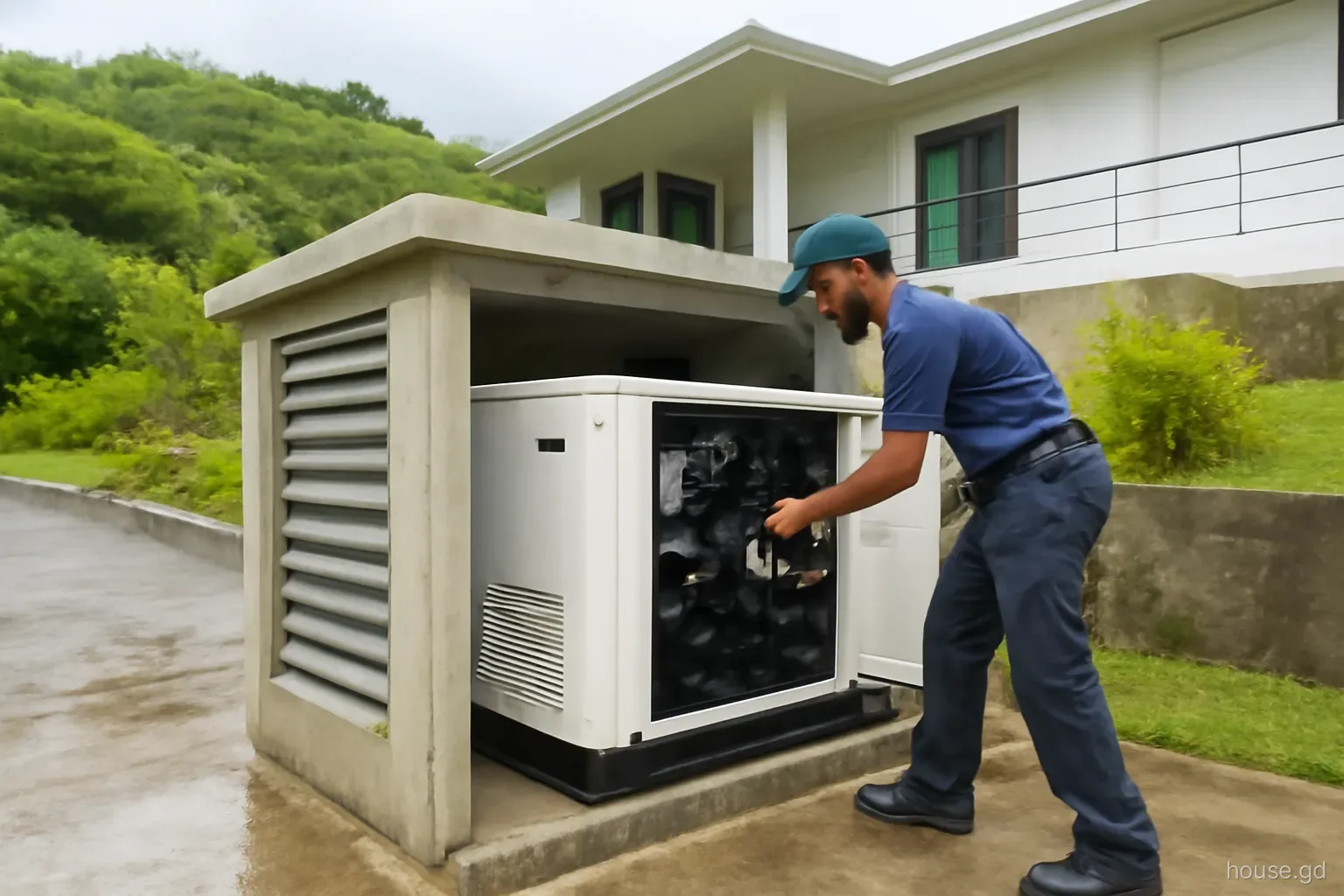
Put the pump on its own protected circuit, shelter it from rain and direct sun, and keep it reachable for service. Many owners fit a bypass so that if the pump fails, mains water can still feed the house directly. Where the house has both NAWASA supply and a cistern, a changeover valve or an automatic arrangement lets you switch sources. Keep in mind that a pump also needs power, so in an outage the cistern is only useful if the pump has backup from batteries or a generator, or the house has a gravity tank.
Retrofitting an older house
Many houses in Grenada were built with partial guttering, an old cistern of uncertain condition, or no storage at all. Retrofitting is usually straightforward. The first step is an honest inspection: drain the existing cistern if there is one, look for cracks, root intrusion and failed render, and check that the access hatch seals. A cracked cistern can often be repaired and relined, but a contractor experienced with water-retaining structures should assess it, since water leaking around foundations causes its own problems.
Next, map the roof and decide which planes can drain to storage. Downpipes often discharge onto the ground on one side of the house; re-routing them to a collection pipe, with a first-flush diverter at the high point, can add a large catchment for little cost. Where there is no room or budget for an underground cistern, a row of above-ground tanks linked at the base works well and can be extended over time.
Finally, plan the plumbing. Decide whether the cistern supplies the whole house or only certain outlets such as toilets, laundry and garden taps, and whether mains and cistern water will be switchable. Keep the two supplies properly separated with non-return valves so that cistern water can never flow back into the public network.
Routine checks that keep the system healthy
A rainwater system needs a little attention every few months. A simple calendar avoids most problems.
- Before the rainy season (around May): clear gutters and leaf guards, check downpipe joints, empty and flush the first-flush diverter and inspect screens for holes.
- After heavy storms: look for damaged gutters, debris in the diverter and any change in water colour or smell.
- Every few months: change sediment cartridges when pressure drops or they look brown, and check the pressure tank's air charge.
- Yearly: replace the UV lamp if fitted, check the foot valve and inspect the inside of the cistern for sediment.
- Every one to three years: drain and clean the cistern, or hire someone experienced to do it safely; entering a confined tank carries real risk.
- Always: watch for standing water in gutters, saucers and blocked drains around the house, where mosquitoes breed.
Frequently asked questions
Is rainwater in Grenada clean enough to drink?
Rain itself is generally clean, but it picks up dust, salt and droppings from the roof and can grow bacteria in storage. With a clean roof, a first-flush diverter, filtration and disinfection it can be made suitable for drinking. Many households still drink filtered or bottled water.
What does a first-flush diverter do?
It catches the first, dirtiest water from the roof at the start of each rain and diverts it away from the cistern. Once that volume is captured, cleaner water flows into storage. It is cheap, simple and one of the most effective upgrades for water quality.
How much chlorine should go into a cistern?
Dosing depends on the volume and the product strength, so follow the guidance from the Ministry of Health or the product label and measure the result with a simple test kit. Over-dosing makes water unpleasant and under-dosing gives false confidence.
Why does my water pump keep switching on and off?
Rapid cycling usually means the pressure tank has lost its air charge, the bladder has failed, or there is a leak somewhere in the system. It wears out the pump quickly and raises electricity bills, so check the tank pressure and look for dripping taps or running toilets.
Can rainwater harvesting replace NAWASA completely?
In drier areas and on the sister isles many homes rely mostly on rainwater. On the mainland it can cover much of a household's needs with enough roof and storage, but keeping a mains connection as backup is sensible where it is available.
Is a UV system needed as well as filters?
Filters remove particles but do not reliably kill bacteria. If you plan to drink cistern water, you need a disinfection step, either chlorination or UV. For water used only for washing and toilets, many households rely on filtration and occasional chlorination.