Plenty of Grenadian homes manage without hot water at all. Cistern and mains water arrive at a temperature that is perfectly pleasant for a shower most of the year, and many households heat only a kettle for washing up. But expatriate buyers, families with young children, holiday-rental guests and anyone who has showered at six in the morning in the hills above Grenville in January will usually want something warmer.
There are five realistic ways to heat water here: a solar water heater on the roof, a heat pump water heater, a conventional electric tank, a point-of-use instant electric shower head, and an LPG heater. They differ hugely in purchase price, running cost, reliability and how they behave during an outage or a hurricane. The right choice depends on how much hot water the household uses, the roof, and whether it is a home or a rental.
Solar water heaters: the natural fit
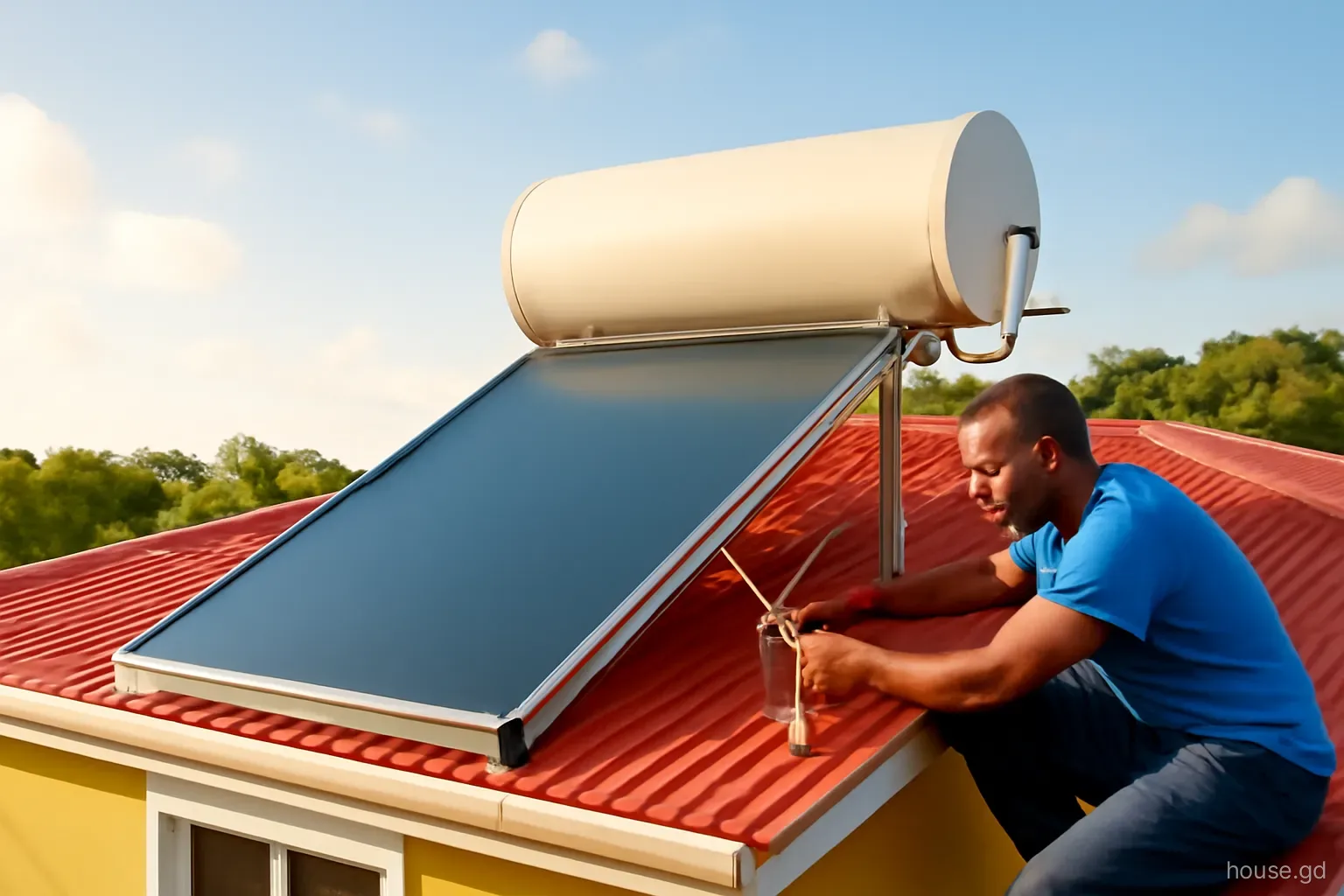
Solar water heaters have been common across the Eastern Caribbean for decades, and Grenada's climate suits them almost perfectly. The typical domestic unit is a thermosiphon system: flat-plate or evacuated-tube collectors on the roof with an insulated storage tank mounted just above them. Water heated in the collectors rises naturally into the tank, and cooler water sinks back down, with no pump or controls needed. On a sunny day a well-sized unit delivers hot water well into the next morning.
Running costs are close to nothing, which is the whole point. Many units include an electric backup element for runs of cloudy weather or heavy guest use; set on a timer or a manual switch, it is used rarely. Maintenance is modest: check for leaks, keep the collector glass clean, inspect the anode in the tank and the pressure relief valve, and descale if the water is hard.
The trade-offs are weight and wind. A filled rooftop tank is heavy, and the whole assembly presents a large surface to hurricane winds. It must sit on a roof structure that can carry it and be secured with properly engineered tie-downs into the frame. Many owners place the tank on a concrete roof or a reinforced section, or choose split systems with the tank indoors and only the collector on the roof.
Heat pumps, electric tanks, instant showers and gas
Heat pump water heaters. These work like an air-conditioner in reverse, pulling heat from the surrounding air into the water. In Grenada's warm air they are very efficient, using a fraction of the electricity of a plain electric element. They cost more to buy, need a ventilated space and produce a gentle cooling, dehumidifying draught, which is no hardship in a tropical utility room.
Conventional electric tanks. Cheap to buy and simple to fit, but expensive to run on Grenada's electricity prices, particularly if left on around the clock. A timer and a modest thermostat setting cut the cost; for most households, solar or a heat pump pays back the difference.
Instant electric shower heads. Common across the region, these heat water as it flows through the shower head. They are cheap and use power only while the shower runs. Flow is usually low, and they must be installed by an electrician with correct cable size, earthing and protection, because they combine high current and water at head height.
LPG water heaters. Tankless gas heaters give continuous hot water and work during power cuts if they have battery ignition. They need safe venting to outside, regular cylinder changes and a competent installer. LPG prices also move with world markets.
Under-sink and point-of-use heaters. Small units serving one kitchen sink avoid long pipe runs from a distant tank, saving water and energy where the main heater is far away.
How to choose for your house
Matching the system to the household avoids both cold showers and wasted money.
- Full-time household of three to five: a solar water heater with electric backup, or a heat pump if the roof is unsuitable, typically gives the lowest lifetime cost.
- Couple or single occupant: instant shower heads or a small solar unit may be enough; a large tank would sit hot and unused.
- Holiday rental villa: guests expect hot water at any hour in every bathroom. Size generously, with backup, and consider a heat pump or gas for reliability on cloudy days with a full house.
- House with frequent outages: solar thermal keeps working without grid power if it has no pump, and gas heaters with battery ignition also work; heat pumps and electric tanks do not.
- Roof near end of life: replace the roof first or choose a heat pump or split system, rather than mounting a heavy tank on tired sheeting.
- Rainwater-only house: soft rainwater suits all systems, but check pump pressure is adequate for the heater, especially tankless models.
Running costs compared
The differences in running cost are large enough to dominate the decision for a full-time household. As a rough illustration, a family of four using a conventional electric tank kept hot all day might spend somewhere in the region of 100 to 200 kWh a month on water heating, depending on habits and tank insulation. At recent Grenada rates of roughly EC$0.80 to EC$1.10 per kWh, that is a noticeable slice of the monthly bill.
A heat pump water heater providing the same hot water typically uses perhaps a third or less of that electricity in a warm climate. A solar water heater uses almost none on sunny days, with the backup element covering only cloudy spells and peaks in demand. Instant electric shower heads draw high power for a short time; for a small household taking brief showers their monthly total can be modest, but it climbs quickly with long showers and several users.
LPG running costs depend on cylinder prices and usage, and generally sit somewhere between electric resistance heating and a heat pump. When comparing quotes, put each option's purchase price alongside an estimate of ten years of running costs. On that basis, solar and heat pump systems usually come out ahead for anyone who will stay in the house.
Sizing and installation details that matter
For solar and storage systems, size the tank to daily use. A common rough guide is around 40 to 60 litres of hot water per person per day, so a family of four might look at a tank in the 150 to 250 litre range. As with cisterns, check whether a supplier quotes in imperial or US gallons. Collectors should face roughly south at a modest tilt, with no shade from trees or neighbouring buildings during the middle of the day.
Keep hot-water pipes short and insulated. Long runs from a rooftop tank to a distant kitchen waste both heat and water, since every tap opening drains cold water before the hot arrives. On pumped systems, the hot side should have its own pressure-relief and, ideally, a tempering valve to prevent scalding, which matters with children and in rental properties.
Water quality affects lifespan. Mains water in some areas carries more minerals than cistern rainwater, which leaves scale in tanks and heat exchangers. Sediment filtration before the heater, and periodic flushing or descaling, extend life. Near the coast, choose collectors, frames and fixings with good corrosion resistance; salt eats cheap aluminium and plain steel brackets within a few years.
Mistakes and what to check
Most problems with hot water systems in Grenada trace back to installation rather than the equipment itself.
- Rooftop tanks fixed with light brackets or simply resting on the roof. Ask how the unit is anchored and what wind load it is rated for.
- Backup elements left on permanently, so the "solar" heater runs mainly on electricity. Fit a timer or switch and check the bill.
- Instant shower heads wired with undersized cable or without earthing and protection. Have a licensed electrician check any existing units in a house you buy or rent.
- Gas heaters installed indoors without proper flues. Carbon monoxide risk is serious.
- No isolation valves, so a leak means shutting off the whole house supply.
- Ignoring the anode rod in steel tanks. Replacing it every few years is cheap compared with a new tank.
- Forgetting to tell the insurer about rooftop equipment that could be damaged in a storm.
Frequently asked questions
Does a Grenada home really need a water heater in Grenada?
Many households manage without, since water is mild most of the year. Families with children, people living at higher elevations and holiday rentals usually want hot water. A small system or instant shower heads can be a reasonable compromise for a modest budget.
How long does a solar water heater last?
A well-installed unit can last fifteen to twenty years or more with basic maintenance such as anode replacement, valve checks and occasional descaling. Corrosion-resistant frames and fixings matter near the sea, and the roof mounting should be checked after every major storm.
Will a solar water heater work on cloudy days?
It still collects some heat in diffuse light, and a well-insulated tank carries hot water over from sunny days. During longer cloudy spells, an electric backup element or other backup keeps the supply going.
Are instant electric showers safe?
They are safe when installed correctly by a licensed electrician, with the right cable size, a dedicated protected circuit and proper earthing. Poorly wired units are a genuine hazard, so have any existing installation checked, particularly in an older rental or newly purchased house.
Is a heat pump better than solar for hot water?
Both are efficient in Grenada. Solar costs almost nothing to run but needs a suitable roof and secure mounting. A heat pump works anywhere with ventilation but uses some electricity and stops in a power cut. The choice often comes down to the roof.
Can a solar water heater survive a hurricane?
It can if the roof survives and the unit is anchored with properly engineered tie-downs into the structure. Poorly secured tanks are a real hazard in high winds. Ask the installer for the wind rating and inspect the fixings before each hurricane season.