
Most people who see a high GRENLEC bill reach first for the lights, switching off bulbs as they leave rooms. In a modern home with LED lighting, that barely registers. The money goes to a handful of big users: air-conditioning above all, then water heating, refrigeration, pool and water pumps, and a few appliances that run far more than their owners realise.
Because electricity in Grenada is generated mainly from imported diesel, each kilowatt-hour costs considerably more than in North America, and the fuel charge on the bill moves with oil prices. That makes efficiency unusually valuable. A change that saves 100 kWh a month is worth roughly EC$80 to EC$110 at recent rates, every month, for as long as you live in the house. Here is where to look, in order of likely payoff, and how to find the leaks in your own home.
Air-conditioning: the biggest lever
In most air-conditioned homes, cooling accounts for a large share of the bill, often the largest. The type of unit matters more than anything else. Older fixed-speed window and split units cycle hard on and off, while modern inverter split units vary their compressor speed and can use substantially less electricity for the same comfort. When an old unit fails, or even before, an inverter replacement is often the quickest efficiency payback in the house.
Setting matters almost as much. Each degree warmer on the thermostat trims consumption noticeably. Many households in Grenada find 25 or 26 degrees Celsius comfortable, especially with a ceiling fan running, instead of the 18 or 20 degrees that some remotes default to. Cooling only the rooms in use, and only at night in bedrooms, changes the bill dramatically compared with cooling the whole house all day.
The building envelope finishes the job. A bedroom with gaps under the door, louvred windows that never fully seal and a hot, uninsulated roof above it forces the unit to run constantly. Weather-stripping, solid shutters or curtains, reflective roof coating and insulation under the roof all cut the cooling load. Clean filters monthly and have units serviced; a clogged filter or low refrigerant quietly raises consumption.
The next tier of big users
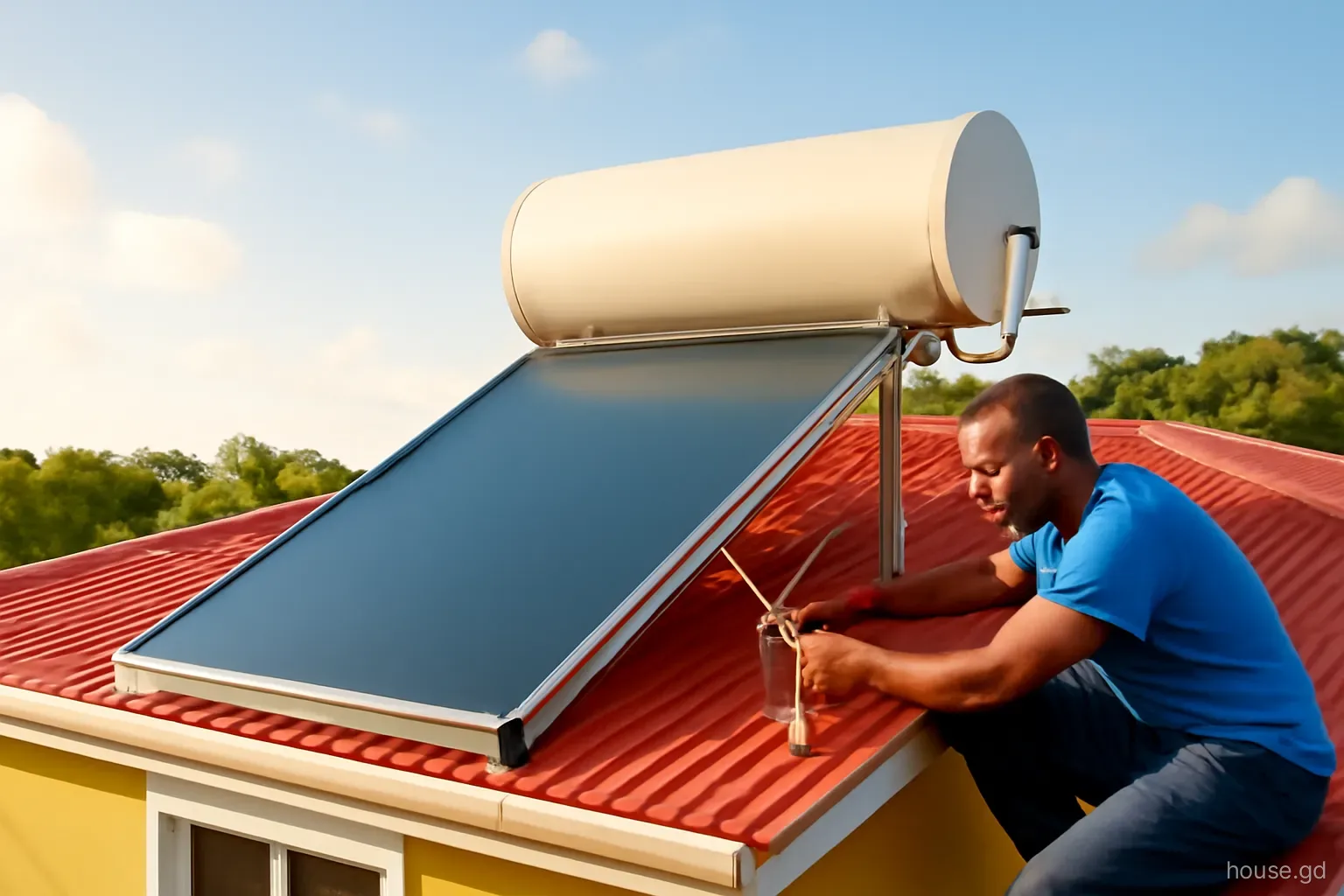
Electric water heaters. A conventional tank heater kept hot around the clock wastes energy reheating water nobody uses. A timer, a lower thermostat setting, an insulated tank and short pipe runs help; replacing it with a solar water heater or heat pump removes most of that load.
Refrigerators and freezers. An old fridge with tired door seals in a hot kitchen can use several times as much as a new efficient model. A second fridge or an old chest freezer kept on the porch for drinks is a classic hidden cost. Keep appliances out of direct sun, leave space behind for airflow and check the seals by closing the door on a sheet of paper.
Pool pumps. A single-speed pool pump running eight to twelve hours a day uses a great deal of electricity. A variable-speed pump, run at low speed for longer, usually filters adequately for much less. Running it during the day also suits homes with solar panels.
Water pumps. A pump that cycles constantly because of a leak or a failed pressure tank wastes power and wears out. Listen for it starting when no taps are open.
Clothes dryers. In a country with sunshine and breeze most days, a washing line is the most effective efficiency measure there is. Dryers are worth keeping for wet-season emergencies only.
Design that keeps a house cool without power
Traditional Caribbean houses dealt with heat long before air-conditioning, and those principles still cut bills. Cross-ventilation is the core: windows or louvres on opposite walls, aligned with the prevailing north-east and easterly trade winds, let breeze flow through rooms. High ceilings and vents near the roof let hot air escape. Wide overhangs and verandas shade walls and windows from the high tropical sun, especially on the west side, which takes the full afternoon heat.
Ceiling fans are the cheapest comfort device available. Moving air makes a room feel several degrees cooler at a tiny fraction of the electricity used by air-conditioning. Choose quiet, efficient models and switch them off in empty rooms, since fans cool people, not spaces.
Colour and materials matter. A light-coloured or reflective roof absorbs far less heat than dark sheeting, and insulation or a ventilated ceiling void beneath the roof stops the attic becoming an oven radiating down into bedrooms. Shade trees and planting on the west and south sides cool walls and paving. For anyone building or renovating, these choices are cheaper to make at the design stage than any solar array later.
Small loads: lights, standby power and gadgets
Small loads deserve a quick check rather than a crusade. LED bulbs use a fraction of the power of the old incandescent and compact fluorescent lamps still found in some older houses and rentals, and they also give off far less heat, which slightly reduces the cooling load. If a house still has older bulbs, replacing them is cheap and worthwhile, but in a home that is already LED-lit, switching lights off obsessively will not move the bill much.
Standby consumption is subtler. Televisions, decoders, sound systems, chargers, microwaves with clocks and older printers all draw a little power around the clock. Individually trivial, together they can add a noticeable number of kilowatt-hours over a month. A switched power strip behind the television that is turned off at night deals with most of it.
Outdoor security lighting is a frequent hidden cost. Floodlights left on all night, every night, add up. Motion-sensor fittings or LED floodlights on a dusk-to-dawn sensor give the same security for much less, and are kinder to neighbours, nesting birds and, on beachfront properties, the sea turtles whose hatchlings are drawn away from the sea by artificial light.
Do a one-week home energy audit
You do not need special equipment to find out where your power goes. The meter and a notebook are enough.
- Read the GRENLEC meter at the same time each morning and evening for a week, noting what ran in between. The difference shows daytime and night-time consumption.
- One evening, switch off everything you can and read the meter twice, an hour apart. What still registers is your background load: fridges, standby devices, pumps and anything left running unknowingly.
- Test the suspects one at a time: run only the pool pump for an hour, or only one air-conditioner, and read the meter before and after.
- Buy an inexpensive plug-in power meter to measure fridges, freezers, televisions and other plug-in appliances over 24 hours.
- Rank what you found by kilowatt-hours per month, multiply by your average cost per unit, and tackle the largest first.
- Repeat after changes. Comparing the bill month on month against the same month last year allows for seasonal differences in cooling.
Common mistakes and false savings
Some popular measures save less than people expect, and some habits cost more than people realise.
- Switching air-conditioning off and on repeatedly through the day in an unsealed room rarely saves much; sealing the room and raising the set point does.
- Leaving bedroom units running all day "so the room is cool at night" can cost more than any other single habit.
- Buying a cheap fixed-speed unit to save on purchase price often costs more over a few years of bills than the inverter model.
- Assuming the bill is wrong when it jumps. Check the fuel charge first; it reflects oil prices and can move noticeably from month to month.
- Ignoring a running toilet or dripping tap on a pumped system. The pump pays for every drop.
- Adding solar before efficiency. Every kilowatt-hour you stop using is one you do not need to generate, which makes any later solar system smaller and cheaper.
Frequently asked questions
Why is electricity so expensive in Grenada?
Most power is generated from imported diesel on small, isolated grids, so fuel costs dominate. These are passed through on the bill as a fuel charge that follows world oil prices. Small island systems also lack the economies of scale of larger networks.
What uses the most electricity in a Grenada home?
In most homes with air-conditioning, cooling is the largest single use. After that come electric water heating, refrigeration, pool and water pumps, and clothes dryers. Lighting and electronics are usually small by comparison in modern homes.
What temperature should the air-conditioning be set to?
Many households find 25 to 26 degrees Celsius comfortable, especially with a ceiling fan. Each degree cooler raises consumption, so setting units very low and running them for long hours is one of the most expensive habits in a tropical home.
Are inverter air-conditioners worth the extra cost?
Usually, yes, for units that run many hours a day. They vary compressor speed instead of cycling on and off, typically using notably less electricity and holding a steadier temperature. The extra purchase cost is often recovered through lower bills within a few years.
How can a renter cut the electricity bill?
Renters can raise the thermostat, use fans, cool only occupied rooms, keep doors and windows closed while cooling, dry clothes on a line, unplug second fridges and report leaking taps or a cycling pump to the landlord. These changes need no investment.
Does GRENLEC offer energy audits?
Utilities and agencies in the region have offered energy-efficiency advice and programmes at various times. Ask GRENLEC or the ministry responsible for energy what is currently available, or hire a qualified electrician or energy consultant for a home assessment.