
A large share of houses going up in Grenada are being paid for from New York, Toronto, London or elsewhere in the diaspora, often over several years as savings allow. Many of those projects are finished beautifully. Others stall at the ring beam, run far beyond budget or reveal hidden faults years later, and the common thread in the troubled ones is usually distance rather than dishonesty.
When the owner is thousands of miles away, the information reaching them is filtered through whoever sends the photos. A wall looks finished in a picture whether or not the steel inside it matches the drawings, and a request for money "to buy materials" is hard to judge from abroad.
This article sets out the structure that works: a trusted local representative, an independent professional to verify work, a payment method that leaves a record, and a reporting routine that tells you what is really happening on site. It also covers the legal and family arrangements that diaspora owners often overlook.
Decide who represents you on the ground
Every remote build needs someone in Grenada with the authority and the time to act for you. This can be a family member, a friend, a professional project manager or your architect. What matters is that the role is defined: who can approve changes, who can order materials, who receives the builder's requests for payment, and who is allowed to say no.
Family members are the most common choice and often the best informed about who in the area builds well. The risk is that they are also juggling jobs and their own households, and they may not feel able to challenge a contractor who is a neighbour or relative. If you rely on family, consider pairing them with a paid professional who visits at key stages.
For legal steps, such as signing documents, dealing with utilities or collecting approvals, you may need to give someone a power of attorney. Have a Grenadian lawyer prepare it, limit it to the matters required, and set an end date. A broad, open-ended power of attorney over property is a risk you do not need to take.
Pay for independent verification
Separate the checker from the builder. The person who certifies that a stage is complete should not be the person being paid for it. A structural engineer, a quantity surveyor or an experienced independent clerk of works can fill this role.
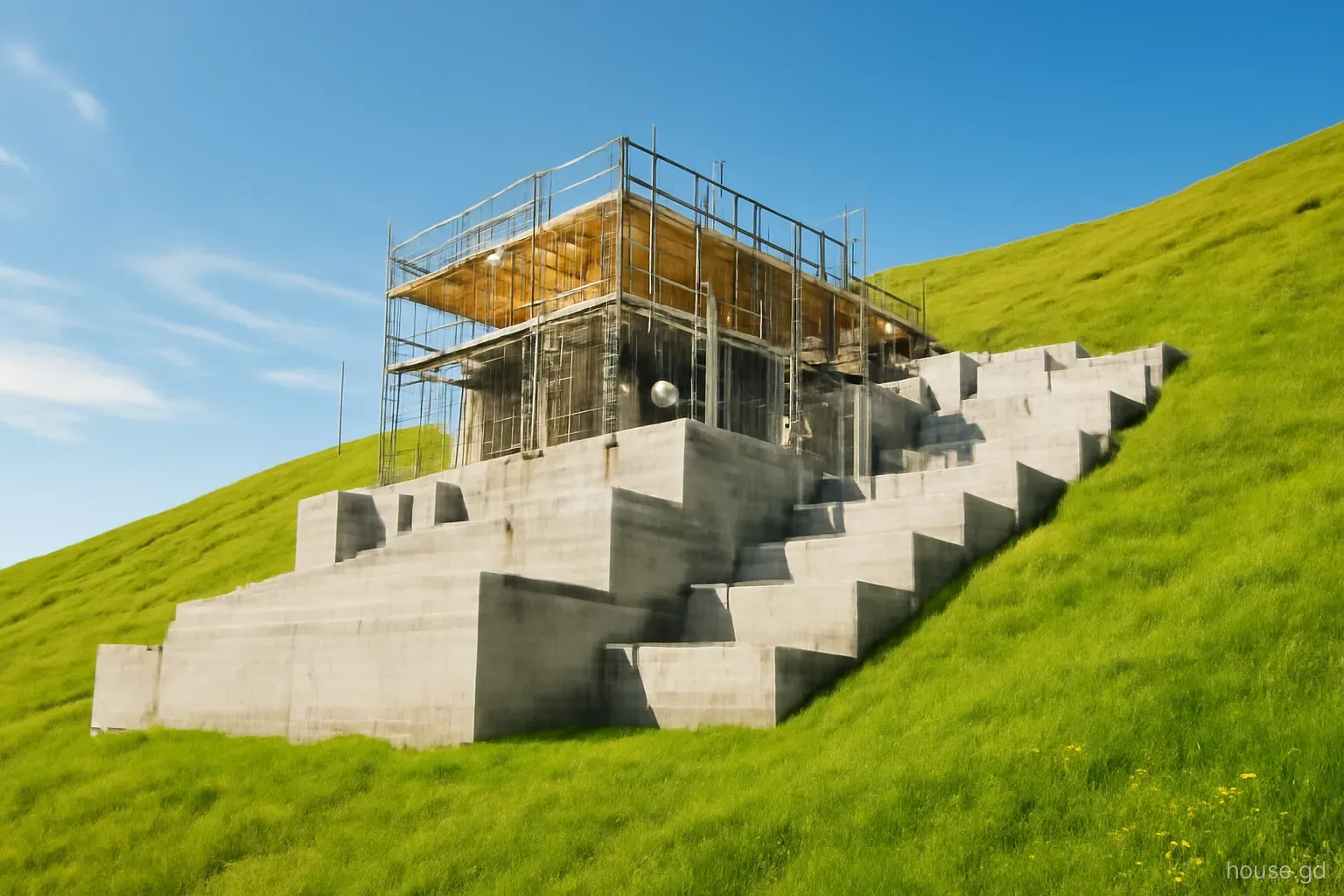
Inspect before concrete is poured. Foundations, columns, beams and slabs should be checked with reinforcement in place and before the pour. Once concrete covers the steel, nobody can see whether it matches the drawings.
Agree inspection points in advance. Write the inspection stages into the builder's contract, so the crew knows to call the inspector before pouring and cannot claim surprise.
Get written reports. A short report with dated photographs and a clear statement of what was checked, what was satisfactory and what must be corrected is far more useful than a verbal "all good".
Budget for it. Independent supervision costs money, but it is usually a small fraction of the construction budget and much less than putting one defect right after the fact.
Sending money safely and keeping a record
Money is where remote builds most often go wrong. The safest principle is that payments follow verified work. Pay the builder against stage certificates from your independent inspector, and wherever possible pay hardware suppliers directly for materials delivered to site rather than giving cash to the crew to buy them.
Use transfers that leave a trail, such as bank transfers to a business account, with a reference that matches an invoice or stage. Many owners open an account with a local bank or credit union in Grenada to handle project payments; ask the institution what documents they require from non-residents and how long the process takes. Keep every invoice, receipt and certificate in one shared folder that you and your representative can both see.
Build a cash buffer before you start. Projects that run out of money halfway are expensive to restart: exposed steel corrodes in salt air, unroofed walls take rain damage, and crews move to other jobs. If funds will come in instalments, plan the build in phases that each end at a weather-safe point.
A reporting routine that actually works
Agree the reporting routine in the contract, not as a favour, and decide who sends it: the builder, your representative or the inspector. Reports from the person being paid are useful, but they should be cross-checked by someone who is not. A good weekly update includes:
- dated photos from the same fixed positions each week, so progress can be compared like with like;
- a short video walk-through of the whole site, not just the newest work;
- a list of the week's deliveries matched against invoices;
- the number of workers on site each day, which tells you more about pace than any promise;
- problems found and decisions needed, with a date by which a decision is required;
- the updated programme, showing whether the build is ahead of or behind the agreed timetable;
- a running total of money paid against the contract sum and approved variations.
Security, insurance and storms while you are away
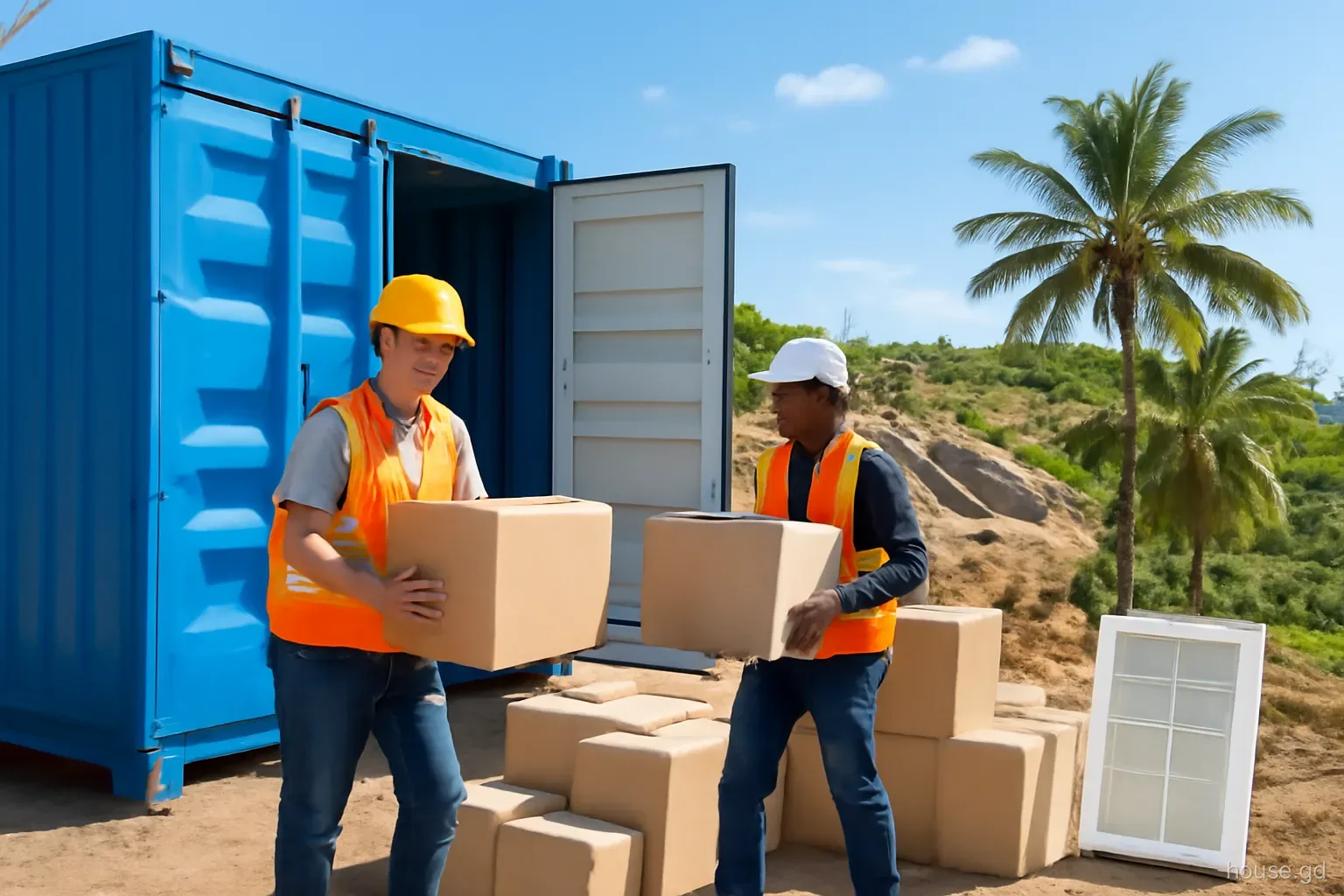
A building site with no owner nearby attracts attention. Cement, steel, tools and later fittings such as windows, doors and sanitary ware are valuable and easy to resell. Agree with the builder who secures the site at night and at weekends, whether a lockable store or container is needed, and when expensive items should be delivered: ideally just before they are installed rather than weeks in advance.
Ask an insurer about contract works cover for the construction period, and check whether the builder carries liability insurance for injuries or damage to neighbours. Policies vary, and some cover is hard to obtain once a named storm is approaching, so arrange it before work starts.
Write a hurricane plan into the contract. When a watch is issued, the crew should tie down or remove loose materials, sheeting and scaffolding, protect open roofs where possible and clear drains. Ask your representative to send photos of the site both before and after any storm, which also helps with any insurance claim.
Visit at the moments that matter
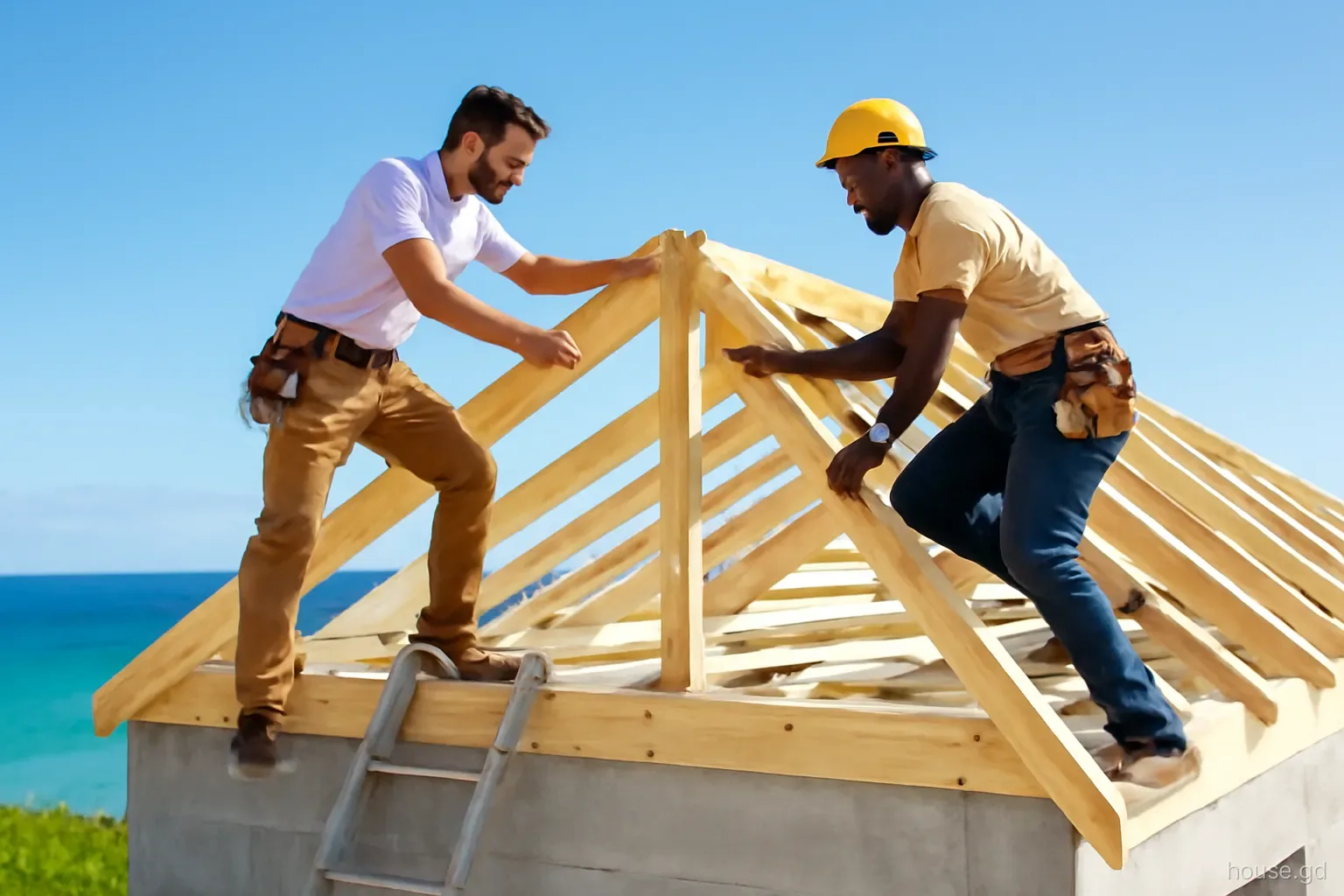
Even with good supervision, a few personal visits change the dynamics of a project. The most valuable times are before work starts, to walk the plot with the builder and agree the setting out; around the time the walls reach the ring beam and the roof goes on, when the shape of the house can still be adjusted; and before final payment, to inspect the finishes and compile a defects list.
If you can visit only once, many owners choose the stage just before the roof, when window openings, door positions and electrical layouts can still be changed relatively cheaply. Seeing the views and the light from inside the shell often leads to small changes that make a big difference to living in the house.
Plan visits outside the peak of hurricane season where possible and around the builder's programme, so the crew is on site and decisions can be made face to face.
Mistakes diaspora owners make
Building on family land without clear title. Houses are sometimes built on land that belongs to several heirs. Before investing, have a lawyer confirm who owns the plot and put the arrangement in writing; a house on disputed land can become a family conflict.
Choosing a builder on loyalty alone. A cousin who builds may be excellent, or may never have built a house of this size. Ask for the same evidence you would ask of a stranger.
Changing plans by message. Design changes sent from abroad without updated drawings confuse the crew and may breach the planning approval.
Ignoring the climate on finishes. Imported fittings chosen online may not suit salt air or humidity. Ask locally what lasts.
Not planning for an empty house. A finished house that stands empty for months needs security, ventilation and someone to check the roof and cistern, especially after storms.
Frequently asked questions
Can a house in Grenada be built entirely without visiting?
It is possible, and many homes are, but it raises the risk. A trusted local representative plus an independent engineer or quantity surveyor who inspects key stages makes a remote build far safer. Most owners find at least one visit before the roof goes on worthwhile.
Who should hold a power of attorney for the build?
Someone you trust who is available on the island, often a close family member or your lawyer. Have a Grenadian lawyer draft it, limit it to specific matters such as approvals and utility connections, and set an expiry date rather than granting general powers over your property.
Is it safer to pay suppliers directly than to give the builder money for materials?
Generally yes. Paying hardware suppliers for delivered materials creates a clear record and reduces the risk of money disappearing before materials arrive. Combine it with delivery checks on site, so you know what was paid for actually reached your plot.
Are there concessions for returning nationals building a home?
Grenada has offered concessions to returning nationals, such as relief on personal effects and a vehicle, under specific conditions. What applies to building materials, if anything, changes over time. Ask the Customs and Excise Division and a customs broker about current rules before shipping anything.
How often should progress photos be sent?
Weekly is a good rhythm for most builds, with extra updates before concrete pours and at key stages. Ask for photos from fixed positions, plus a short walk-through video, so you can compare progress honestly rather than seeing only the best angles.
What should be done if the build stalls for lack of funds?
Stop at a weather-safe stage if you can: cap exposed column steel, protect wall tops and, ideally, get the roof on. Secure materials on site and keep the area clear of standing water. Restarting a protected shell is far cheaper than repairing a neglected one.