Termites never stop working in Grenada. There is no winter to slow them down, the humidity suits them all year, and a great deal of Grenadian housing still relies on timber for roof structures, doors, windows, kitchen cupboards and the older board houses that line village roads from Sauteurs to Grand Roy. Many people call them wood lice, and almost every long-term homeowner has a story about them.
The damage is slow and quiet, which is what makes it expensive. By the time a door frame crumbles or a ceiling sags, a colony may have been feeding for years. The good news is that the main species leave distinct signs, and a house checked regularly and built or repaired with the right materials can stay largely free of serious damage.
Three kinds of termite, three sets of signs
Drywood termites. These live entirely inside the wood they eat, with no contact with the soil. They attack roof rafters, furniture, door frames and cupboards. The tell-tale sign is small piles of hard, gritty pellets, often the colour of sawdust or slightly darker, that collect below a tiny hole. Sweep the pile away and a fresh one appearing within days means an active colony.
Subterranean termites. These nest in the ground and travel up into buildings through mud tubes, pencil-thin tunnels of earth they build across concrete, along walls and behind skirting. They need moisture and often follow plumbing leaks and damp walls. Break a tube open: live, pale termites inside confirm activity.
Tree termites. The large, dark, football-shaped nests seen on trees, fence posts and utility poles all over Grenada belong to arboreal termites. They connect to the ground and to food sources by covered trails. A nest on a tree beside the house is a warning that termites are foraging nearby, and trails can reach roof timbers.
Swarmers. At certain times of year, often after rain, winged termites emerge in large numbers, flutter round lights and shed their wings. Piles of discarded wings on windowsills are a sign a colony is close, possibly inside.
A thirty-minute inspection you can do yourself
Professional inspections are worth having, especially before buying, but owners can catch most problems early with a regular check. Every few months, work through the house with a torch and a screwdriver:
- Look under the eaves and, if there is access, inside the roof space at rafters, purlins and the wall plate, checking for pellet piles, soft spots and mud trails.
- Tap door frames, window frames and skirting with the handle of the screwdriver. Sound timber rings solid; hollow or papery timber needs a closer look.
- Open kitchen and bathroom cupboards and check the backs and bases, particularly near sinks where leaks keep the wood damp.
- Walk the outside of the house at ground level looking for mud tubes on foundations, steps, columns and the undersides of verandahs.
- Check wooden verandah posts, railings and pergolas where they meet concrete or soil, a classic entry point.
- Inspect stored timber, firewood, old furniture and cardboard boxes under the house or in sheds, which can feed a colony next to the building.
- Look at trees and fence posts near the house for arboreal nests and covered trails heading towards the walls.
Treatment options and how they differ
Treatment depends on the species and the extent of the damage. For drywood termites in a few accessible pieces of timber, local treatment is common: the infested wood is drilled and injected with an insecticide, or badly damaged pieces are cut out and replaced with treated timber. For widespread drywood infestation, whole-structure fumigation is the method used in some countries, but it needs specialist equipment and is not routinely available everywhere, so ask local pest control firms what they offer.
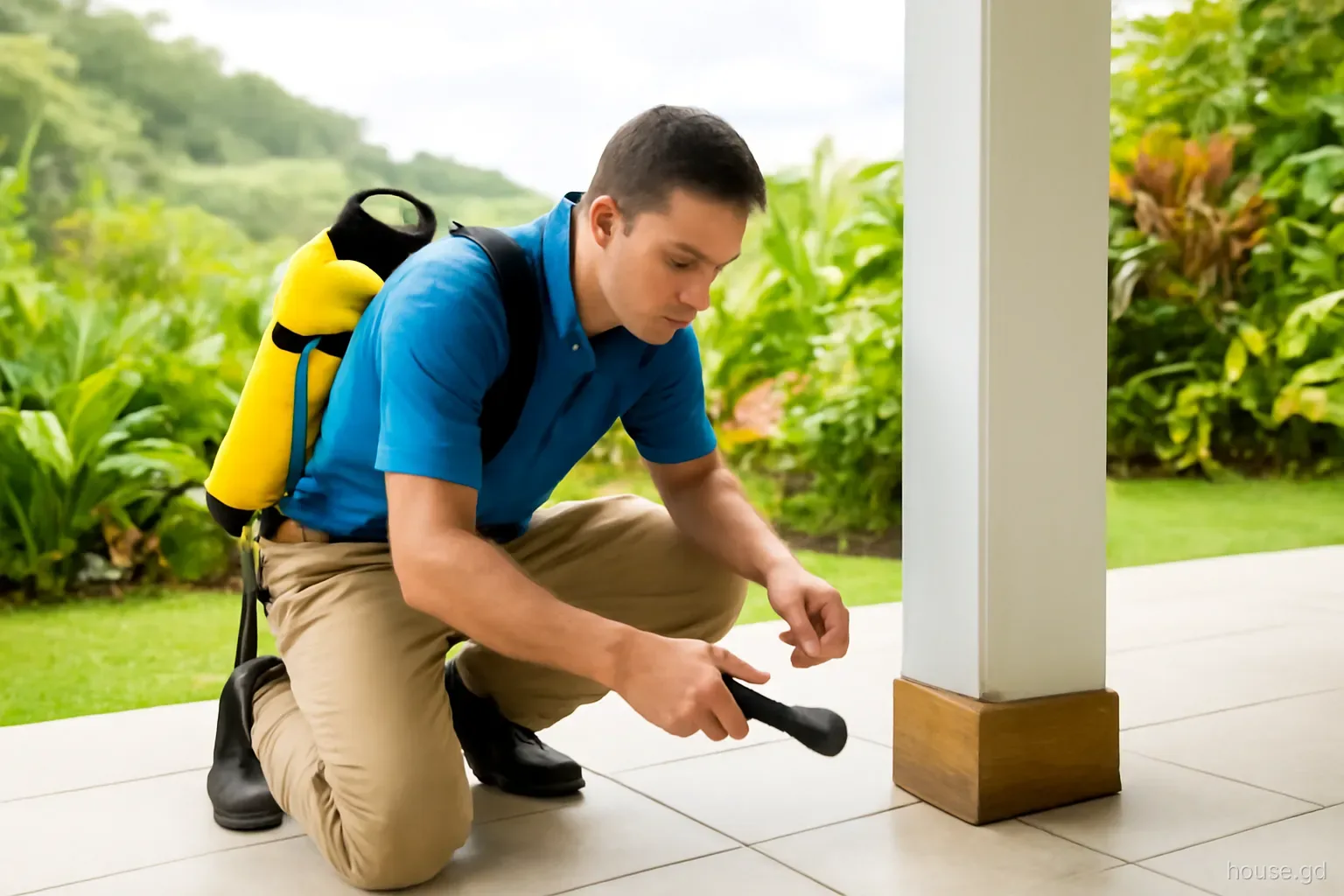
For subterranean termites, the aim is to stop them reaching the building. Methods include a chemical barrier applied to the soil around and under the foundations, and baiting systems, stations placed in the ground around the house containing a slow-acting bait that worker termites carry back to the colony. Baits take longer to work but can eliminate a colony rather than just blocking it.
Tree termite nests near the house are usually removed and the trails treated. Removing the nest without dealing with the trails, or without finding where they enter the building, often just moves the problem.
Keep the paperwork from every treatment, including the date, the areas treated and the product used. It helps the next technician and reassures a future buyer.
Whichever method is used, ask the pest control company which product it is applying, what precautions are needed for children, pets and cisterns, and what warranty or follow-up visit is included.
Building and repairing to resist termites
Grenada builders have long relied on reinforced concrete and concrete block for walls, partly because termites cannot eat them. The weak points are the timber elements: roof structures, doors, windows, fascias, built-in cupboards and decks. Choosing materials carefully for those parts saves a great deal of money later.
Pressure-treated pine is widely used for roof framing and is much more resistant than untreated softwood, provided cut ends are brushed with preservative after cutting on site. Dense tropical hardwoods imported from Guyana and elsewhere in the region, such as greenheart, have a strong reputation for durability. Aluminium and uPVC windows and doors avoid the problem altogether, while steel roof framing is an option some builders now offer.
Keep soil, mulch and planting beds from piling against walls, fix leaks promptly, keep gutters and downpipes discharging away from foundations and never store timber in contact with the ground near the house. Termites need moisture and an easy route in; denying both is the cheapest control there is.
Termites and buying a house
Termite damage is one of the most common hidden defects in Grenadian houses offered for sale, especially older homes, houses that have stood empty and properties where the roof was rebuilt quickly after Hurricane Ivan in 2004 or later storms. A fresh coat of paint and new ceiling boards can conceal rafters that have been hollowed out. Before committing, pay for an inspection by a builder, engineer or pest control company that includes the roof space, not only the rooms.
Ask the seller directly whether the house has been treated for termites, when, by whom and with what method, and whether any guarantee is transferable. Receipts and treatment records are a good sign that the house has been looked after. Pay attention to the age of roof timbers, whether they are treated lumber, and whether verandah and pergola posts sit directly on soil.
If the inspection finds active termites, it is not necessarily a reason to walk away. Get a quote for treatment and repair, and use it in negotiation. What matters is whether the damage has reached structural members, which needs a builder's or engineer's assessment, or is limited to replaceable items such as doors, cupboards and trim.
Mistakes that let termites win
Painting over damage. Filling and painting a door frame with pellet holes hides the colony without killing it. Treat or replace first, paint afterwards.
Untreated timber in repairs. After storms, untreated lumber is often used in a rush. It may be the first thing termites find. Ask specifically for treated timber and treat cut ends.
Ignoring the neighbour's side. A colony in an abandoned house or a dead tree next door will keep foraging. Talk to neighbours and deal with shared sources together where possible.
Spraying random insecticide. Household sprays kill the termites you can see and leave the colony intact. They can also contaminate cisterns if used carelessly near gutters or water tanks.
Skipping the pre-purchase inspection. A house that looks freshly painted can hide extensive roof damage. Before buying, pay for an inspection that includes the roof space.
Frequently asked questions
Are wood lice the same as termites?
In Grenada and elsewhere in the Eastern Caribbean, "wood lice" is a common name for termites. Elsewhere the term usually means a small crustacean that lives under stones and does not damage buildings. If a local builder mentions wood lice in your roof, they almost certainly mean termites.
How much does termite treatment cost in Grenada?
It depends on the species, the size of the house and the method, from a small local injection job to a full soil barrier or baiting system. Get quotes from at least two pest control companies and ask what follow-up visits and guarantees are included.
Can termites damage a concrete house?
They cannot eat concrete, but they can travel through cracks and along joints to reach timber inside, including roof structures, door frames, cupboards and furniture, as well as paper and stored boxes. A concrete house reduces the risk without eliminating it.
Is termite treatment safe near a cistern?
It can be, if the company knows the cistern is there and takes precautions. Tell the technician where water tanks, cisterns, wells and gutters are, and ask which products are used and how long to wait before using collected rainwater.
How often should a house in Grenada be checked for termites?
A quick owner inspection every few months and a professional inspection about once a year is a reasonable routine. Check more often if the house has a lot of timber, stands empty for long periods or has had termites before.
What timber resists termites best?
Pressure-treated lumber, properly treated after cutting, and dense tropical hardwoods such as greenheart have good reputations in the Caribbean. No timber is completely immune, so good detailing, ventilation and regular inspection still matter.