
Most houses in Grenada wear one of two roofs: pitched sheet metal over timber or steel framing, or a flat or gently sloped reinforced concrete slab. Each does the hardest job in the house, shedding tropical downpours that can deliver more rain in an afternoon than a European town sees in a week, while baking in sun and catching salt on the wind. Neglect shows up first as a stain on a ceiling and ends, too often, as rotten timbers or a slab that weeps through every rainy season.
Routine care is cheap compared with replacement. Twice a year, once in the dry months and once just before the peak of the hurricane season, a careful look at the roof catches nearly all problems while they are small. This checklist covers the everyday upkeep. Structural upgrades for storms, such as strapping and bracing, are a separate subject and worth discussing with an engineer.
Why twice a year, and when
Grenada's year divides roughly into a drier season from about January to May and a wetter season from about June to December, which overlaps with the official Atlantic hurricane season from 1 June to 30 November. The first inspection works best around February or March, when the roof is dry, paint and sealants cure well and there is time to finish repairs before the rains. The second fits in around June or July, a final check before the busier weeks of the hurricane season, typically August to October.
Keep a short written log of each inspection with photographs of the same spots each time, such as the ridge, the eaves above the kitchen and the area around the water tank. Comparing photos from one season to the next shows slow changes, like spreading rust or lifting sealant, that are easy to miss on a single visit.
Add an extra look after any severe weather: a tropical storm, a long spell of heavy rain or strong gusts. Loose sheets and lifted ridge caps are much easier to fix immediately than after the next storm has peeled them back further.
Safety matters. Roofs are slippery, sheet metal can be sharp and hot by mid-morning, and falls from roofs are a common cause of serious injury. Work early in the day, wear soft-soled shoes, use a properly secured ladder and harness, never walk on sheets between purlins, and leave steep or high roofs to an experienced roofer.
Checklist for sheet-metal roofs
On a corrugated or ribbed sheet roof, work methodically from the ridge down, looking at each of these:
- Fixings. Screws should be tight, with sealing washers intact. Look for rusted heads, missing screws, loose ones that rattle and any nails, which can work loose over time and are better replaced with suitable roofing screws.
- Laps and edges. Where sheets overlap, and at the eaves and cut ends, rust usually starts first. Treat early rust spots with a suitable primer before they spread.
- Ridge capping and flashings. Check that ridge caps are securely fixed and that flashings around water tanks, vent pipes, solar mountings and walls are sealed. Old sealant cracks and lets water track underneath.
- Paint condition. Chalky, faded or peeling paint means the coating is wearing out. Repainting with a paint made for metal roofs at the right time extends the life of the sheets considerably.
- Dents and holes. Fallen branches and coconuts dent sheets and can puncture them. Small holes can be sealed; larger damage means replacing the sheet.
- Underneath. From the roof space, look for daylight through holes, water stains on timbers, rusty undersides and any termite activity in rafters and purlins.
Checklist for flat concrete roofs
Concrete roofs avoid rust in the sheets, but they have weaknesses of their own, mostly about water sitting where it should not:
- Ponding. After rain, water should drain away within a few hours. Puddles that linger point to sagging, blocked outlets or poor falls, and standing water also breeds mosquitoes.
- Waterproofing. Many slabs are protected by a membrane or coating. Look for blisters, cracks, peeling edges and bare patches, particularly at upstands, corners and around penetrations.
- Outlets and scuppers. Drains and spouts must be clear of leaves, sand and debris. One blocked outlet can flood a whole roof during a downpour.
- Cracks. Hairline cracks in concrete are common; wider or growing cracks, or cracks with rust staining, need a builder's or engineer's assessment.
- Parapets and copings. The tops of parapet walls collect water and crack. Damp patches high on interior walls often trace back to them.
- Equipment. Water tanks, solar panels and AC units on the roof should be secure, with their mountings sealed where they meet the slab.
Gutters and downpipes, step by step
Gutters are where many roof leaks really begin. Overflowing gutters dump water against walls, rot fascia boards and spoil cistern water. Clean them at every roof inspection and more often if trees overhang the house:
- Clear leaves, seed pods, sand and nesting material from the gutters by hand or with a scoop, working from a stable ladder.
- Flush each run with a hose, watching that water flows towards the downpipe without pooling, which indicates a sagging section.
- Check that downpipes are clear by running water through them; tap them to dislodge blockages if needed.
- Inspect brackets and joints. Tighten loose brackets and reseal leaking joints.
- Make sure downpipes discharge into a drain, cistern inlet or splash block away from the foundations, not straight against a wall.
- If the roof feeds a cistern, clean the leaf screen and first-flush diverter at the same time.
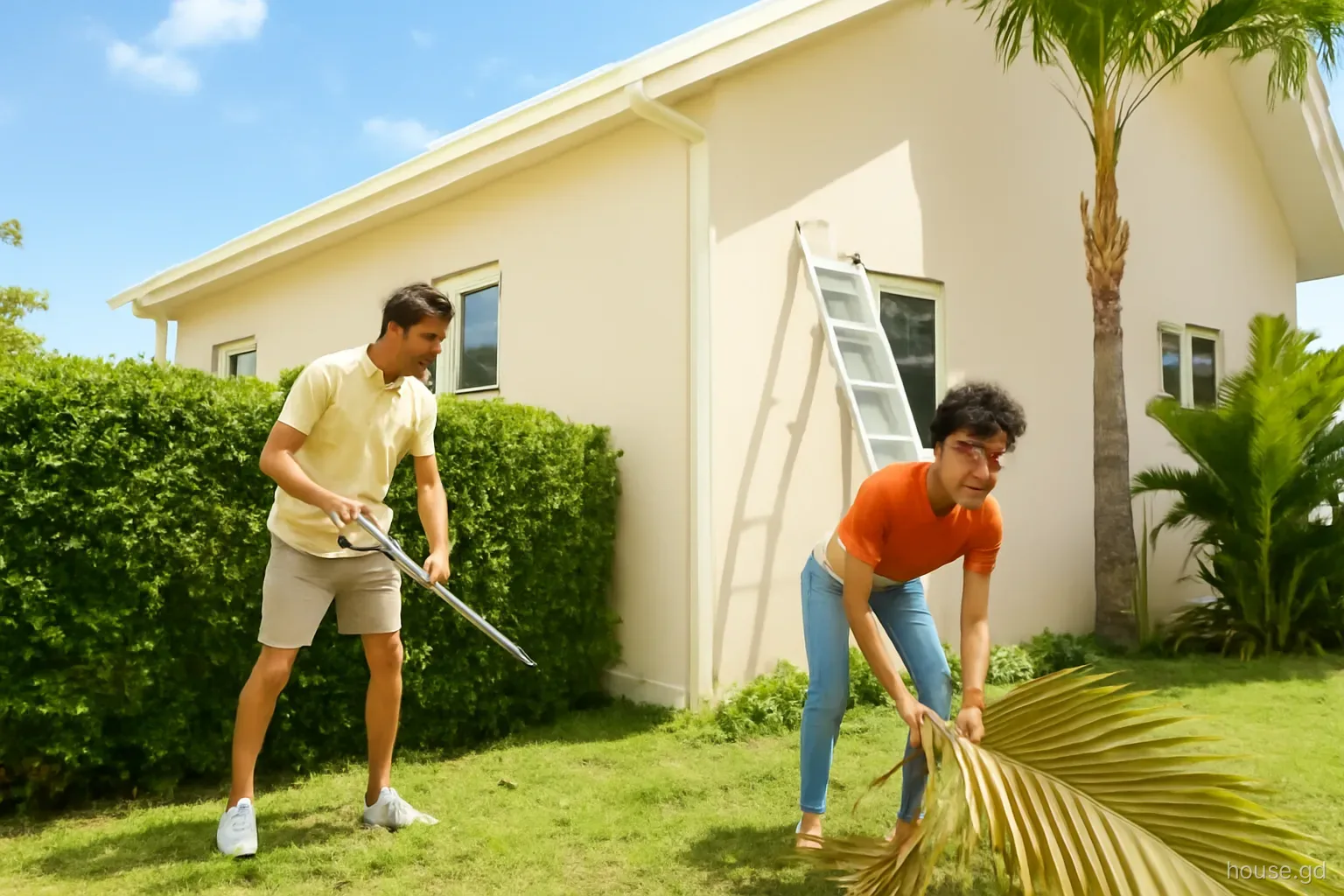
- Trim overhanging branches that drop leaves onto the roof, and remove any palms or trees that could fall onto it in a storm.
Repainting and recoating
A good coat of paint is the most cost-effective protection a sheet roof can receive. Paint designed for metal roofing, applied over a clean, dry, rust-treated surface, can add years to the sheets. Wash off dirt and salt first, treat any rust with an appropriate primer, and apply in dry weather. Light colours reflect more heat and can make the rooms below noticeably cooler.
If the roof collects rainwater for a cistern, check with the supplier that the paint is suitable for a catchment surface, and divert the first rains after painting away from the cistern until any residue has washed off.
Timing the repaint well saves money. Paint applied while the original coating is merely faded protects the steel directly; paint applied after rust has spread across the sheets needs far more preparation and may not hold. Many owners find that a roof kept on a regular repainting cycle outlasts a neglected one by many years, and the cost of a few tins of paint and a day of labour compares well with a full replacement.
For concrete roofs, waterproof coatings are commonly reapplied every few years depending on the product and exposure. Ask the applicator for the product's expected lifespan and keep the receipt and product details so you know when to plan the next coat.
Mistakes that shorten a roof's life
Walking anywhere on the sheets. Stepping between purlins dents sheets and breaks seals around fixings. Walk only along the lines of screws, where the sheet is supported.
Sealing leaks from inside. Patching a stain on the ceiling does nothing about the water coming through the roof above. Trace the leak, which may enter some distance from where it appears.
Mismatched metals. Copper wire, brass fittings or certain timbers in contact with steel sheets can speed corrosion. Use compatible materials and isolate where necessary.
Ignoring the fascia. Rotten fascia boards weaken gutter fixings and give termites a way in. Replace with treated timber or a non-timber alternative.
Leaving repairs until after the rains begin. Roofers are busiest just before and after storms. Booking dry-season maintenance early avoids the queue.
Frequently asked questions
How often should a roof be inspected in Grenada?
Twice a year is a sensible minimum: once in the dry season, around February or March, and once early in the hurricane season, around June or July. Add a check after any severe storm or prolonged heavy rain, and inspect more often if trees overhang the roof.
How long does a sheet-metal roof last in Grenada?
Lifespan depends heavily on the sheet type, coating, fixings, exposure to salt and maintenance. Coated sheets that are kept painted and fixed with suitable screws last far longer than bare galvanised sheets left to rust. Coastal roofs generally need more attention than inland ones.
Is a concrete roof better than a sheet roof?
Each has advantages. Concrete roofs resist wind and termites and do not rust, but they are heavier, need careful waterproofing and can hold heat. Sheet roofs are lighter, cheaper and quicker to build but need regular painting and fixing checks. Good design and maintenance matter more than the choice itself.
Can roof paint contaminate cistern water?
Some paints and coatings are not suitable for surfaces that collect drinking water. Check with the supplier before painting a catchment roof, and divert the first rainfall after painting away from the cistern. Never use leftover paints or products of unknown composition on a catchment roof.
Who should repair a roof leak?
Small fixes such as tightening screws or clearing gutters are often handled by owners or handymen. For steep roofs, structural damage, recurring leaks or work at height, use an experienced roofer or builder, ideally one recommended by people who have used them recently.