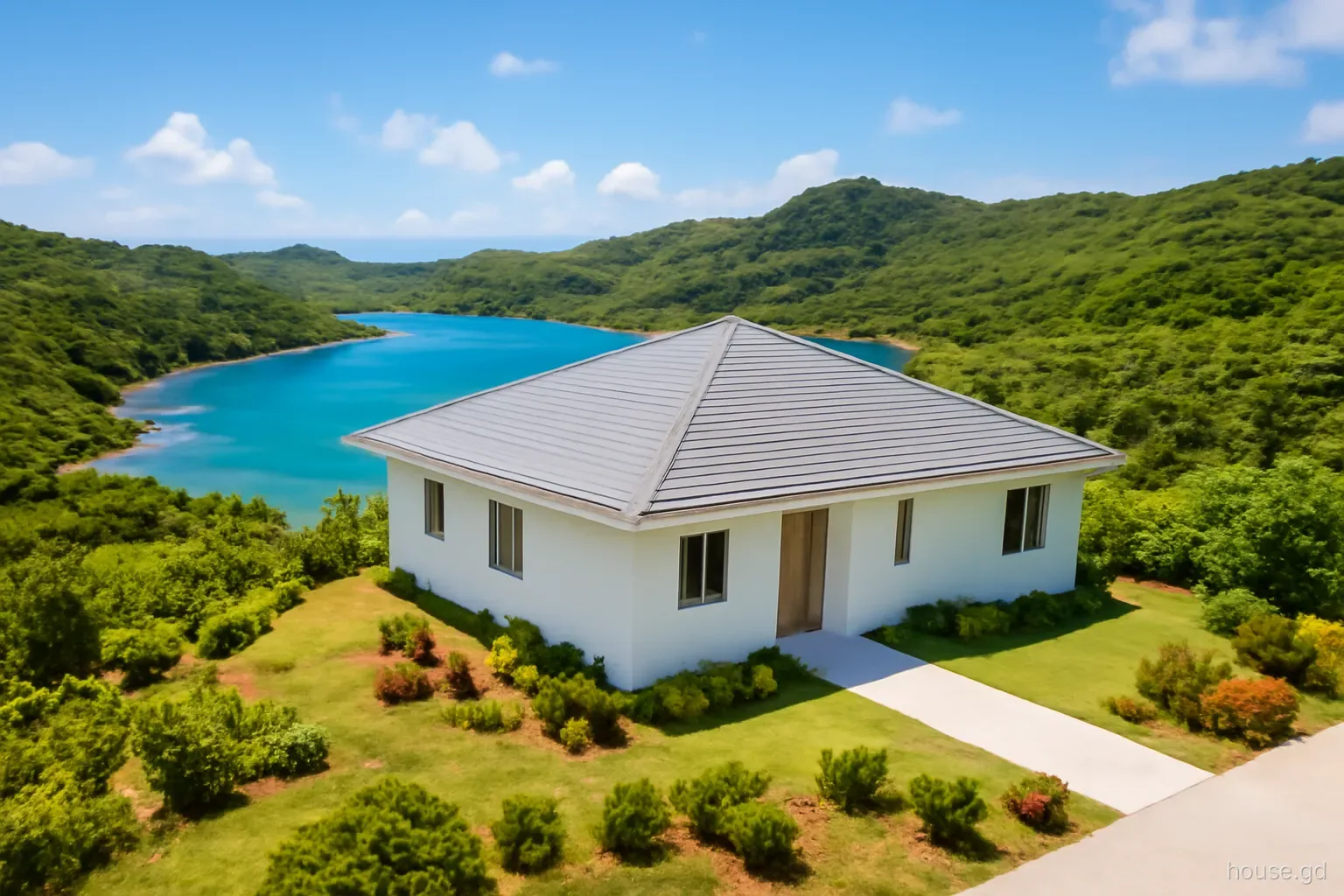
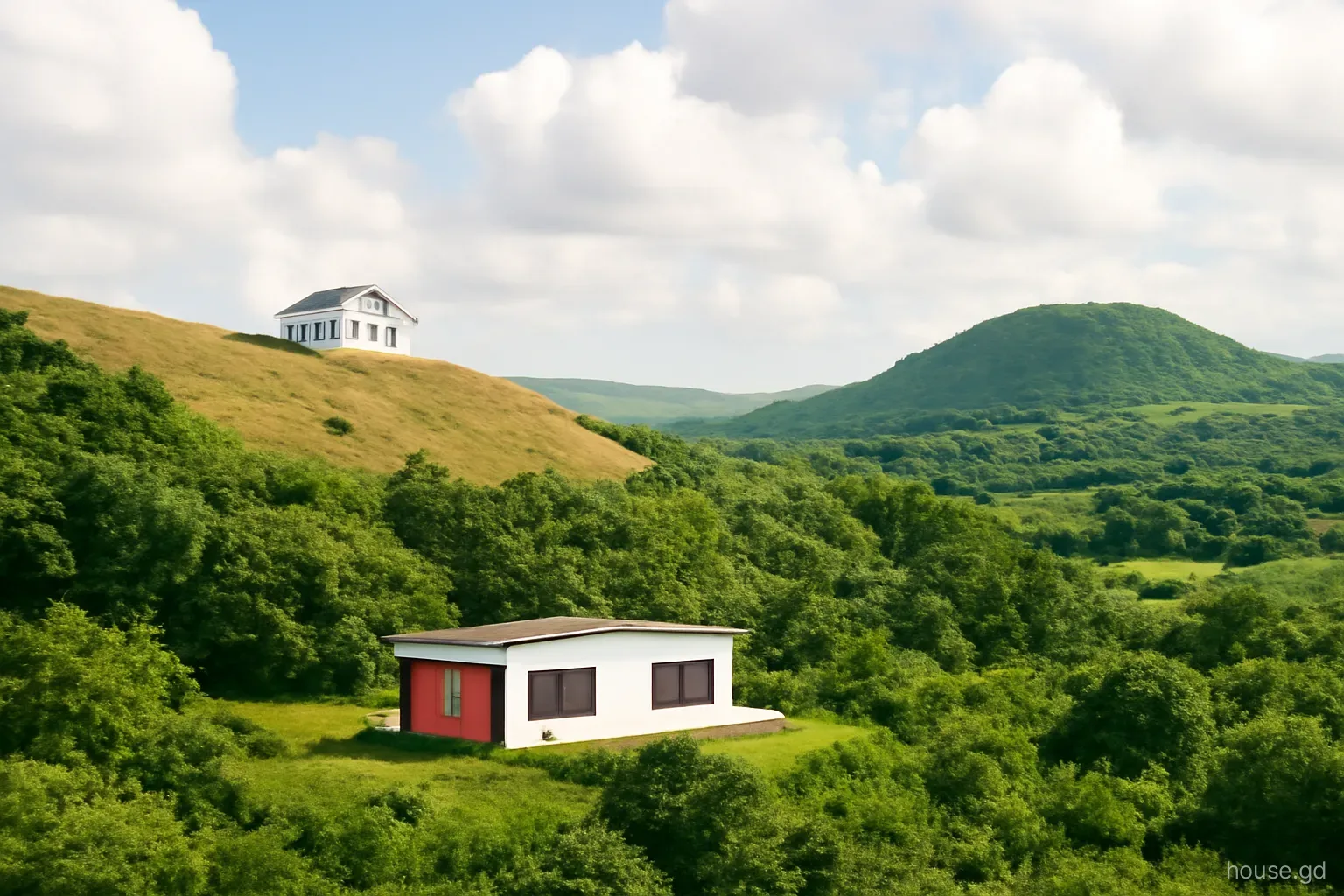
Two identical houses built a mile apart in Grenada can face very different storms. One sits on an open ridge with a panoramic sea view and takes the full, accelerated force of the wind. The other lies in a sheltered fold of land, partly protected by hills and trees. A third, on a low seafront plot, may survive the wind and still be damaged by storm surge and waves.
Engineers account for these differences when they calculate the wind loads a house must resist. Owners rarely see those calculations, but understanding the ideas behind them helps when choosing a plot, briefing a designer or judging whether a quote has cut corners.
This explainer covers the main factors that change hurricane risk from site to site in Grenada: exposure to open wind, the speed-up over hills, coastal surge and salt, flooding and landslips, and how those factors feed into design. It is meant to help you ask the right questions, not to replace a site-specific engineering assessment.
What engineers mean by design wind speed
Building codes used in the Caribbean set a basic design wind speed for each territory, derived from historical storm records and statistical analysis. It represents the wind a building should withstand with an appropriate margin of safety. Regional work, including the model building code developed for the Organisation of Eastern Caribbean States, has guided how Grenada and its neighbours approach this. Your engineer will state which code and which design wind speed they have used; ask them to put it on the drawings.
That basic figure is then adjusted for the specific site. The same nominal wind produces much higher forces on an exposed hilltop than in a sheltered suburb, and higher forces on a tall building than on a single-storey bungalow. Engineers apply factors for terrain roughness, height, topography and the importance of the building.
From the adjusted wind speed, the engineer calculates pressures on walls and suction on the roof, especially at edges and corners. Those pressures determine the size of structural members, the spacing of roof fixings and the rating needed for windows, doors and shutters. Every product you buy for the building envelope should be rated for those numbers.
Hilltops, ridges and the speed-up effect
Wind accelerates over hills. As wind is forced up and over a hill or ridge, it speeds up near the crest. A house sitting at the top of a steep slope facing the prevailing wind can experience significantly higher wind speeds than one at the bottom.
Steep slopes amplify more. The steeper and more isolated the hill, the greater the effect. A gentle rise in open country produces little speed-up; a sharp ridge above the sea can produce a lot.
The view comes at a price. Many of the most desirable plots in Grenada, on the ridges above Grand Anse, around Morne Jaloux, and the high ground of the south and east coasts, are exactly the sites with the greatest exposure. That does not make them unbuildable, but it raises design loads and construction cost.
Shelter is valuable. A site partly protected by higher ground or established trees on the windward side faces lower wind loads. Removing those trees during clearing removes some of that protection.
Ask the engineer directly. Ask whether topographic factors have been applied and what they did to the design loads. If the answer is vague, ask again.
Seafront plots: surge, waves and salt
On the coast, wind is only part of the hazard. Storm surge, the rise in sea level pushed ashore by a hurricane's winds and low pressure, combined with large waves, can flood low-lying land, undermine foundations and batter walls facing the sea. Beryl's impact on low-lying parts of Carriacou showed how destructive surge and waves can be. Swells generated by passing storms can also cause serious erosion even when the storm itself does not hit Grenada.
Height above the sea and distance from the shoreline are the main defences. Planning rules in Grenada include coastal setbacks, and the Physical Planning Unit can require greater distances on vulnerable shores. Even where building close to the water is permitted, raising floor levels, designing foundations that resist scour and keeping living spaces well above potential flood levels reduce risk. Beaches change over time, and a gap that looks generous today may narrow with erosion and sea level rise.
Salt air is the slow hazard. Within sight of the sea, salt spray corrodes steel fixings, hurricane straps, roofing sheets and window hardware far faster than inland. Specify marine-grade and stainless fixings, use heavy galvanising and protective coatings, and plan for more frequent inspection and maintenance.
Valleys, rivers and slopes: water hazards inland
Inland sites have their own risks, mostly from water. Hurricanes and tropical storms often bring extreme rainfall, and Grenada's steep terrain concentrates it quickly. Before choosing or building on a plot, consider:
- whether the plot lies near a river, ravine or drainage channel that floods in heavy rain, and how high water has reached in past storms;
- whether the plot sits below a steep slope that could shed water, mud or debris in extreme rain;
- whether cutting into the hillside for the house would destabilise the slope above or below;
- how drainage from roads and neighbouring land reaches the plot;
- whether access roads could be cut by floods or landslips, isolating the house after a storm;
- the history of the area: neighbours and long-time residents often remember where water ran during Ivan, Emily or later tropical storms;
- whether the septic system and cistern could be contaminated by flood water.
Height, shape and the house itself
The building's own form changes its exposure. Taller houses catch stronger winds than single-storey ones, because wind speed increases with height above the ground. A two- or three-storey villa on a ridge faces substantially higher loads than a bungalow on the same plot, and its upper floors and roof need correspondingly stronger construction.
Shape matters too. Compact, simple forms with hip roofs present fewer edges and corners where suction peaks. Wide overhangs, large open-sided verandas, roof terraces with parapets and projecting features all add complexity that the design must handle. Large glazed facades facing the sea or prevailing wind need high-rated glazing or robust shutters.
Finally, consider what surrounds the house. Neighbouring buildings with lightly fixed roofs, loose sheds or construction sites can generate debris in a storm. You cannot control them, but you can protect your openings accordingly and keep your own site free of potential missiles.
Garages, workshops and outbuildings deserve the same thinking. A lightly built shed or carport on an exposed site can break up early in a storm and send sheets and timber straight into the main house, so either build ancillary structures to the same standard or keep them downwind and well away.
Questions to ask before buying or designing
Where does the wind come from here? Prevailing winds come from the east and north-east, but hurricane winds can come from any direction as a storm passes, and often swing around as the centre moves by. A house that is sheltered from the trade winds may be fully exposed to a westerly gust on the back side of a storm, so consider all sides.
How exposed is the plot? Open ridge, sheltered slope or valley floor? The answer shapes design loads and cost.
How high above the sea? For coastal plots, ask about historic surge and wave reach and current coastal setback requirements.
What happened here in past storms? Ask neighbours and look at surviving older buildings for clues. Replaced roofs, newer walls on one side of the street or rebuilt sea walls often tell a story about where the damage concentrated.
What design wind speed and factors will the engineer use? Get them on the drawings, and make sure products are rated to match.
Frequently asked questions
Are hilltop houses in Grenada more at risk in hurricanes?
They usually face higher wind speeds, because wind accelerates over hills and ridges. That does not rule them out, but the structure, roof, connections and openings must be designed for greater loads. A sheltered site may need less, so ask your engineer how topography affects your design.
What is storm surge, and does it affect Grenada?
Storm surge is a rise in sea level pushed ashore by a hurricane's winds and low pressure, often with large waves on top. It can flood low-lying coasts and damage seafront buildings. It is a serious consideration for low coastal plots on all three islands, as Beryl showed on Carriacou.
How close to the sea can a house be built in Grenada?
Coastal setbacks are set through the planning system and can vary with the location and the nature of the shoreline. Check current requirements with the Physical Planning Unit before buying a seafront plot, and consider height above sea level and erosion trends, not just the minimum distance.
What building code applies to houses in Grenada?
Building standards in Grenada have been shaped by regional work, including the model building code developed for the Eastern Caribbean, alongside international engineering standards. Ask your structural engineer which code and design wind speed they are using, and have it recorded on the drawings.
Do taller houses face stronger winds?
Yes. Wind speed increases with height above the ground, so upper floors and roofs of taller houses experience higher pressures. Multi-storey houses, particularly on exposed sites, need correspondingly stronger structure, roof connections and window ratings.
Does salt air really weaken hurricane protection?
Over time, yes. Salt spray corrodes steel fixings, straps, roofing and shutter hardware much faster near the sea. A strap that has rusted through gives no protection. Use marine-grade or stainless fixings in coastal locations and inspect them every year before the season.