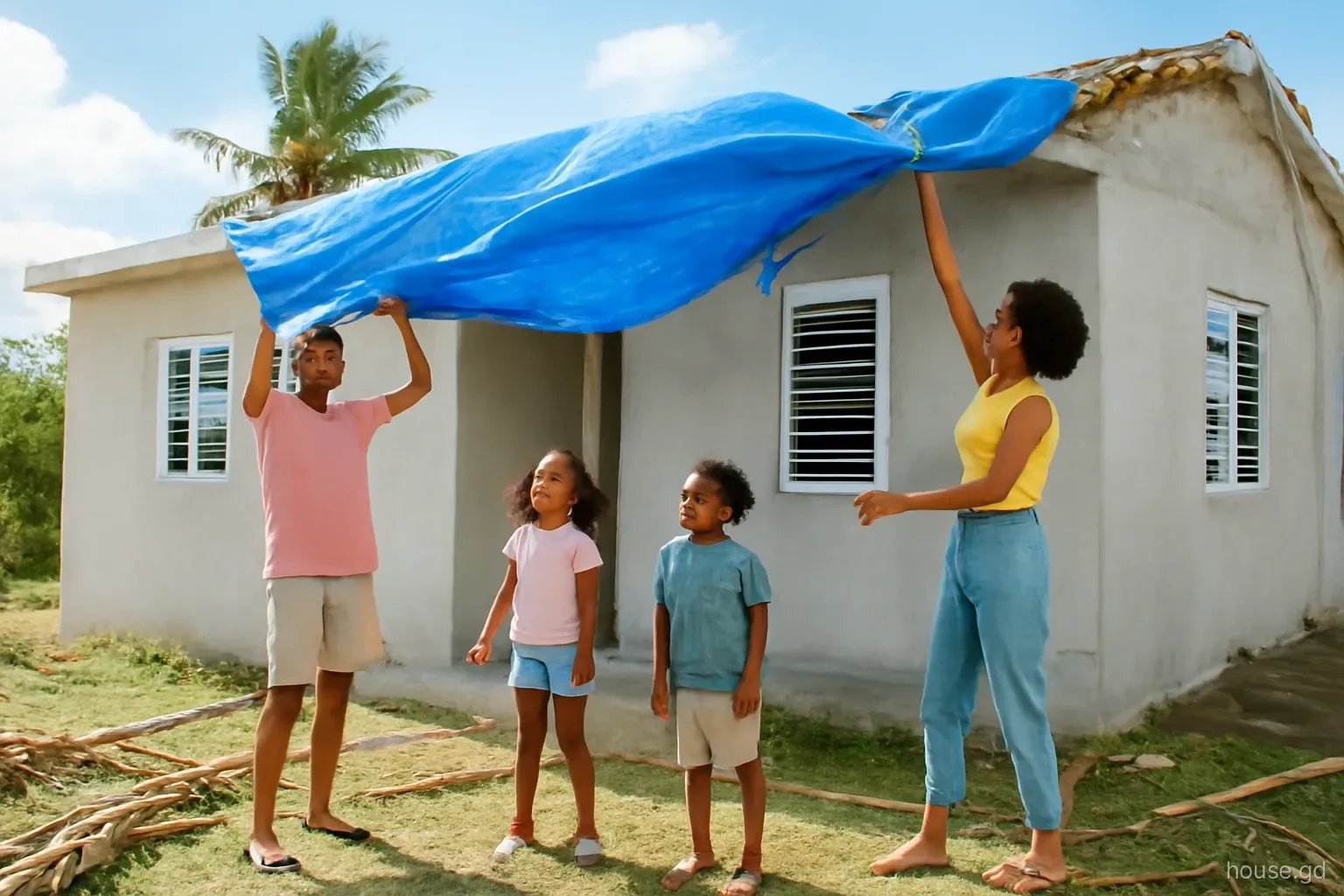
Windows and doors are the weakest points in most houses facing a hurricane. Glass breaks under wind pressure or when hit by flying debris, and once wind enters the building, the pressure inside pushes up on the roof while suction outside pulls on it. Protecting openings is therefore one of the most effective things an owner can do to keep a house standing.
There is no single best product for Grenada. Owners choose between removable storm panels, permanently fixed systems such as accordion, roll-down, Bahama and colonial shutters, and impact-resistant glass that needs no shutter at all. They differ widely in cost, appearance, how much work they take before a storm and how they cope with salt air.
This comparison explains how each option works, where it suits and where it struggles, and what to check before buying. Prices vary with size, specification and supplier, so get written local quotes for your openings.
Removable storm panels
How they work. Corrugated aluminium or steel panels, or clear polycarbonate, slot into tracks or bolt onto anchors fixed around each opening. They are stored when not in use and put up when a storm threatens.
Strengths. Usually the lowest-cost engineered option, strong when properly installed and invisible for most of the year. Clear panels let some light in during the storm.
Weaknesses. They take time and labour to install, often more than owners expect, and panels for upper-floor windows need ladders in rising wind. They need storage space, and panels must be labelled and kept with their fixings.
Best for. Owners who live in the house year-round, have help available, and want strong protection at a moderate cost.
Watch for. Anchors corroding in salt air, lost wing nuts, and panels that no longer fit after repainting or alterations. Do a trial installation every year before the season.
Accordion and roll-down shutters
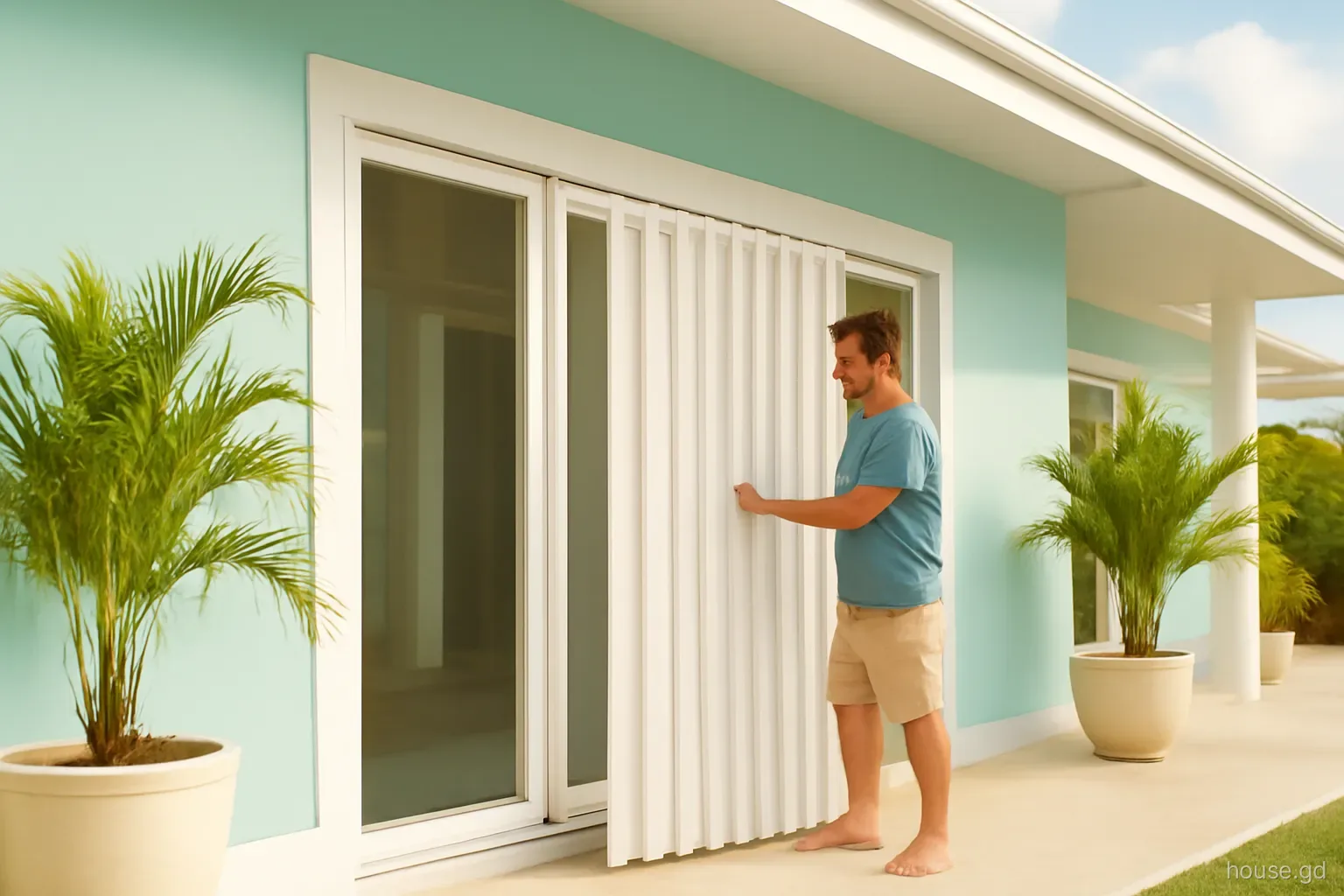
Accordion shutters are vertical slats that fold into a stack at each side of the opening and slide across on tracks, locking in the middle. They stay permanently in place, can be closed by one person in minutes and double as security shutters when the house is empty. They are popular for wide veranda openings and sliding doors. Their housings are visible year-round, and the tracks need cleaning and lubrication to keep them running smoothly, especially near the sea.
Roll-down shutters are interlocking slats that roll into a box above the opening and descend in side tracks, operated manually with a crank or by an electric motor. They are the quickest to deploy and also provide security and shade. They are usually the most expensive option, the boxes must be designed into the building or neatly added, and motorised versions need a manual override because power often fails before a storm arrives.
For both types, the quality of installation and fixings is critical. The tracks must be anchored into concrete or reinforced structure, not into plaster or thin block, and the product should be rated for the wind pressures your engineer specifies for the house and its exposure.
Bahama and colonial shutters
Bahama shutters are hinged at the top and prop open at an angle, giving permanent shade and a distinctly Caribbean look. When a storm comes, they are lowered and fastened shut. Colonial shutters are hinged at the sides and close across the window like doors. Both styles suit traditional architecture and can be very attractive.
Their storm performance depends on the product. Decorative timber or light aluminium versions may offer little real protection, while engineered versions with tested ratings and strong hardware can be effective. Bahama shutters also reduce light and views permanently, which some owners like for shade and others dislike.
If you want this look, ask the supplier for evidence that the specific model has been tested for wind load and debris impact, check that the hinges and fastenings are stainless or heavily protected, and make sure every opening can be closed and locked from inside or safely from outside before the wind rises.
Impact-resistant glass
Impact-resistant windows and doors use laminated glass, two or more layers bonded to a tough interlayer, in heavy frames anchored into the structure. If the glass is hit by debris it may crack, but the interlayer holds it in the frame and keeps the opening sealed. There is nothing to put up before a storm, which is a major advantage for owners who are often away or cannot handle panels.
Impact glass is the most expensive way to protect openings, and its performance depends entirely on the complete system: glass, frame and installation into the opening. A strong window fixed into a weak opening can blow in as a unit. Products should carry recognised test certification for wind pressure and impact, and the installer should follow the manufacturer's anchoring details.
Many owners use a combination: impact glass on large, hard-to-protect openings such as sliding doors to the veranda, and panels or accordion shutters elsewhere. Some insurers may view tested protection favourably, so ask about it when renewing cover.
What to check before buying any system
Whatever the product, the same questions apply. Before placing an order, check:
- the wind pressure and impact rating, and whether it matches your engineer's design pressures for your site;
- how and into what the system is anchored, and whether the fixings suit coastal exposure;
- how long it takes one person to close or install protection for the whole house;
- whether upper-floor openings can be secured safely without ladders;
- what happens to doors: a garage or veranda door left unprotected can fail and let the wind in;
- whether the supplier offers local installation, maintenance and spare parts;
- storage space for removable panels and their fixings;
- how the system looks and performs on ordinary days, since it will be there for years.
Doors, garage doors and the other openings
Owners often protect every window and forget the doors. Wide sliding doors to a veranda are usually the largest area of glass in the house and the most exposed to wind-driven debris, so they need protection at least as strong as the windows. Accordion shutters, roll-down shutters or impact-rated doors are common choices for these openings.
Garage doors are another weak point. A standard lightweight roller or panel garage door can buckle inward in strong wind, and once it fails the garage pressurises and the roof above it is at risk. Reinforcement kits, braces or wind-rated doors are available; ask your supplier which option suits your door.
Smaller openings matter too. Louvred windows, high-level vents, roof vents and even pet doors can let wind and rain in. Plan how each one will be closed or covered, and include them on the list of openings you check when a storm watch is issued.
Mistakes owners make with shutters
Leaving it too late. Suppliers and installers are swamped once a storm is forecast. Order and install months before the season.
Plywood as a plan. Plywood cut to size and pre-drilled with permanent anchors can serve as a temporary measure, but buying and cutting it with a storm approaching rarely works, and nailing it to frames does little.
Forgetting the garage and doors. Large doors are big surfaces. If they fail, wind enters and the roof is at risk.
Never testing. Tracks seize, keys go missing and anchors rust. Close every shutter at least once a year before June.
Fixing into weak material. Tracks and anchors screwed into plaster, thin render or the hollow cells of block can pull out under load. Fix into concrete, filled block cores or structural frames as the manufacturer specifies.
Shuttering every exit. Make sure at least one door can be opened from inside once shutters are closed, so occupants can leave if needed.
Frequently asked questions
What is the cheapest effective hurricane shutter for a Grenada home?
Removable aluminium or steel storm panels on permanently fixed anchors are usually the lowest-cost engineered option. They work well when installed correctly but take time and labour to put up. Cost-effectiveness also depends on how often you are on the island and who will install them.
Is impact glass worth it compared with shutters?
It is the most expensive option but requires no preparation before a storm, which matters if you are often away or cannot handle panels. Many owners use impact glass on large sliding doors and cheaper shutters elsewhere. Make sure the product and installation are tested and certified.
Do Bahama shutters protect against hurricanes?
Some do and some are decorative. Engineered Bahama shutters with tested wind and impact ratings and strong hardware can be effective; lightweight decorative versions may not be. Ask the supplier for test evidence for the specific model before relying on them.
Is plywood good enough for hurricane protection?
As a temporary measure, plywood of adequate thickness, pre-cut and fitted to permanent anchors, can help. Plywood bought at the last minute and nailed to window frames gives poor protection. Engineered shutters are more reliable and quicker to deploy each season.
Should windows be left slightly open during a hurricane?
No. That old advice is discredited. Opening windows lets wind in and increases pressure inside the house, adding to uplift on the roof. Keep all openings closed and protected, and stay in an interior room away from glass.
Do motorised roll-down shutters work when the power fails?
Only if they have a manual override or battery backup. Power is often cut before a storm arrives, so close motorised shutters early and make sure everyone in the house knows how to operate the manual crank.