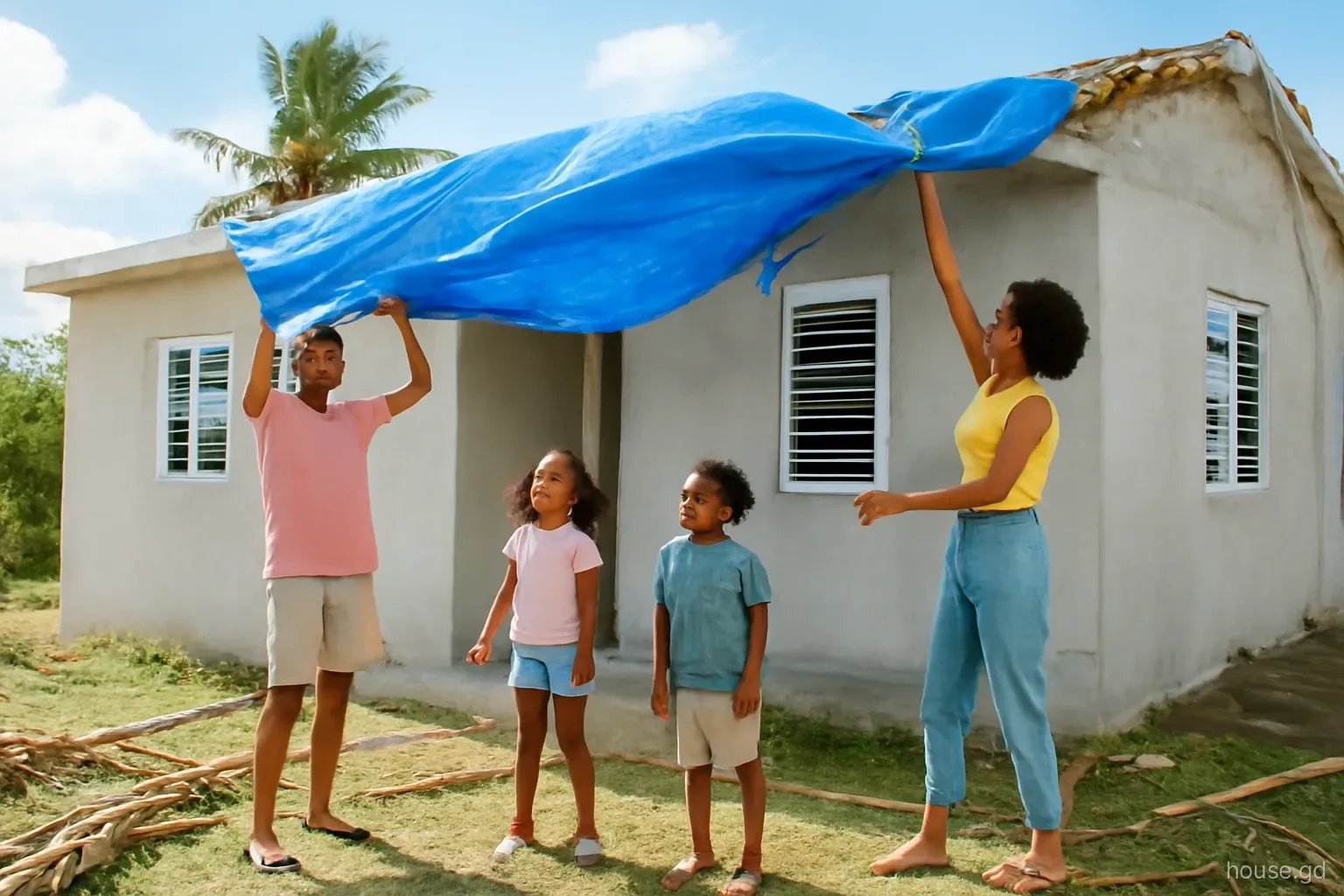
When a hurricane damages a Grenadian house, it usually starts at the roof. Wind flowing over a roof creates suction that tries to lift it, while gusts force their way under eaves and through broken windows, pushing upward from inside. Sheets peel from the edges first, then purlins and rafters lift, and once the roof goes, rain and wind destroy the interior and can bring down unsupported walls.
Hurricane Ivan in 2004 left a huge share of the island's roofs damaged or gone, and Hurricane Beryl in 2024 did the same on Carriacou and Petite Martinique. Yet in both storms some roofs came through intact, and the differences between those that survived and those that did not were mostly in details that cost relatively little at the time of building.
This explainer covers how a roof resists wind, which shapes and pitches perform best, how the roof should be tied to the walls and how coverings should be fixed. It is a guide for conversations with your engineer and builder, not a substitute for an engineered design.
How wind attacks a roof
Wind does not simply push against a house; as it flows over and around it, it creates zones of strong negative pressure, or suction. On a roof, those suction forces are highest at the edges, corners, ridges and eaves, which is exactly where failures begin. A sheet that loses a few fixings at a corner flaps, tears more fixings loose, and the damage runs across the roof in seconds.
At the same time, if a window or door breaks on the windward side, wind enters the house and pressurises it from within. That internal pressure adds to the external suction, so the total uplift on the roof can increase sharply. This is why protecting openings is part of keeping a roof on, not a separate issue.
The design response is a continuous load path: every piece of the roof fixed to the piece below it strongly enough to resist uplift, from the roof covering to the purlins, rafters, wall plate, ring beam, walls and foundations. A roof is only as strong as the weakest connection in that chain.
Shape and pitch
Hip roofs generally outperform gables. A hip roof slopes down on all four sides and has no tall, flat gable end for wind to push against. Studies and post-storm surveys across the Caribbean have repeatedly found hip roofs suffer less damage than gable roofs of similar construction.
If you have gables, brace them. Gable ends need bracing back into the roof structure and secure connection to the walls, and the gable wall itself should be reinforced and tied into the ring beam.
Moderate pitch is better than very flat. Very low-pitched roofs experience strong suction over their whole surface. Regional guidance commonly recommends a pitch somewhere around 25 to 40 degrees for timber roofs, with around 30 degrees often cited as a good balance. Your engineer will confirm the right figure for your design.
Keep the shape simple. Complex roofs with many valleys, dormers and changes of level have more edges and junctions, which are the points where wind finds a way in.
Limit overhangs. Wide, unsupported eaves catch wind like a lever. Keep overhangs modest, or support verandas with posts properly tied down, and consider separating veranda roofs structurally so their failure does not take the main roof with them.
Tying the roof to the walls
In a typical Grenadian timber roof on a concrete house, the rafters or trusses sit on a timber wall plate bolted to the concrete ring beam. Each of those connections needs a metal fixing designed for uplift. Hurricane straps or ties connect rafters to the wall plate, the wall plate is held down by anchor bolts or straps cast into the ring beam, and the ring beam itself is tied into reinforced columns and walls.
The commonest failure seen after storms is a roof structure that was simply nailed to the wall plate, or a wall plate resting on the ring beam with too few anchors. Toe-nailing, driving nails at an angle through the rafter into the plate, offers little resistance to uplift. Galvanised straps with the right number of nails or screws on each side are far stronger.
Fixings near the sea corrode, and a strap that has rusted through gives no protection. Use galvanised or stainless fixings suited to the exposure, keep them dry, and inspect accessible straps in the roof space regularly. Before the roof covering goes on, ask your engineer or an experienced inspector to check every connection, because afterwards they are hidden.
Fixing galvanised sheets and other coverings
Corrugated or profiled galvanised sheeting, often simply called galvanise, is the most common roof covering in Grenada. How it is fixed matters more than which brand is used. Good practice includes:
- using the sheet thickness your engineer specifies; thinner sheets tear around fixings more easily, and a lower gauge number means a thicker sheet;
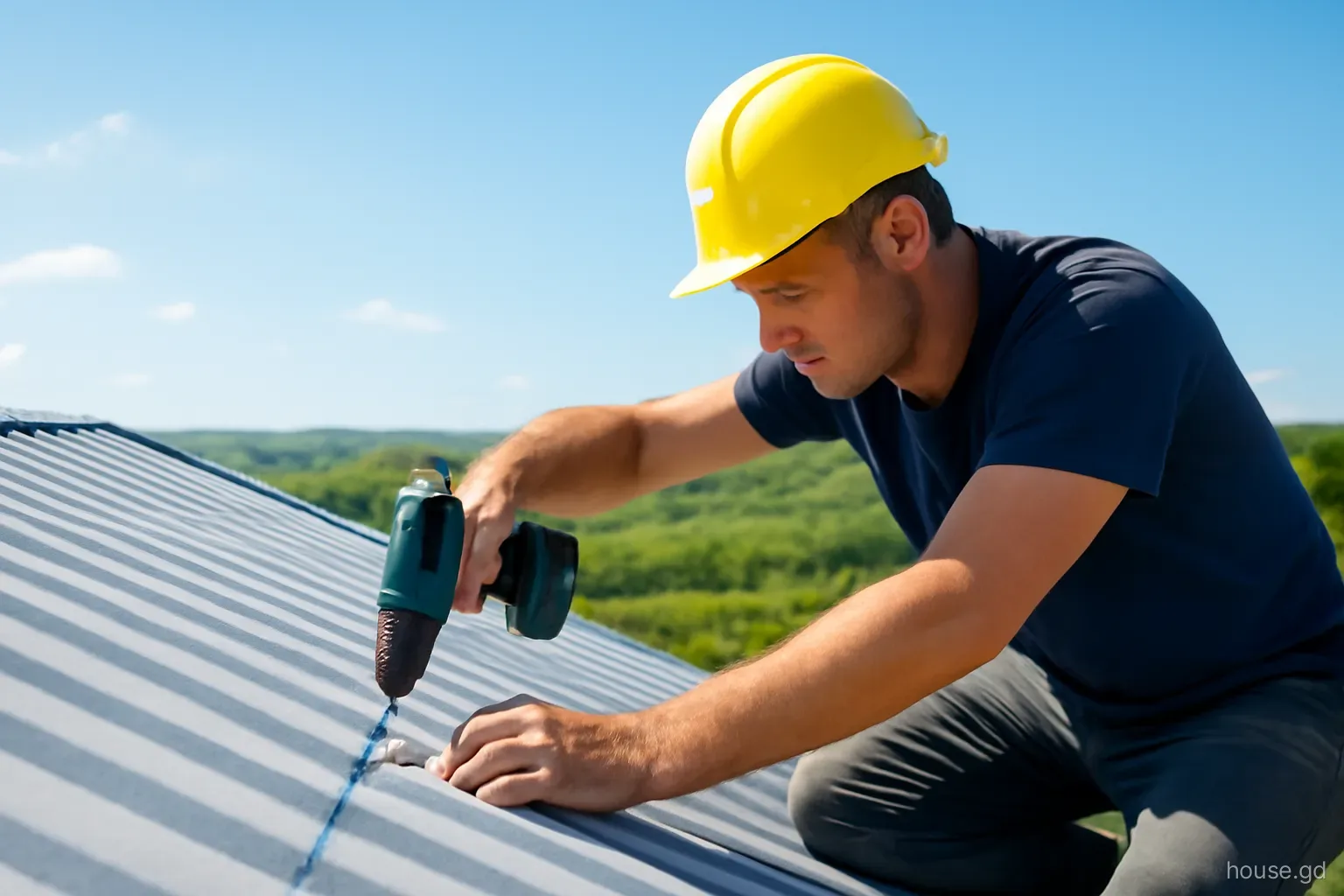
- fixing with screws and sealing washers rather than nails, which pull out under repeated gusts;
- closer fixing spacing at edges, ridges, eaves and corners, where suction is highest, as set out in the design;
- purlins at the spacing the design requires and properly fixed to rafters with metal connectors, since a well-fixed sheet on a loose purlin still fails;
- proper end and side laps between sheets, with fixings through every lap as specified;
- secure ridge caps and flashings, which often peel first if under-fixed;
- for tiles or shingles, products and fixing methods rated for high winds, since loose tiles become dangerous projectiles.
Concrete roof slabs: strong but not automatic
Since Ivan, more owners have chosen flat or sloping reinforced concrete roofs. A properly designed concrete slab, monolithically cast with the ring beam and columns, is extremely resistant to wind uplift because of its weight and continuity. Concrete roofs also resist flying debris far better than sheet roofs.
They come with trade-offs. A concrete roof is heavier, so the whole structure, including foundations and columns, must be designed to carry it and to resist earthquake forces, which increase with weight. Flat slabs must be waterproofed and laid to falls so that water drains away, otherwise leaks and staining follow. Concrete roofs also store heat, so they need insulation or reflective coatings for comfort.
Many designs combine a concrete slab over the main living spaces with a lighter roof elsewhere, or add a lightweight pitched roof above a concrete slab for drainage and heat control. If a light roof is placed above a slab, its fixings must still be designed for hurricane uplift, or it becomes debris.
What to check on an existing roof
Look in the roof space. Check whether rafters or trusses have metal straps to the wall plate and whether the plate is bolted down. Rusted, missing or partly nailed straps are a priority repair.
Look at the edges. Loose or rusted screws at the eaves, ridges and corners, lifted sheet edges and gaps in flashings should be fixed before the season.
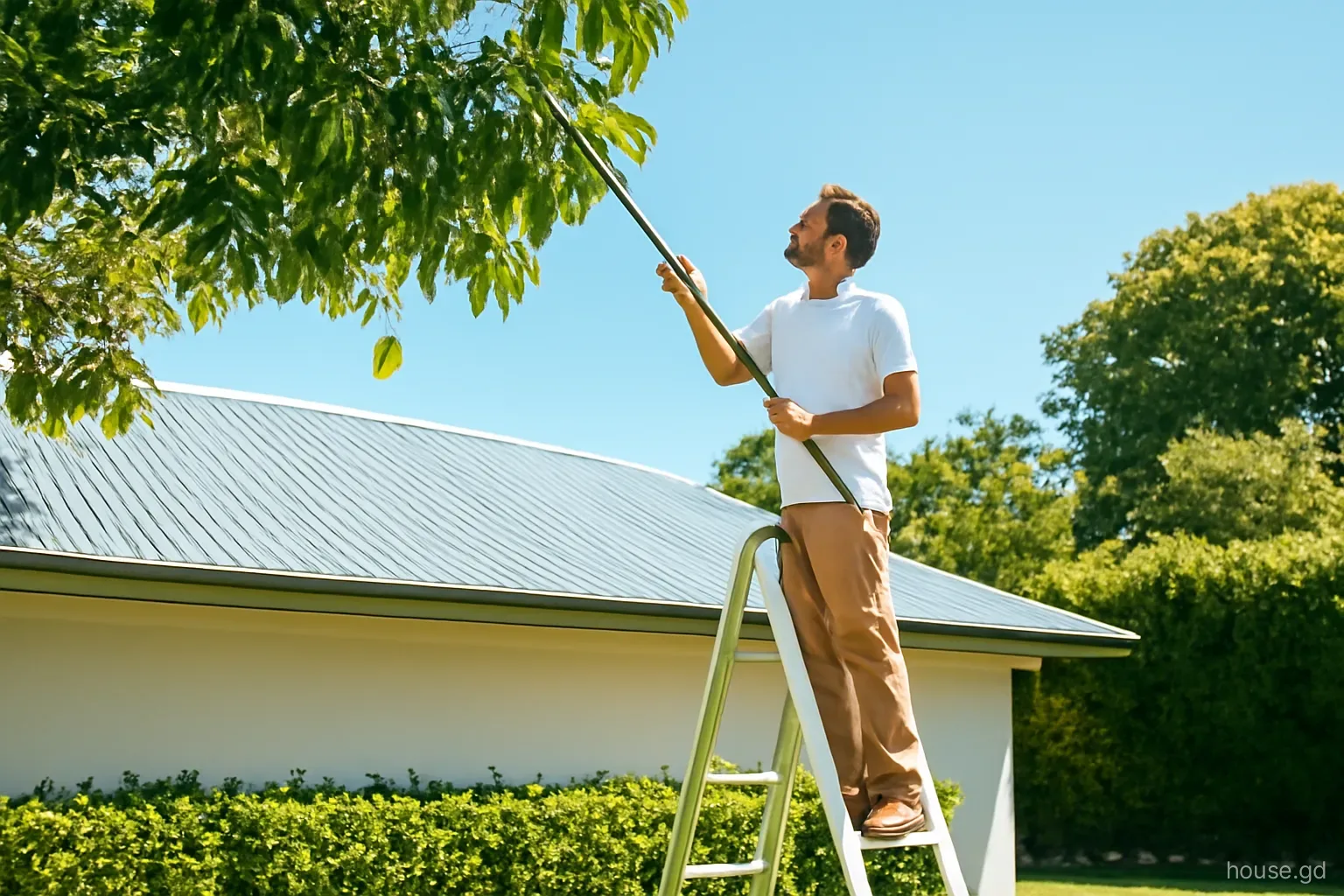
Check overhanging trees. Branches over the roof can break and puncture sheeting in a storm.
Ask about history. If the roof was repaired after Ivan or another storm, find out whether the repair restored proper connections or just replaced the covering.
Check gutters and attachments. Gutters, solar panels, satellite dishes and water tanks on the roof all catch wind. Make sure they are fixed to the structure, not just to the sheeting, and that loose gutters will not tear the roof edge with them.
Get a professional view on older roofs. A structural engineer or experienced roofer can tell you whether a tired roof needs targeted repairs, added straps, or replacement. On roofs more than a couple of decades old, replacement with proper connections is often better value than repeated patching.
Frequently asked questions
Is a hip roof really better than a gable roof in a hurricane?
Generally yes. Hip roofs slope on all sides and present no tall flat end to the wind, and post-storm surveys in the Caribbean have consistently found less damage on hip roofs. A well-braced and well-connected gable roof can still perform, but it needs extra attention to the gable ends.
What are hurricane straps and where do they go?
They are galvanised metal connectors that tie roof members to the structure below. Typically they connect rafters or trusses to the wall plate and the wall plate to the ring beam. Their job is to resist wind uplift, which simple nails cannot do reliably in a strong hurricane.
Are screws better than nails for roofing sheets?
Yes. Screws with sealing washers hold far better against the repeated pulling of gusts and are standard good practice in hurricane areas. Nails can work loose and pull through. The spacing should be tighter at the edges, ridge and corners, where suction forces are strongest.
Should roof overhangs be avoided altogether?
Not necessarily, because overhangs shade walls and keep rain off windows. Keep unsupported overhangs modest, design veranda roofs with posts and tie-downs, and ask your engineer whether veranda roofs should be structurally separate so their failure does not drag off the main roof.
Is a concrete roof worth the extra cost?
For many owners, yes, because a properly engineered concrete roof resists uplift and debris very well. It requires stronger supporting structure, careful waterproofing and attention to heat. The decision depends on budget, design and the site; your engineer can compare options for your house.
How often should a roof be checked for hurricane readiness?
At least once a year before the season starts in June, and after any significant storm. Check fixings at edges and ridges, corrosion on straps and sheets, flashings, gutters and nearby trees. Problems found in May are much cheaper to fix than damage found in October.