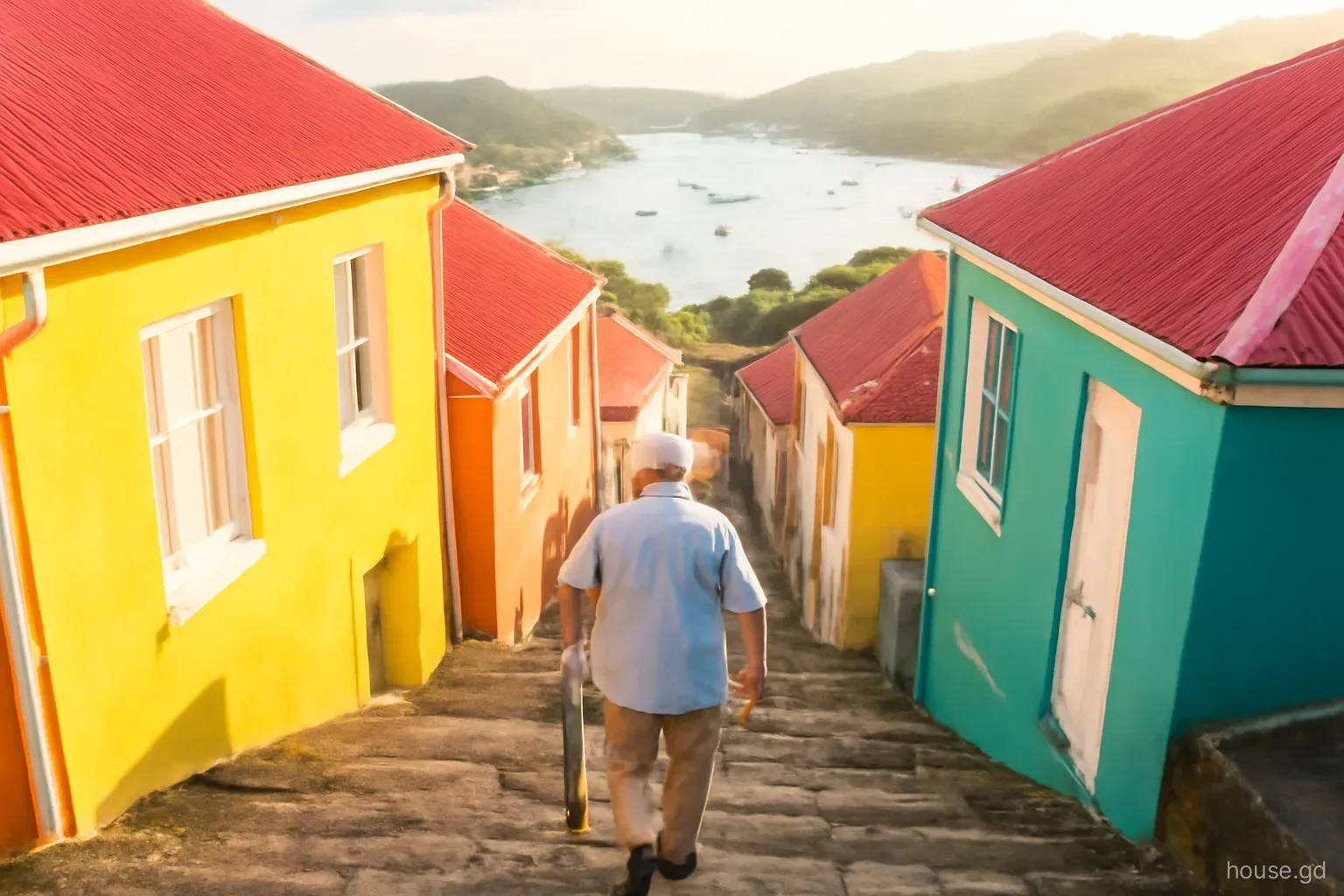

Grand Anse is the one part of Grenada where you can realistically live without a car. The supermarkets, banks, pharmacies, restaurants and a two-mile beach sit within a few minutes' walk of one another, minibuses pass every few minutes, and St George's is a short ride over the hill. Next door, Morne Rouge wraps around a smaller, calmer bay and adds a few hillside streets with views back across Grand Anse to the capital.
That convenience comes with density, traffic and noise that the rest of the south coast does not have. This guide looks at what kind of homes exist here, who lives in them, the realities of apartment living in a tropical beach town, and the checks that separate a comfortable flat from a frustrating one.
Where the neighbourhood begins and ends
In everyday speech, Grand Anse covers the flat land behind the beach and the slopes rising inland towards the Grand Anse valley and St George's University's neighbours in True Blue. The main road runs parallel to the beach, lined with shops, hotels and small commercial plazas; behind it, residential lanes climb the hill. Morne Rouge sits immediately south-west, over a low headland, around the bay many people still call BBC Beach.
The character changes within a few hundred metres. Beachfront blocks and resorts are tourist territory. The streets behind the main road are mixed: small apartment buildings, Grenadian family homes, guest houses and offices. The hillsides above, including the roads up towards the valley, are mainly residential and quieter, with longer views and steeper walks home.
Morne Rouge has fewer shops and a more residential feel, though its beach and restaurants draw crowds at weekends and on public holidays. It suits people who want to be near Grand Anse without living on top of it.
What you can rent or buy here
Purpose-built apartments. Small blocks of four to twenty units are the typical home in Grand Anse. Many were built to let to students, visiting professionals or holidaymakers, so furnishings are practical and turnover can be high.
Resort and condominium units. Some hotels and resort developments sell units to private owners, who may live in them part-time and place them in a rental pool the rest of the year. Rules on personal use, fees and management are set by the development, and they vary a great deal.
Older family houses. Behind the main road and on the hills you still find standalone houses with yards, sometimes converted into two or three flats. They offer more space for the money but may need updating.
Rooms and studios. Single rooms and studios cater to students and young workers. They are the cheapest option, often with shared facilities and utilities included or split.
Daily life: what works well
Residents of Grand Anse tend to describe the same advantages:
- Walking to a supermarket, a pharmacy, a bank and the beach in the same morning, something almost impossible elsewhere on the island.
- Frequent minibuses to St George's along the main road, and taxis readily available at hotels and plazas.
- A choice of restaurants, cafés and bars, from rum shops to hotel dining, within walking distance.
- Short drives to private doctors, dentists and clinics in the area, and to the Grenada General Hospital in St George's.
- Morning swims and evening walks on the beach, which is busy with locals exercising before work and at sunset.
- Easy access to the airport, generally around fifteen minutes away outside rush hour.
- A mixed community of Grenadians, students and expatriates that makes it easy to meet people quickly.
Noise, traffic and parking: the costs of convenience
The same features that make Grand Anse convenient make it loud. Bars and beach venues play music late on Friday and Saturday nights, and sound carries a long way across water and up hillsides. Sound systems on passing vehicles, church services, construction and dogs add to the mix. If you sleep lightly, see a flat on a weekend night before committing.
Traffic on the main road through Grand Anse builds up at school and office hours and when cruise ships are in port, as visitors head to the beach. Turning out of a side lane can take minutes at peak times. Minibuses stop wherever passengers wave, which keeps traffic moving unpredictably.
Parking is limited. Many older apartment blocks have only a few spaces, and street parking on narrow lanes is awkward. If you have a car, ask whether a space is allocated to the unit or simply available when nobody else has taken it. During carnival and the Christmas season, expect everything to be busier still.
Checks before you sign for an apartment
Water storage. Ask whether the building has its own tank or cistern and a pump, and how large it is relative to the number of units. A block that relies only on mains water will have dry taps during interruptions.
Backup power. Find out whether a generator covers the whole building or just common areas, and who pays for its fuel.
Management and fees. In a shared building, ask who manages it, what the monthly charge covers, and whether there are reserves for roof repairs, painting and hurricane damage. Poorly managed blocks deteriorate quickly in salt air.
Rental rules. If you are buying to let, confirm whether short-term rentals are allowed and how other owners use their units. A building full of student lets behaves differently from one of owner-occupiers.
Security. Look at the gate, lighting, locks and window grilles, particularly on ground-floor units. Ask other residents whether there have been break-ins.
Ventilation and mould. Units that get little cross-breeze rely on air-conditioning to avoid mould. Look inside wardrobes and around window frames for black spots, and ask about electricity bills, which can be high when air-conditioning runs most of the day.
Owning a unit: fees, rental pools and resale
Buying an apartment in Grand Anse usually means buying into a shared building, and the quality of that building's governance matters as much as the unit itself. Before an offer, ask your attorney to obtain the declaration or rules that govern the building, the current monthly or annual charges, the minutes of recent owners' meetings and any outstanding disputes or special levies.
Resort units placed in a rental pool are a different product again. Income is shared according to a formula set by the operator, owner use is often limited to certain weeks, and the operator's costs come off the top. Read the management agreement carefully, including how long it runs and how an owner can leave it.
Resale is generally easier here than in remote areas because demand is broad, but it is not instant. Small blocks with a high share of investor-owned units can be slow to sell in a soft market, and units bought under the citizenship by investment programme may carry holding periods and pricing that do not match the open market. Plan for the exit when you buy.
Grand Anse or Morne Rouge?
For a year-round resident who wants the most convenience, Grand Anse wins: shops, transport and services on the doorstep. For someone who values a calmer evening and does not mind a short drive or a walk over the headland, Morne Rouge offers a quieter base and a bay that is generally gentler for swimming.
Students and young professionals often start in Grand Anse because it saves the cost of a car. Families may prefer the hillside streets above either area, where houses have yards and the night-time noise fades. Retirees who want walkability but dislike crowds sometimes compromise on an upper-floor unit set back from the main road.
Whichever you choose, spend time there at different hours: early morning, a weekday at 5 pm and a Saturday night. The difference between those three snapshots tells you more than any listing description.
Frequently asked questions
Can you live in Grand Anse without a car?
Yes, more easily than anywhere else in Grenada. Supermarkets, pharmacies, banks and restaurants are within walking distance of much of the area, and minibuses run frequently to St George's. A car becomes useful for trips to the north and east or for living on the steeper hillsides.
Is Grand Anse noisy at night?
It can be, particularly near the beach and main road on Friday and Saturday nights, during carnival and at Christmas. Units set back up the hill or facing away from bars are generally quieter. Visit on a weekend evening before signing a lease.
Is Morne Rouge part of Grand Anse?
They are neighbouring areas separated by a low headland. Morne Rouge has its own bay, a smaller selection of shops and a more residential atmosphere, but it is close enough that residents use Grand Anse for daily errands.
Are apartments in Grand Anse a good rental investment?
Demand from students, visiting professionals and holidaymakers is steady, but so is competition, and turnover brings wear and management costs. Check occupancy history, building fees and rental rules carefully, and be realistic about net returns.
What should be included in an apartment lease here?
The rent, the deposit and when it is returned, who pays electricity and water, whether internet is included, parking, the notice period, and who handles repairs. Ask for an inventory of furniture and its condition, signed by both sides at move-in.