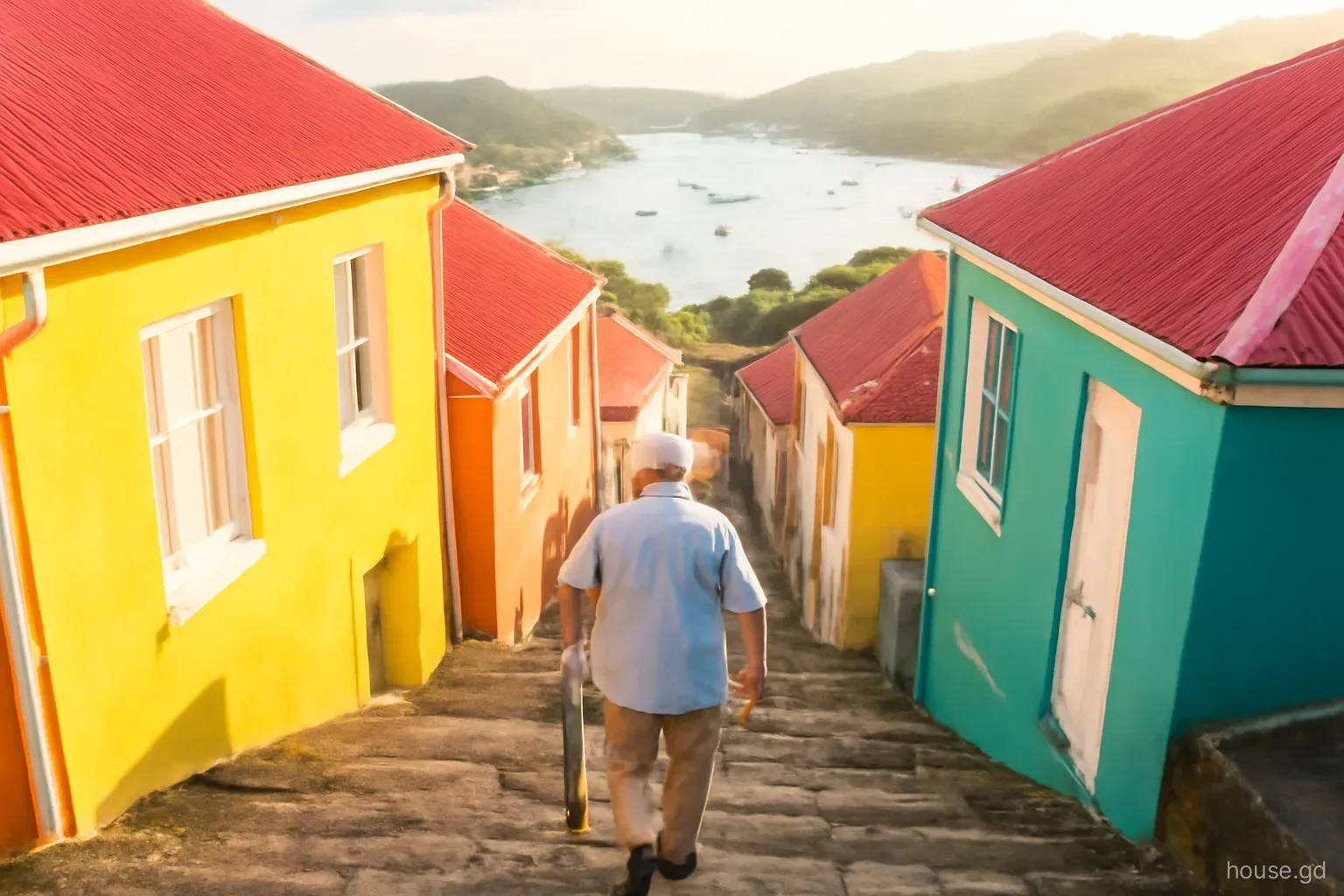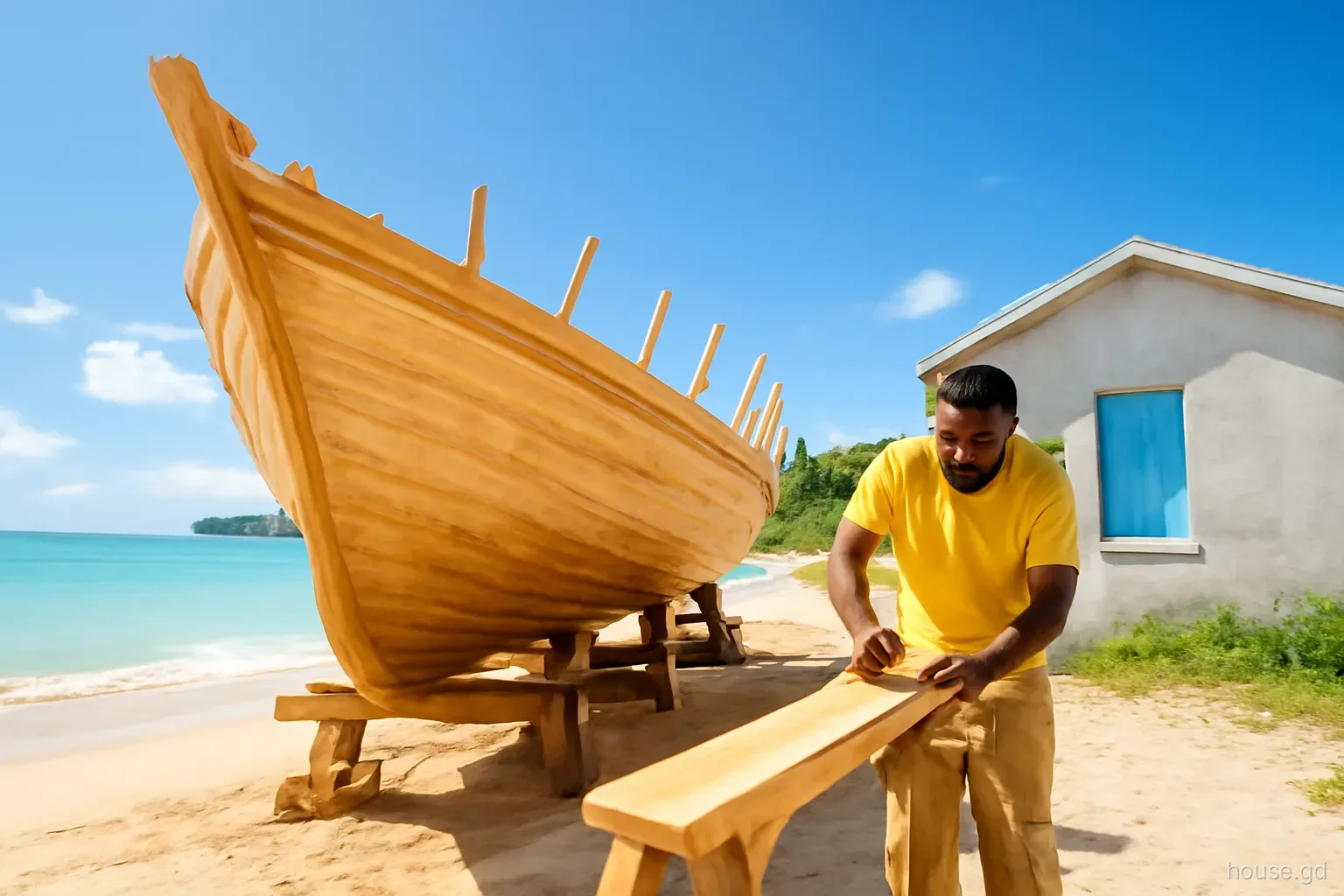
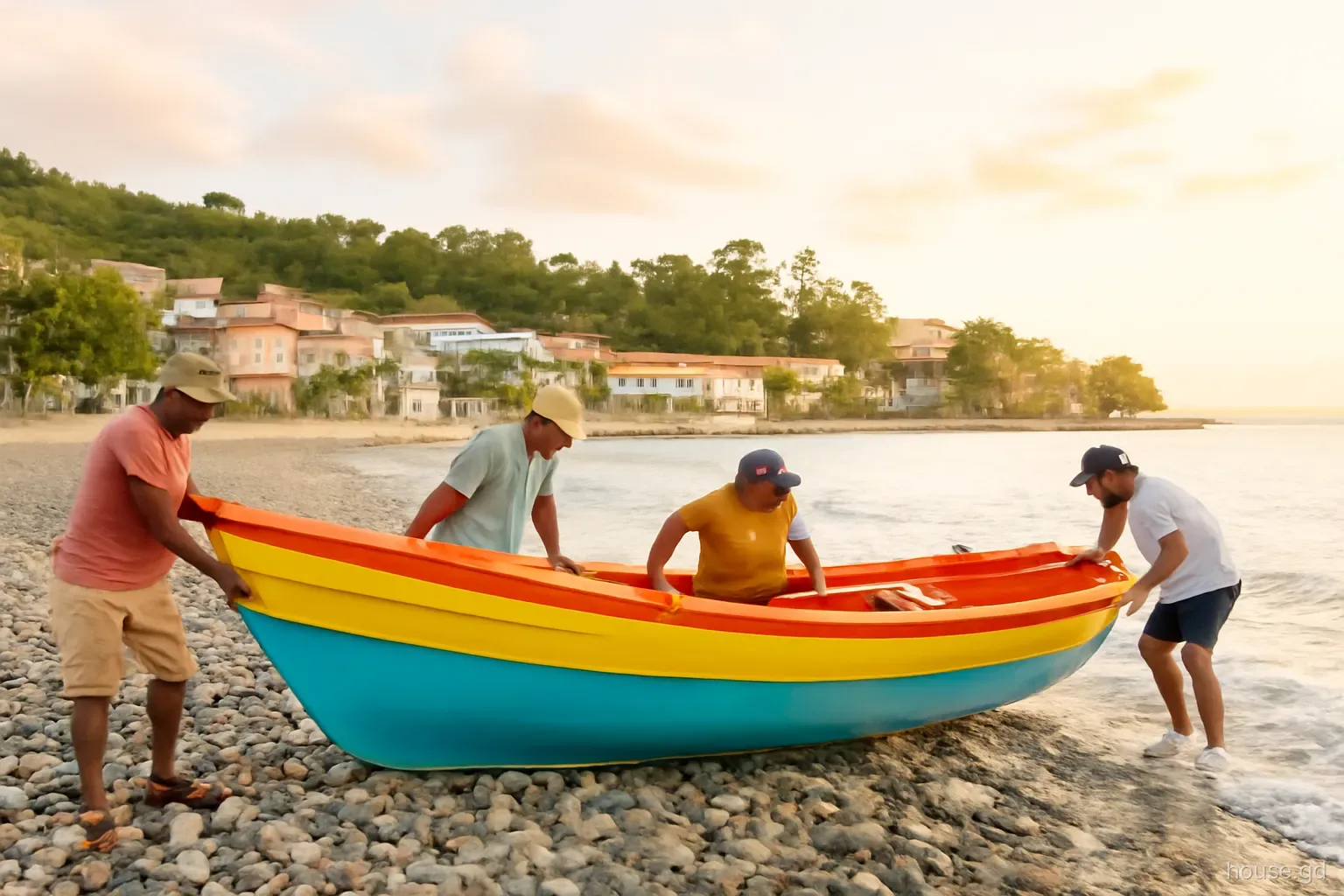
For every newcomer who settles in Lance aux Epines or Grand Anse, there is another who asks a different question: what is Grenada like away from the airport and the beaches? The answer lies in the towns of the north, east and west: Grenville on the Atlantic, Gouyave and Victoria on the leeward coast, and Sauteurs at the northern tip.
These are working towns with markets, fishing fleets, churches and schools, and the villages around them sit among nutmeg, cocoa and banana land. Homes cost less, life moves at a different pace, and foreigners are fewer. The trade-offs are distance, thinner services and a property market that moves slowly. This guide compares the main options for anyone thinking of living outside the south.
Grenville and St Andrew's
Grenville, the main town of St Andrew's, is Grenada's second town and the commercial centre of the east. It has banks, supermarkets, a busy market, hardware stores, government offices and a bus terminal linking it to St George's and the villages. Princess Alice Hospital at Mirabeau, inland from the town, serves the east of the island.
St Andrew's is the largest parish, with rolling farmland, rivers, the Grand Etang forest on its western edge and a long Atlantic coastline. Villages such as Birch Grove, Paradise, Telescope, Soubise and Pearls have their own character, and the old Pearls airstrip is a reminder that the island's airport was once on this side.
For buyers, the attraction is land. Plots of a size that would be unaffordable on the south coast are within reach here, and many people build or buy with room for fruit trees and a garden. The drive to St George's and the airport, either across the mountains via Grand Etang or around the coast through St David's, typically takes about an hour and can take longer.
Gouyave and Victoria: the leeward fishing towns
Gouyave. The main town of St John's, known as the fishing capital of Grenada. Fish Friday, the weekly street-food night, draws visitors and locals, and the town has a nutmeg processing station that reflects its role in the spice economy. It is about forty minutes from St George's by the west coast road.
Victoria. The small main town of St Mark's, the smallest parish, further north along the leeward coast. Quieter than Gouyave, with a seafront, a church, schools and views towards Mount St Catherine, the island's highest peak, inland.
The coast between. Villages along the leeward road look west over the Caribbean Sea, with sunsets that rival anything on the south coast. Beaches are mostly darker sand and pebble, and the sea is usually calmer than on the Atlantic side.
Housing. Mostly Grenadian family homes and small apartments, with few properties built for foreign buyers. Rentals are found through local contacts more than agents, and rents are generally modest.
Sauteurs and the north
Sauteurs, the main town of St Patrick's, sits on the north coast, where the land drops to the sea at Leapers' Hill, the site where Kalinago people are said to have leapt to their deaths rather than surrender to French forces in 1651. The town has shops, schools, a market, churches and government services, and the surrounding parish includes the Levera area, River Sallee and the bays facing the Grenadines.
The north is the most remote part of the mainland from the airport and Grand Anse, typically more than an hour by road. It is also one of the most dramatic, with views towards Carriacou and the islets between, and a pace of life that newcomers either love or find too slow.
Property here is generally the least expensive on the mainland, but the pool of buyers is small. Anyone buying in the north should see it as a long-term home rather than an asset they expect to sell quickly.
Prices and value: what the savings really are
The most common reason people look beyond the south is cost. Land in rural St Andrew's, St John's, St Mark's or St Patrick's can cost a fraction of a similar-sized plot near Grand Anse, and long-term rents for local-style homes are generally lower. Day-to-day costs for local produce and fish can also be lower, because they are bought close to where they are grown and landed.
Some savings are offset by other costs. Fuel and vehicle wear add up when every trip to a supermarket, specialist or airport is an hour each way. Building materials have to be trucked further, and tradespeople may charge for travel or be harder to book. Insurance does not necessarily cost less, because exposure to wind and floods depends on the site, not the parish.
A sensible comparison sets the lower purchase price or rent against a realistic annual budget for driving, deliveries and maintenance. For many people the result is still favourable, but by less than the headline difference suggests.
What is genuinely different about living outside the south
Living in the north, east or west changes daily routines in ways worth anticipating:
- Shopping. Town supermarkets cover essentials, but specialised items, imported foods and many household goods mean a trip to St George's or Grand Anse every week or two.
- Healthcare. District health centres and the hospitals at Mirabeau and in St George's serve these areas. Private specialists are mostly in the south, so routine appointments involve travel.
- Transport. Minibuses link towns and villages to St George's throughout the day, but evening and Sunday services thin out. A reliable vehicle is close to essential.
- Weather. The windward east is breezier and wetter in places, with rougher seas. The interior hills see more rain than the coast. The leeward west is sheltered and often drier.
- Community. Fewer foreigners means more integration. Neighbours notice newcomers, and participation in church, village and sports life is the way in.
- Connectivity. Broadband reaches towns and many villages, but check the specific address, especially in valleys.
How the three compare
Services. Grenville has the most, being a substantial town with a hospital nearby. Gouyave comes second; Sauteurs and Victoria are smaller.
Travel to the airport. All are around an hour or more. Grenville is reached across the island; the leeward towns and Sauteurs follow the west coast road.
Beaches and swimming. The leeward towns have calmer water. The Atlantic coast near Grenville is more exposed; some beaches there are better for walking than swimming.
Land and prices. All are cheaper than the south. St Andrew's offers the widest range of land, from village lots to farms.
Foreign community. Small everywhere outside the south. Expect to build your social circle among Grenadian neighbours.
Character. Grenville feels like a busy market town, Gouyave like a proud fishing community with a weekly street party, and Sauteurs like the end of the road in the best sense: quiet, historic and facing the open sea towards the Grenadines.
Checks before you commit to the north, east or west
Road access in all weather. Rural roads can be damaged by heavy rain and landslips. Drive the route to the property after rain and ask how often it is cut off.
Water and power. Villages may have less consistent water supply than the south. A cistern and pump are standard; ask about outage history.
Title and family land. Rural land is more often family land with several owners or unclear boundaries. Your attorney's search and a licensed surveyor's plan are essential.
River and coastal risk. Properties near rivers can flood, and low-lying Atlantic shores face erosion. Look at the land's history with neighbours.
Resale reality. Expect a slower sale and a smaller pool of buyers when the time comes. Buy for the life, not the return.
Trial period. Rent in the area for a few months, ideally across both dry and rainy seasons, before buying.
Frequently asked questions
Is Grenville a good place for foreigners to live?
It can suit people who want a working Grenadian town with full services and lower prices than the south. The foreign community is small, the Atlantic coast is windier, and the drive to the airport is around an hour, so it suits year-round residents more than holiday-home owners.
How far is Gouyave from St George's?
Roughly forty minutes by the west coast road, depending on traffic and stops. Minibuses run frequently during the day. The road is scenic but winding, and slower than the distance suggests.
Is property cheaper in the north of Grenada?
Generally yes. Land and houses in St Patrick's, St Mark's, St John's and much of St Andrew's cost less than comparable property on the south coast, but resale takes longer and the pool of buyers is smaller.
Do you need a car to live outside the south?
It is strongly recommended. Minibuses serve main roads during the day, but evenings, Sundays and remote villages are poorly served, and many errands, medical appointments and airport trips require travel to the south.
Which coast has better weather for living?
The leeward west coast is generally more sheltered and calmer, with sunsets over the Caribbean Sea. The Atlantic east is breezier and can be wetter. The interior is the rainiest. Spend time in each before deciding.