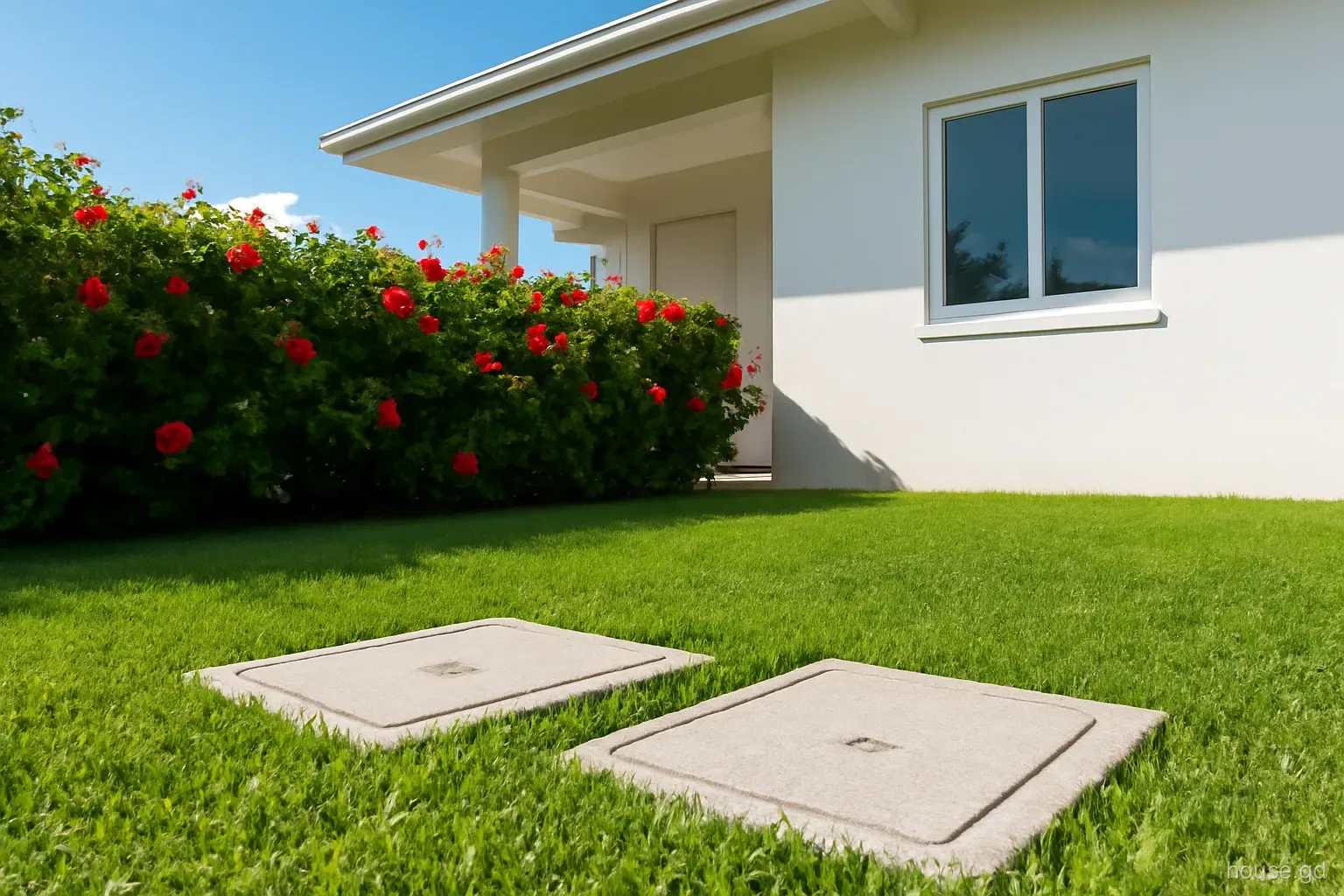
A great many Grenadian homes store rainwater in a cistern, usually a concrete tank under or beside the house, sometimes a large plastic tank on a stand. For houses outside reliable NAWASA supply, or as back-up when the mains run dry in the dry season, the cistern is the household's water. It is also a dark, still pool that collects whatever washes off the roof: dust, leaves, bird and lizard droppings, Saharan dust and the occasional drowned rat.
An annual clean keeps that water safe and the cistern sound. It is a job many families do themselves with a couple of helpers, and others hire someone who does it regularly. Either way, the most important thing to understand is that entering a cistern is dangerous if done carelessly. The steps below put safety first.
When to clean, and how often
Most guidance recommends cleaning a household cistern at least once a year, and sooner if the water smells, looks cloudy, has visible sediment or if something has fallen in. Many Grenadian families schedule the job towards the end of the dry season, roughly April or May, when the water level is naturally low and the rainy season is about to refill the tank with fresh water. That avoids wasting a full cistern.
Keep a simple record of each clean: the date, what was found, any repairs and how much bleach was used afterwards. It takes a minute and makes it obvious if sediment is building faster than usual, which often points to a gutter or first-flush problem upstream.
Plan around the weather. Choose a dry spell so the tank is not refilling while you work, and arrange an alternative water supply for a day or two: NAWASA water if you are connected, a water delivery truck or containers filled in advance. After hurricanes or tropical storms that bring debris and floodwater, inspect the cistern even if it is not due for a clean, and treat it if floodwater may have entered.
Safety first: the rules that matter
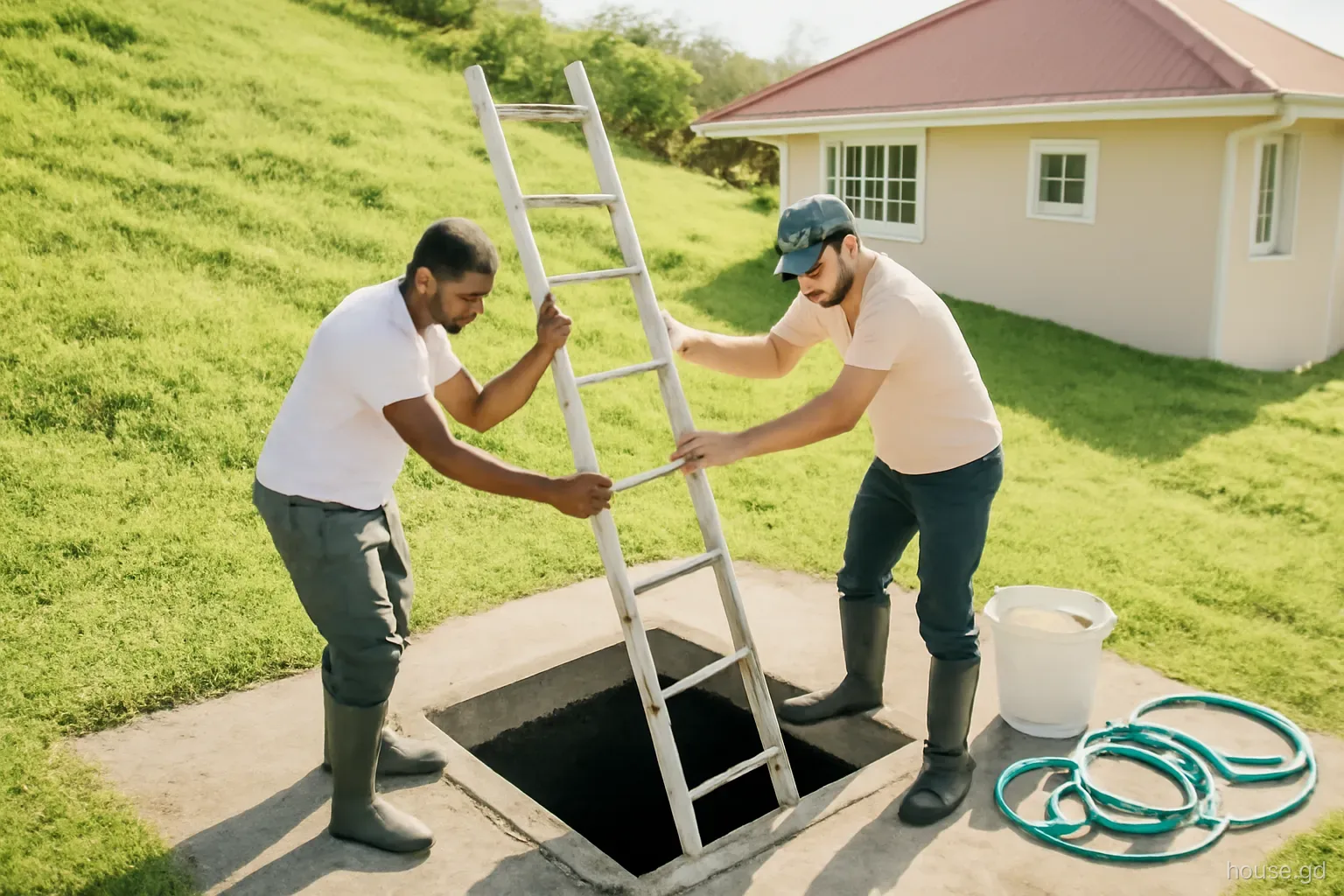
Never work alone. Always have at least one person outside the cistern watching the person inside, able to call for help on 911 and to pull them out with a rope if needed.
Ventilate before entering. Cisterns can hold stale air low in oxygen or contaminated with gases from decomposing matter. Leave the hatch open for some time beforehand, and use a fan to blow fresh air in while someone is inside.
Never run a petrol pump inside. Petrol or diesel pumps, generators or engines used in or at the opening of a cistern produce carbon monoxide, which can build up quickly in an enclosed space and kill. Keep engines well away from the hatch, with exhaust directed away, or use an electric submersible pump.
Respect electricity. Electric pumps and lights used in a wet tank must be suitable for the purpose and connected through a circuit with earth-leakage protection. Unplug before handling.
Ventilate when using chlorine. Bleach fumes in a confined space irritate eyes and lungs. Never mix bleach with other cleaners, especially ammonia-based products or acids, which release toxic gases.
Get out if dizzy. Headache, dizziness or breathlessness mean leave the cistern immediately and get fresh air.
Cleaning the cistern, step by step
With helpers organised and safety equipment ready, the job usually takes most of a day for a typical household cistern:
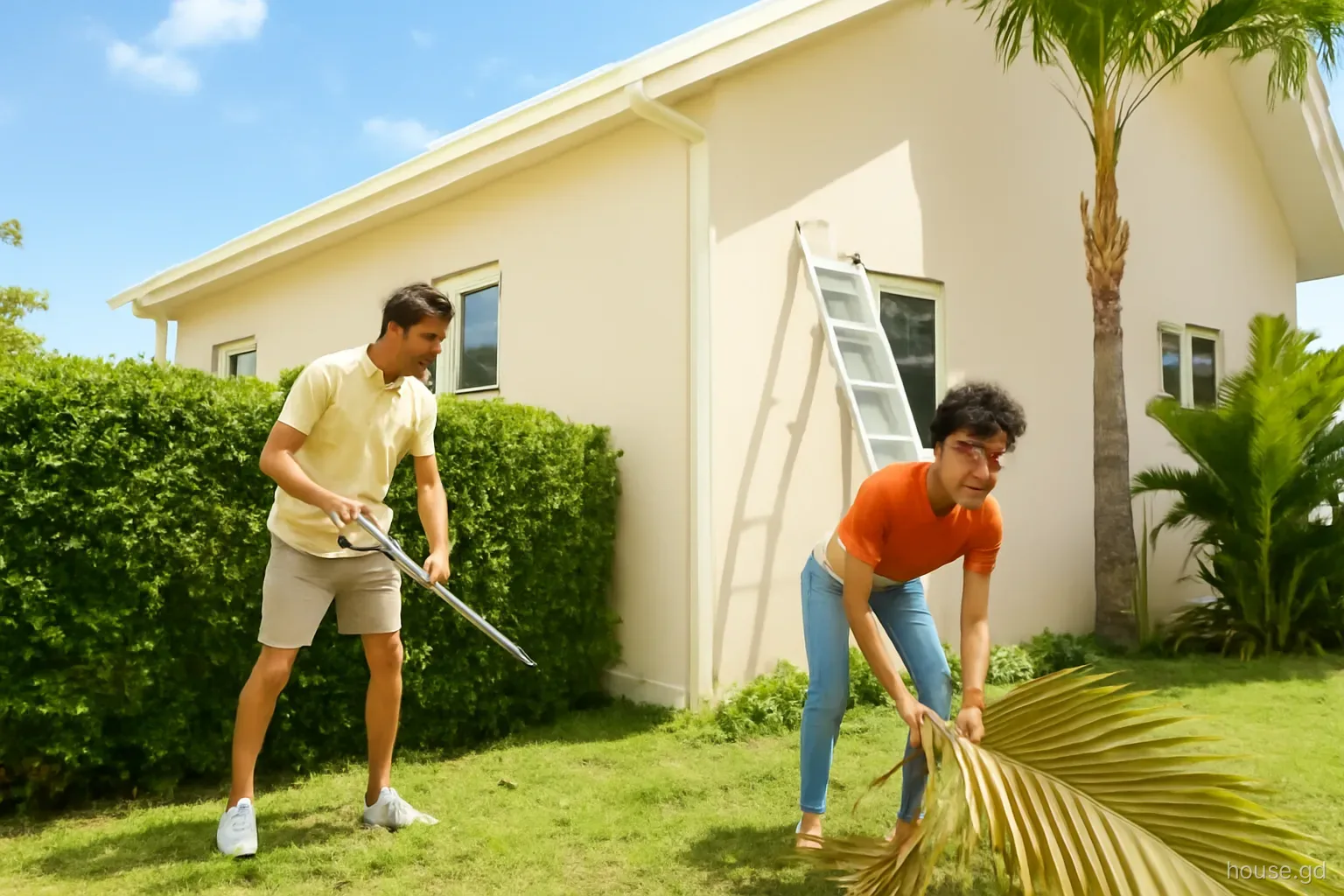
- Clean the roof and gutters first, removing leaves and debris, so dirty water does not flow in once you have finished. Disconnect or divert the downpipe that feeds the cistern.
- Pump the water out. Use the remaining water to water the garden if it is clean enough, rather than letting it run to waste.
- Once the level is low, open the hatch fully and ventilate. Have the person entering wear rubber boots, gloves and eye protection.
- Remove sludge and sediment from the floor with buckets, a shovel or a wet vacuum, passing it up to the helper outside.
- Scrub the walls and floor with a stiff brush and clean water. Avoid detergents, which can leave residues. Rinse and remove the dirty water.
- Inspect the walls, floor and ceiling for cracks, spalling concrete or exposed reinforcing steel, and note any repairs needed.
- Disinfect the clean surfaces with a chlorine solution made from unscented household bleach, applied with a brush or sprayer, then allow it to stand before rinsing as recommended.
- Check the inlet screen, overflow pipe and hatch seal. Replace damaged mesh so mosquitoes, rodents and lizards cannot get in.
- Reconnect the downpipe once the cistern is closed, and allow it to fill with fresh rainwater.
Chlorinating the water afterwards
Once the cistern has refilled, or at intervals during the year, the stored water can be treated with chlorine to kill bacteria. A commonly used rule of thumb is that plain unscented household bleach of around 5 percent strength, at roughly 100 ml per 1,000 litres of water, gives a strong initial dose of about 5 parts per million. One thousand litres is about 220 imperial gallons or 264 US gallons. Bleach strengths vary, so check the label and adjust.
Pour the bleach into the water and circulate it, for example by running the pump for a while or stirring, then wait at least half an hour before use. A faint chlorine smell indicates the treatment is working. For ongoing maintenance, much lower doses are used. Many households also boil or filter water used for drinking, even from a clean, treated cistern.
The Ministry of Health's environmental health officers can advise on dosing and safe water storage, and following their guidance is wiser than improvising with strong doses. Never use scented, thickened or splash-less bleach products for water treatment; they contain additives not intended for drinking water.
Concrete cisterns and plastic tanks compared
Most older Grenadian houses have a concrete cistern built into the foundations or beside the house, often holding many thousands of gallons. Concrete keeps water cool and dark, which limits algae, and lasts for decades if well built. Its weaknesses are cracks, leaks at joints, and deterioration of the interior surface over time. A cistern built under the house is also awkward to enter, which makes the confined-space rules above essential.
Above-ground plastic tanks, sold in a range of sizes and widely used as additional storage, are lighter, easy to install and simple to inspect. They should be opaque, stand on a firm level base and be strapped or anchored, because an empty tank can be blown away in a strong wind and a full one is extremely heavy. Plastic tanks are cleaned without entering them: drain, scrub through the lid with a long-handled brush, rinse and disinfect. Sunlight degrades some plastics, so check older tanks for brittleness and cracking.
Whatever the storage, keep pumps, pressure tanks and filters on the same maintenance calendar, replacing filter cartridges as the manufacturer advises.
Keeping the cistern cleaner between cleans
Install a first-flush diverter. This simple device sends the first rainwater off the roof, which carries most of the dust and droppings, to waste before water reaches the cistern.
Keep gutters clear. Clean gutters and leaf guards regularly, especially if trees overhang the roof. Leaves rotting in gutters spoil water quality.
Seal every opening. Fine mesh on inlets, overflows and vents keeps out mosquitoes, including the Aedes mosquitoes that spread dengue, as well as rats, lizards and frogs. The hatch should close tightly.
Check roof materials. Some old roof coatings and paints are not suitable for collecting drinking water. Ask a supplier before repainting a catchment roof.
Test occasionally. Test kits for chlorine and simple water quality checks give peace of mind. If anyone in the household falls ill with a stomach complaint, consider testing the water.
Frequently asked questions
How often should a cistern be cleaned in Grenada?
At least once a year is the usual recommendation, ideally at the end of the dry season when the water level is low. Clean sooner if the water smells, looks cloudy, after something has fallen in or after a storm that may have contaminated the supply.
Is cistern water safe to drink?
Well-maintained cistern water that is regularly cleaned and chlorinated is widely used, but many households still boil or filter drinking water as an extra precaution. Water from a neglected cistern can carry bacteria and parasites, so do not assume it is safe without treatment.
How much bleach should be added to a cistern?
A common guideline is about 100 ml of 5 percent unscented bleach per 1,000 litres for an initial disinfection, with lower doses for routine maintenance. Bleach strengths vary, so read the label, and follow Ministry of Health guidance where available.
Can mosquitoes breed in a cistern?
Yes. An unscreened inlet, overflow or loose hatch lets Aedes mosquitoes, which spread dengue and similar diseases, breed in stored water. Fine mesh on every opening and a well-fitting cover prevent this. Mosquito larvae in a cistern are a sign that an opening needs sealing.
Should a professional clean the cistern?
Many families clean their own, but hiring an experienced person is sensible for large or deep cisterns, if nobody fit and experienced is available, or if structural repairs are needed. Whoever does it should follow confined-space safety rules, especially around ventilation and engine fumes.
What if the cistern walls are cracked?
Hairline cracks may only need sealing with a suitable waterproofing product, but large cracks, leaks or exposed reinforcement need assessment by a builder or engineer. A leaking cistern wastes water and, if below the house, can undermine foundations.