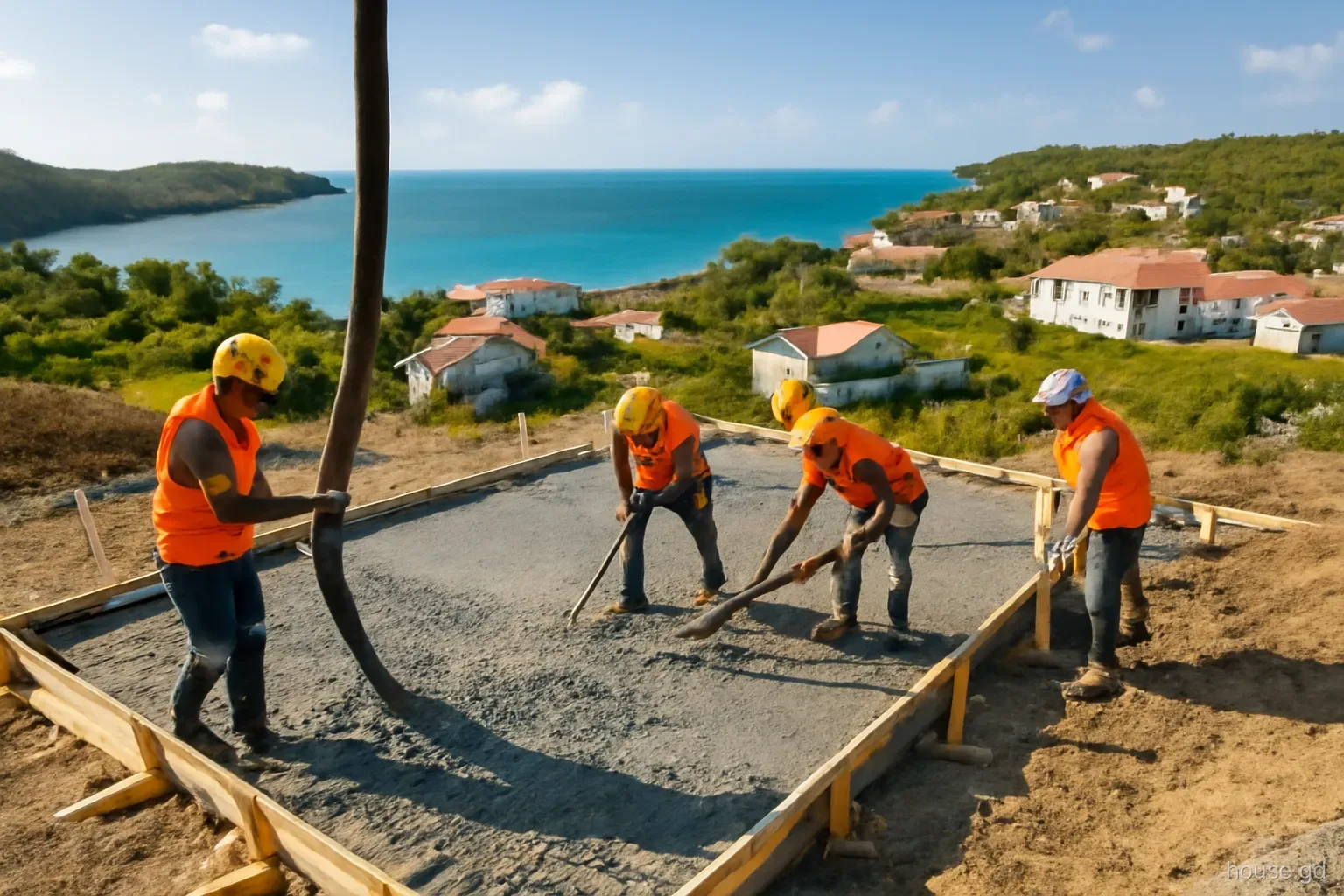

Most houses in Grenada are built of reinforced concrete block with galvanised roofs on timber or steel frames, sitting on slopes, in salt air, through a long rainy season and the occasional hurricane. They age differently from houses in temperate countries, and the things that cost serious money to fix are often not the ones that catch the eye at a viewing.
A professional inspection is essential before you commit, but a careful first viewing saves you from paying for inspections on houses that were never right. Use this checklist on every visit, take photographs, and return at a different time of day before making an offer.
The roof and the structure
Start with the parts that are most expensive to repair and most exposed to storms.
- Age and type of roofing: galvanised sheeting, metal tiles, shingles or concrete slab. Ask when it was last replaced.
- Rust on roofing sheets, particularly at overlaps and around screws, and staining on ceilings below.
- How the roof is fixed: hurricane straps or clips tying rafters to the walls and ring beam, and closely spaced fixings on the sheets.
- Roof overhangs and gable ends, which are vulnerable in high winds.
- Cracks in walls, especially diagonal cracks from window and door corners, which can point to movement.
- Spalling concrete: flaking or bulging surfaces where rusting reinforcement steel has expanded, common on balconies, columns and the undersides of slabs near the sea.
- Exposed or rusty reinforcement bars sticking out of unfinished upper floors, which many owners leave for future extension.
- Retaining walls on sloping plots, looking for leaning, cracking or water seeping through.
Water, waste and drainage
Water supply and waste disposal decide how comfortable a house is to live in, and in Grenada they vary greatly between areas.
- Whether the house is connected to the NAWASA public supply, and how reliable it is in that area during the dry season.
- A cistern or water tanks: size, condition, cleanliness, and whether rainwater from the roof feeds them through gutters and a first-flush device.
- The pump and pressure system, and whether it runs on mains power only or can be powered from a generator or solar.
- Signs of damp: mould on walls, peeling paint, musty rooms that stay closed.
- The septic tank and soakaway: where it is, when it was last emptied, and any smell or wet ground nearby.
- Surface drainage: where rainwater runs in a heavy downpour, whether drains are blocked, and any sign of water entering the house.
- Gutters and downpipes, often missing or damaged, which lead to erosion around foundations.
- Plumbing fixtures: open taps to test pressure and look for leaks under sinks.
Electrics, fittings and pests
Salt air and humidity are hard on wiring, metal and timber, and older houses may have had decades of informal additions.
- The electrical panel: age, labelling, signs of corrosion and whether there is earthing.
- Visible wiring added outside walls or across ceilings, a common sign of unapproved additions.
- Air conditioning units: age, rust on outdoor units and whether they cool properly.
- A generator, its fuel and transfer switch, or a solar system with batteries, and who installed them.
- Window and door frames, especially aluminium that has corroded or timber that has softened.
- Hurricane shutters or panels: are they present, complete and stored somewhere sensible?
- Termite activity: mud tubes, hollow-sounding timber, small piles of droppings near wooden frames and furniture.
- Kitchen units and built-in wardrobes, which in humid conditions swell and delaminate.
The plot, the road and the neighbours
Look beyond the house. Walk the boundaries with the agent or seller and compare what you are shown with the survey plan. Fences and walls in Grenada do not always follow the legal boundary, and many plots have been informally extended over the years. Note any shared driveways, footpaths used by neighbours, or structures that seem to sit on the line.
Check the access road carefully. Many hillside houses are reached by narrow, steep concrete tracks that are difficult in heavy rain and impossible for some vehicles. Ask whether the road is public or private and who maintains it. A house reached across someone else's land needs a legal right of way, which your attorney must confirm.
Look at the surroundings: is there vacant land next door that could be built on and block the view, a bar or church that will be noisy at weekends, a ravine that floods, or cliffs that are eroding? Stand on the balcony for ten minutes and listen. Ask neighbours how the area copes with storms and power cuts. People are usually happy to talk, and they know things no agent will mention.
What buyers commonly miss
Unfinished paperwork for extensions. An extra apartment downstairs or an added storey may never have received planning approval. That can affect insurance, financing and resale. Ask for approved plans.
The cost of a new roof. A roof that looks fine at a viewing may be near the end of its life. Factor in the cost of re-roofing with proper hurricane fixings if the roof is old.
Salt exposure. A house close to the sea, especially on the windward side, corrodes faster. Metal fittings, AC units and appliances wear out sooner, and maintenance costs more.
Water storage that is too small. A small tank on a house in an area with an unreliable supply means water shortages in the dry season, typically from around January to May.
Contents that are not included. Furniture, appliances and even water pumps may be removed unless the sale agreement lists them.
Seasonal conditions. A house viewed in the dry season may hide drainage problems that appear in the rainy months, and the other way round for water supply.
Turning your notes into a decision
After the viewing, sort what you saw into three groups: problems that rule the house out, problems that are expensive but fixable, and cosmetic issues. Structural movement, serious spalling or a title question about access belong in the first group until a professional says otherwise. An old roof, a weak water system or missing shutters belong in the second and should be priced into your offer.
Then commission a professional inspection on the houses that pass. An engineer or experienced builder can assess concrete, roof structure and drainage far better than any checklist, and a surveyor will confirm the boundaries. Their report gives you a factual basis for negotiation.
Finally, go back. Visit in the rain if you can, and at night to judge lighting, noise and security. Check mobile coverage and internet options. A house that still feels right after three visits and a professional report is a much safer purchase than one chosen in a single sunny afternoon.
Questions for the seller on the day
A viewing is also the best moment to ask the seller or agent direct questions, and the way they answer is informative. Ask when the house was built and by whom, whether an engineer was involved, and whether any part of it was added later. Ask what happened during the last major storms: did the roof hold, did water come in, how long was the power out and did the cistern keep the house supplied?
Ask about running costs too: typical monthly electricity bills, how often the septic tank is emptied, what the property tax bill is and whether there are any outstanding bills or charges. Sellers who live abroad may not know, but a caretaker or neighbour often does.
Finally, ask why the house is being sold and how quickly the seller wants to complete. A family settling an estate, an owner returning abroad or someone relocating for work will each negotiate differently, and knowing which you are dealing with helps you pitch the right offer.
Frequently asked questions
Do you need a building inspection when buying a house in Grenada?
It is not legally required, but it is strongly advised. An engineer or experienced builder can identify structural cracking, corroded reinforcement, roof weaknesses and drainage problems that are not obvious at a viewing, and their findings can support a lower offer.
What is concrete spalling and is it serious?
Spalling is when concrete flakes or breaks away because the steel reinforcement inside has rusted and expanded. It is common near the sea. Minor spalling can be repaired, but extensive spalling on columns or slabs may be costly and should be assessed by an engineer.
How big should a cistern be?
It depends on the household size, the area and whether you have a reliable public supply. Many houses have several thousand gallons of storage. In areas with frequent dry-season shortages, larger storage is valuable. Ask a local plumber how long the existing capacity would last.
How can you tell if a house has hurricane straps?
Look in the roof space if there is access, where metal straps or clips should tie the rafters or trusses to the wall plate or ring beam. If you cannot see, ask the seller for construction details and have an inspector check.
Is it better to view houses in the rainy or dry season?
Ideally both, though few buyers have that time. The rainy season shows drainage and leaks, while the dry season shows whether the water supply holds up. If you can only visit once, ask neighbours how the house and area cope in the other season.