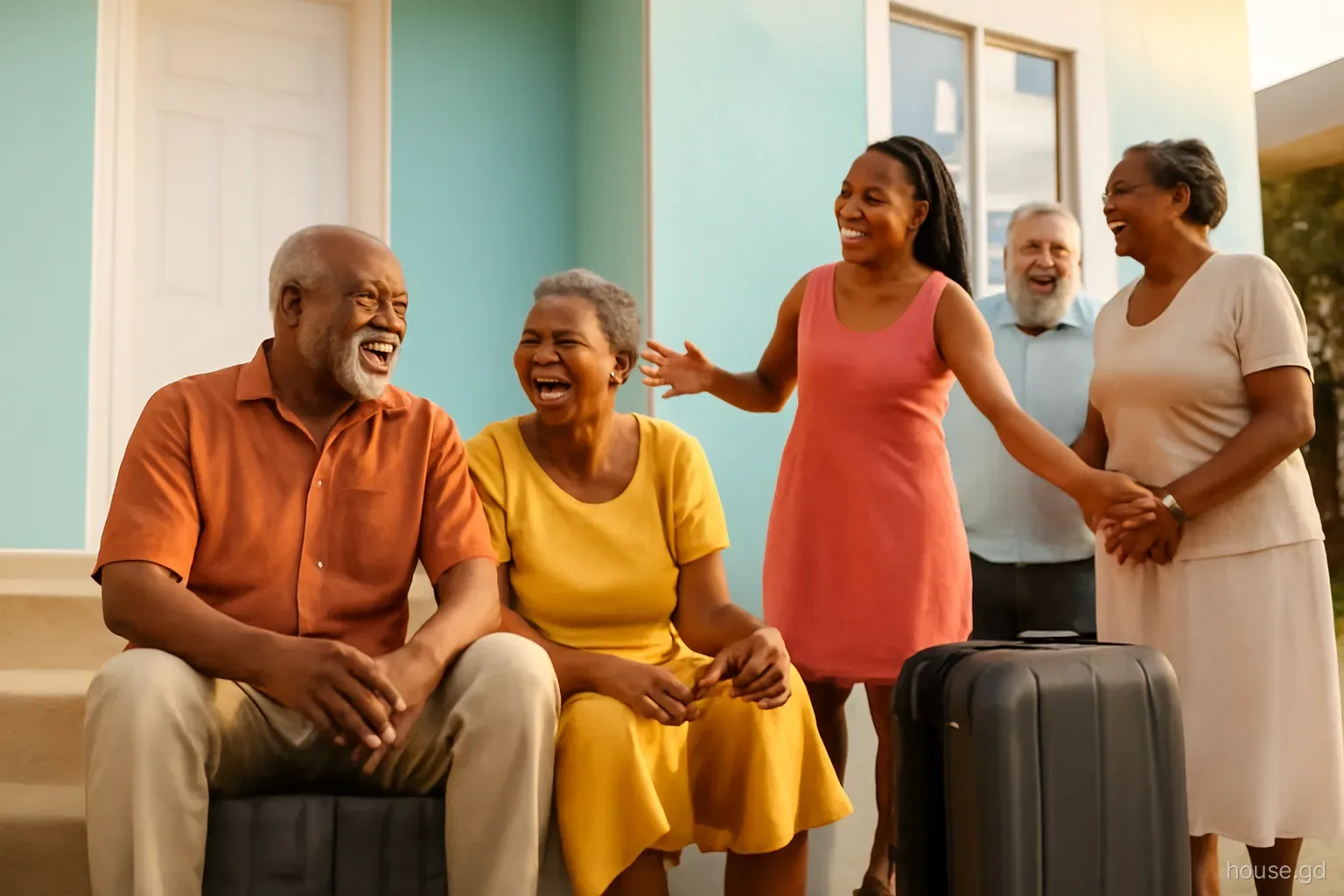
For many Grenadians abroad the plan has always been the same: work in New York, Toronto, London or Port of Spain, send money home, and one day come back to a house of their own. Some build on family land over twenty years, one block course at a time. Others buy a finished house when the moment arrives. Either way, coming home to own property involves questions that a first-time foreign buyer never faces.
Citizenship decides whether you need an Alien Landholding Licence. Family land brings joy and complication in equal measure. Returning nationals may also qualify for concessions on bringing household goods and a vehicle home. This guide is for Grenadians and their children abroad who are buying, or buying out relatives, and want to avoid the mistakes that cost families money and friendships.
Citizenship first: proving you do not need a licence
Grenadian citizens can buy land and houses without an Alien Landholding Licence, which saves a fee commonly quoted at 10% of the property value and months of waiting. The catch is that you must be able to prove citizenship to your attorney and, through them, to the registry. A Grenadian passport or certificate of citizenship does that. A birth certificate on its own may or may not be accepted, depending on circumstances.
Children and grandchildren born abroad to Grenadian parents are often entitled to citizenship by descent, but they usually need to apply for and obtain proof of it before buying. If you are in this position, start the citizenship application early, through the relevant Grenadian authorities or a Grenadian mission abroad, because buying as a non-citizen and then trying to fix it later is expensive.
Spouses raise a similar question. If a Grenadian buys jointly with a spouse who is not a citizen, the attorney will advise whether a licence is needed for the non-citizen's share and whether the spouse could first acquire citizenship by marriage. Settle this before signing anything, because it changes both cost and timing.
Family land: the opportunity and the trap
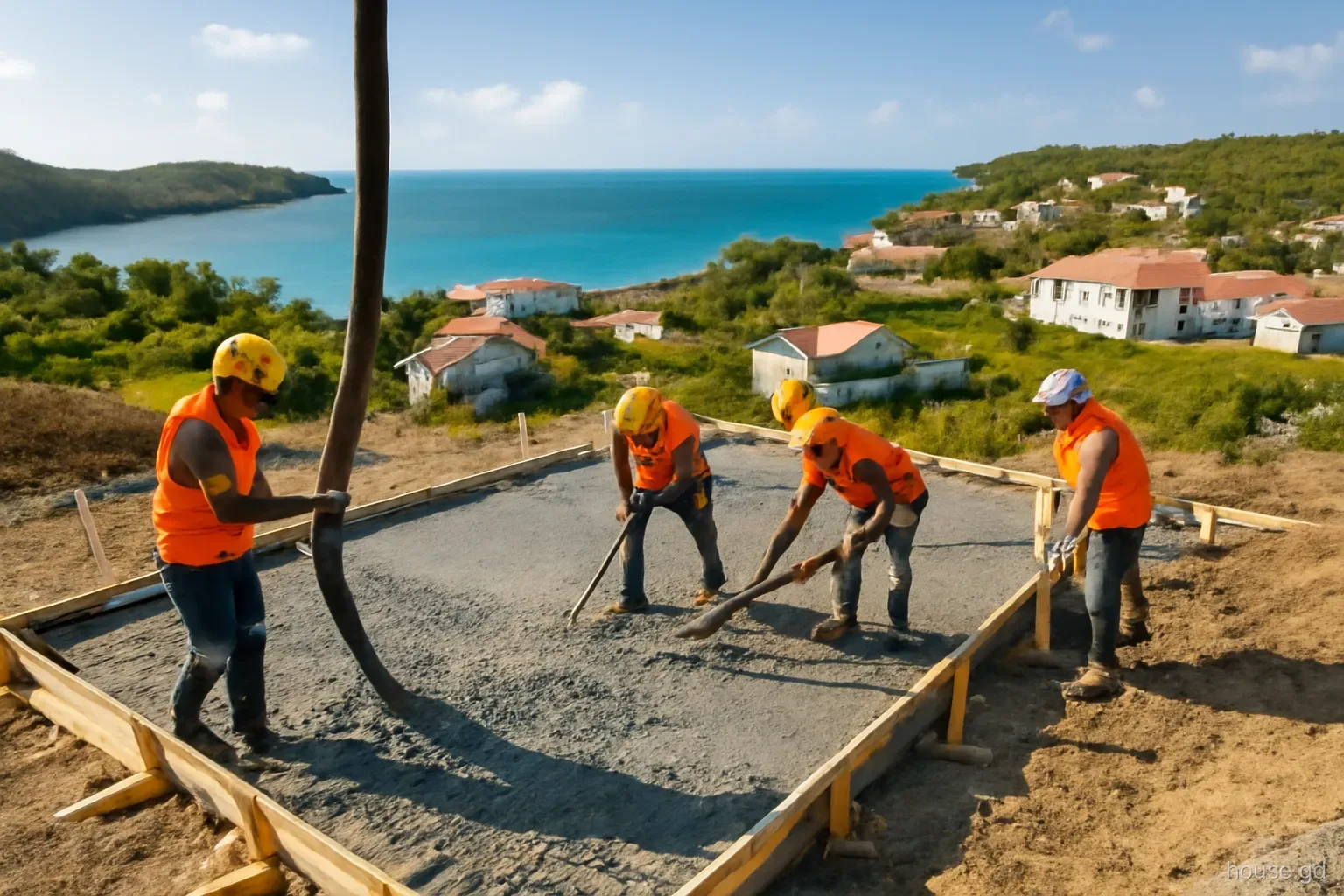
Many returning Grenadians do not need to buy land at all. A parcel belonging to a parent or grandparent is waiting, and relatives are happy for a house to go up on it. The trouble is that much family land in Grenada has never been formally divided or passed through probate. A grandparent may have died decades ago without a will, leaving dozens of heirs across several countries, each with a legal interest.
Building on such land without sorting out the title is the single most common and painful mistake. The house may be on land you do not legally own, and if a cousin later claims a share or the family falls out, you may struggle to sell, mortgage or even insure it. Banks will not normally lend on land without clear title.
The answer is to involve an attorney before the first block is laid. The steps may include obtaining letters of administration or probate for the deceased owner, agreeing a division among heirs, commissioning a survey to create a separate parcel, and registering a deed in your name. It can take time and money, but it turns a family arrangement into a secure asset.
Buying out brothers, sisters and cousins
Agree the value fairly. A professional valuation from an independent valuer avoids arguments about what a share is worth, especially when relatives abroad have different ideas about Grenadian prices.
Put every agreement in writing. A verbal promise between siblings is easily forgotten or disputed by their children. A deed signed by each person giving up their share protects everyone.
Use an attorney, even within the family. Informal arrangements are where family land problems begin. A properly drafted conveyance from each heir, registered at the Deeds and Land Registry, is what gives you clear title.
Watch out for signatures abroad. Relatives living overseas will need to sign before a notary, often with extra legalisation. Plan for the time and courier costs.
Mind the taxes. Transfers between relatives can still attract stamp duty and other charges, and gifts and sales may be treated differently. Ask the attorney for a written estimate before the family agrees terms.
Bringing your belongings home: concessions for returning nationals
Grenada has long offered returning nationals concessions on import duties for personal and household effects, and in many cases a motor vehicle, when they come home to live. The details, including how long you must have lived abroad, what counts as household effects, limits on vehicle age and value, and how long you must stay before reselling a concession vehicle, are set by the government and change from time to time.
The practical point is timing. Applications are generally made before or soon after arrival, with proof of residence abroad, proof of citizenship and an inventory of what you are shipping. If you ship before you apply, or before you know whether you qualify, you may face full duty and VAT on furniture and appliances that would otherwise have entered free. Contact the Customs and Excise Division or the government office dealing with diaspora affairs well before you book a container, and keep copies of everything.
Remember that concessions cover goods, not property purchase itself. Stamp duty, legal fees and property tax apply to returning nationals in the normal way.
Mistakes returning Grenadians often make
Most of these come from trust and good intentions, which is exactly why they are so common.
- Sending money for years to a relative to build a house, without a contractor's agreement, receipts or regular photographs, and returning to find the work unfinished or the money spent elsewhere.
- Building on family land with no deed in their own name.
- Assuming a house in a familiar village needs no survey because "everybody knows where the boundary is".
- Paying full duty on a container because the concession application was never made.
- Buying in the old home village for sentimental reasons, without checking how far the house is from a pharmacy, clinic and supermarket, which matters more with every passing year.
- Forgetting to make a will in Grenada, so that the next generation inherits the same tangled title problem.
Choosing where to live after years away
Grenada has changed a great deal for those who left in the 1980s or 1990s. The south of the island around Grand Anse, Morne Jaloux, St Paul's and Calliste has grown fast, with more traffic, more services and higher prices. Towns such as Grenville, Gouyave, Sauteurs and Victoria remain closer to the Grenada many people remember, with lower prices and stronger community ties, but further from the main hospital and the airport.
Think about health care, transport and family. The General Hospital is in St George's, with smaller hospitals and health centres around the island and in Carriacou. If you will not drive, look at how bus routes serve the area and how steep the walk is from the road. If grandchildren will visit, a house near a beach and reliable internet may matter more than a large plot.
Renting for six months before buying is sensible for anyone who has been away for a long time. It lets you test daily life, the commute, the water supply and the neighbours before committing.
Making it last: wills and family planning
The tangled family land that complicates so many purchases today exists because previous generations did not make wills or formalise divisions. Breaking that cycle is one of the most useful things a returning owner can do. Once you have a registered deed, make a will under Grenadian law with a local attorney, especially if you also have assets abroad, and keep the deed and will where your executors can find them.
If you plan for the house to stay in the family, consider how it will be held: in the names of a couple as joint owners, in one name with a clear will, or through another arrangement your attorney recommends. Talk openly with your children about what you intend. Clear plans now are what prevent your grandchildren from facing the same search through old deeds and scattered relatives that you may have faced yourself.
Frequently asked questions
Do Grenadians living abroad need an Alien Landholding Licence?
No, Grenadian citizens do not need one, wherever they live. You must, however, prove citizenship, usually with a Grenadian passport or certificate of citizenship. Children born abroad may need to obtain proof of citizenship by descent before buying to avoid the licence.
Can a house be built on family land without a deed?
It happens often, but it is risky. Without a registered deed in your name, you may be unable to sell, mortgage or fully protect the house if relatives dispute ownership later. Ask an attorney to regularise the title before building.
What concessions do returning nationals get in Grenada?
Returning nationals have generally been able to apply for duty concessions on personal and household effects and, in many cases, a vehicle, subject to conditions such as time spent abroad. Rules change, so confirm the current criteria with the Customs and Excise Division before shipping.
How do you buy out relatives' shares in family land?
Agree a value, ideally from an independent valuation, then have an attorney prepare deeds by which each relative transfers their share to you. Relatives abroad sign before a notary. The deeds are stamped and registered, giving you clear title.
Should returning nationals rent before buying?
For anyone who has been away for many years it is a sensible step. A few months of renting shows how the area has changed, how long journeys take and how reliable water and power are, before you commit savings to a particular house or village.