
Buyers in Grenada broadly choose between three kinds of home: an existing house sold by its owner, a newly completed house or apartment from a builder or developer, and an off-plan unit bought before it is finished. Each has a very different risk profile, and the brochure rarely tells you which one suits your money, your timetable and your tolerance for surprises.
Resale houses offer space and character but may hide decades of wear. New builds promise modern standards but vary widely in quality. Off-plan purchases can look like good value but put your money at risk while the building rises. This guide compares the three honestly and sets out the checks that matter for each.
Resale houses: space, land and the unknowns
Most homes for sale in Grenada are resale houses: concrete homes built by families over the past few decades, often with generous plots, mature fruit trees and views that newer subdivisions cannot match. Prices per square foot can be lower than for new construction, and you can see exactly what you are buying, including how the house has stood up to past storms.
The unknowns are in the structure and the paperwork. Older houses may have roofs near the end of their life, reinforcement corroding inside the concrete, informal extensions without approval and electrical systems added to over the years. Many were built before current building code expectations for hurricane and earthquake resistance were widely applied. Title can be complicated if the house has passed through inheritance.
A resale house suits buyers who want land, privacy and character, and who are prepared to budget for improvement. A thorough building inspection and a careful title search are essential, and a contingency of several per cent of the price for early repairs is sensible.
New builds: modern standards, variable quality
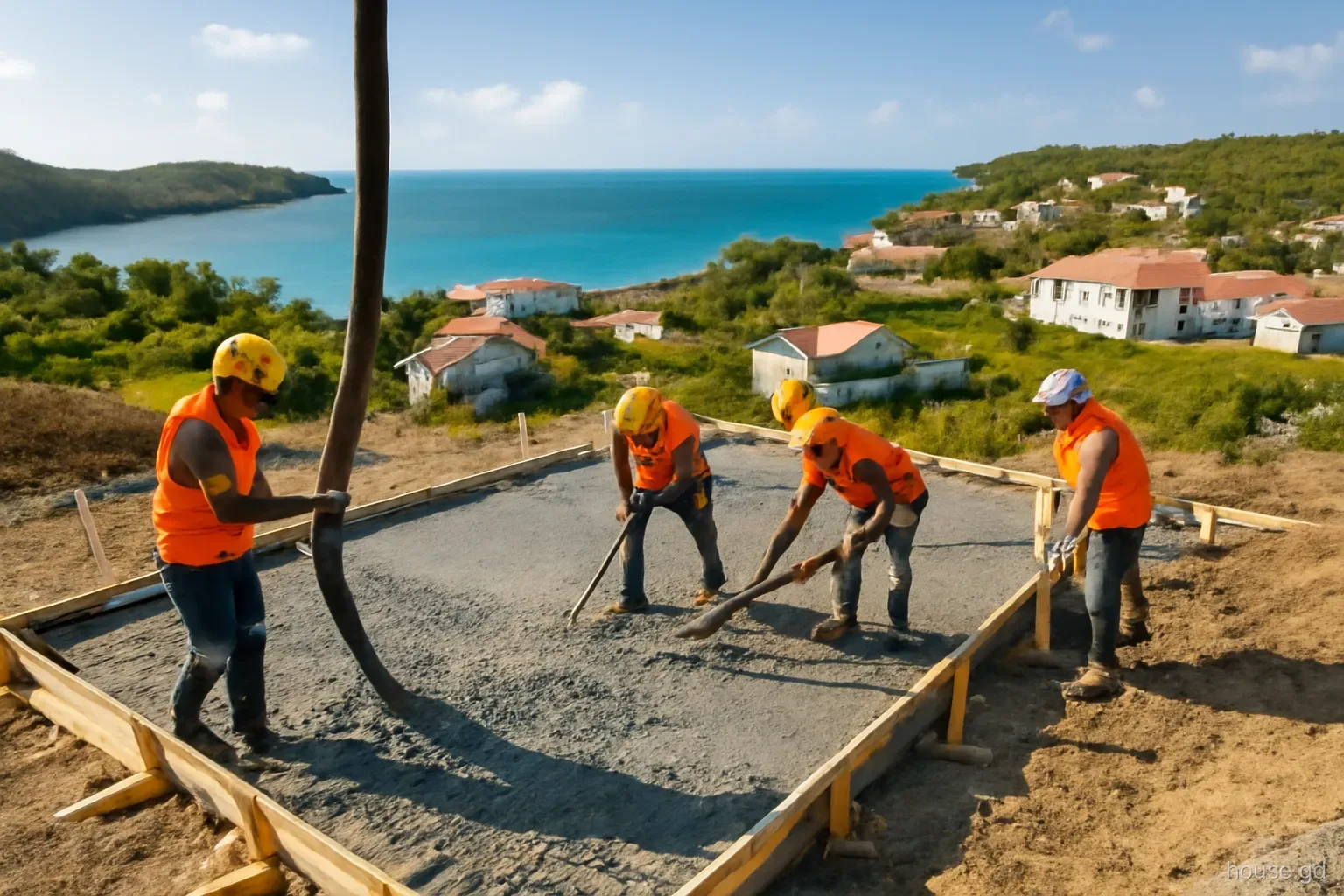
A newly completed house or apartment, whether from a developer or a small builder, should offer modern wiring and plumbing, better insulation against heat, and construction that reflects current thinking on hurricane and earthquake resistance. You move in without immediate major repairs and often enjoy a period before maintenance becomes a real cost.
Quality, however, varies enormously. Some builders in Grenada work to high standards with engineers involved at every stage; others cut corners on concrete cover, roof fixings and drainage that will only show up years later. Look at earlier projects by the same builder, ask owners how their homes have performed, and have your own engineer inspect the finished house before completion.
Ask for copies of the approved plans and confirmation that the planning authority signed off the building. Check what warranty the builder offers, in writing, and what it covers. On the south coast, new houses in gated or semi-gated estates may also come with estate fees and rules on extensions, colours and rentals, so read those documents before you commit.
Off-plan: buying before it exists
How it works. You sign an agreement for a unit in a development not yet built or finished, pay a deposit and then staged payments as construction proceeds, with the balance on completion.
The attraction. Prices may be lower than for completed units, you can sometimes choose finishes, and in a rising market the value may increase before you move in.
The main risk. If the developer runs out of money, faces planning problems or simply stalls, your payments may be tied up in an unfinished building. Grenada, like other islands, has examples of projects that took far longer than planned.
Protecting staged payments. Insist that payments go to an attorney's escrow account or are released against independently certified stages of work, not straight to the developer's operating account.
Title to the land. Your attorney must confirm that the developer owns the land free of undisclosed mortgages, or that any lender has agreed to release units on sale.
Realistic dates. Agree a completion date with a long-stop deadline and the right to recover payments if it is missed.
Apartments and shared developments: who owns what
Apartments and townhouses in shared developments raise a question that standalone houses do not: how the common parts are owned and paid for. Roads, pools, gardens, roofs, stairwells and the land under the building need to belong to someone, and the cost of maintaining and insuring them must be shared fairly among owners.
Arrangements in Grenada differ from project to project. Some developments use a registered condominium or strata-type structure, others an owners' association or management company with each owner holding a share, and others rely on covenants in each deed. Ask your attorney to explain exactly what you will own, what you will share, and how the service charge is set, collected and enforced.
Look at the service charge budget and whether there is a reserve fund for roof replacement, painting and hurricane repairs. Ask whether the building's insurance covers the whole structure, including hurricane damage, and what the deductible is. A low service charge may simply mean nothing is being saved for the inevitable big repairs.
Comparing the three at a glance
No option is best in every situation. These are the trade-offs most buyers weigh.
- Upfront risk: lowest for a completed new build with clean title; moderate for resale, where hidden defects are the main risk; highest for off-plan, where completion itself is uncertain.
- Early maintenance: often heavy for older resale houses; light for new builds in their first years; unknown for off-plan until the work is finished.
- Space and land: generally most generous with resale houses, least with apartments.
- Running costs: resale and standalone new builds carry the owner's own repair and insurance costs; apartments add service charges but share big repairs.
- Rental appeal: modern apartments near Grand Anse and True Blue suit student and short-stay markets; houses with land suit long-term family tenants.
- Resale: depends heavily on location and build quality more than on age alone.
- Timetable: resale and completed new builds can complete in months; off-plan may take years.
Checks every buyer should make, whichever you choose
Whatever the type of home, the same foundations apply. Your own attorney checks title and drafts or reviews the agreement. A licensed surveyor confirms the boundaries, or for an apartment, the plan showing your unit and the common areas. An engineer or experienced builder inspects the structure. Non-citizens need an Alien Landholding Licence, which developers sometimes downplay but which applies all the same.
Ask about insurance early, because some insurers are cautious about older houses with old roofs, or about properties close to the sea. Find out what water storage the property has, how reliable the public supply is, and whether there is backup power.
Finally, look at the neighbourhood rather than just the building. A beautiful new apartment can lose its appeal if the vacant plot next door is developed, and a modest older house may gain value as services arrive. Walk around, talk to residents and visit at different times before deciding which kind of home is right for you.
Matching the choice to your situation
Retirees who want low maintenance and neighbours nearby are often happiest in a well-run apartment or a newer house in an established estate, where shared services take some of the work out of hurricane preparation and upkeep. Families looking for space and long-term value, and willing to manage some repairs, usually find more of what they want among resale houses.
Investors drawn to off-plan schemes should judge the developer at least as carefully as the design, and only commit money they could afford to have tied up for longer than planned. Buyers on a tight timetable, such as those relocating for a job at St George's University or elsewhere, generally do better with a completed property they can inspect today.
If none of the options feels right, renting for a season while watching the market is a perfectly sensible decision.
Frequently asked questions
Is it safe to buy off-plan in Grenada?
It can be, with protection. The main risk is that the developer does not finish. Use your own attorney, confirm the developer owns the land, pay into escrow or against certified stages of work, and agree a long-stop date with the right to recover payments.
Are new houses in Grenada built to hurricane standards?
Many are designed with hurricane and earthquake resistance in mind, but quality varies by builder. Ask whether an engineer designed and supervised the structure, how the roof is fixed, and have your own inspector check before you complete.
What are service charges on Grenada apartments?
They are the owners' shared costs for maintaining, insuring and managing common areas such as roofs, pools, roads and gardens. Amounts vary widely by development. Ask for the budget, recent accounts and whether a reserve fund exists for major repairs.
Do foreigners need a licence to buy a new apartment?
Yes. Non-citizens generally need an Alien Landholding Licence for any land or property interest, including apartments in new developments. Some developments may have arrangements linked to citizenship by investment, so your attorney should confirm the position for the specific project.
Are resale houses cheaper than new builds in Grenada?
Often per square foot, especially for older houses outside the busiest south coast areas, but the true cost should include repairs, a new roof if needed and upgrades. Compare the total likely spend over the first few years, not just the purchase price.