Hurricane season in Grenada runs from 1 June to 30 November, and for tenants it raises questions that owners settle for themselves: who puts up the shutters, who pays to fix the roof, what happens to the rent if the house is damaged, and whether anyone has insured the tenant's belongings. Hurricane Ivan in 2004 and Hurricane Beryl, which devastated Carriacou and Petite Martinique in July 2024, showed how quickly ordinary arrangements break down when a major storm hits.
Most seasons pass with no direct hit, but planning costs little and saves a great deal. This guide sets out what landlords and tenants each usually handle, what to agree in the lease, how to prepare your own household and what to expect in the days after a storm.
Agree the plan before June
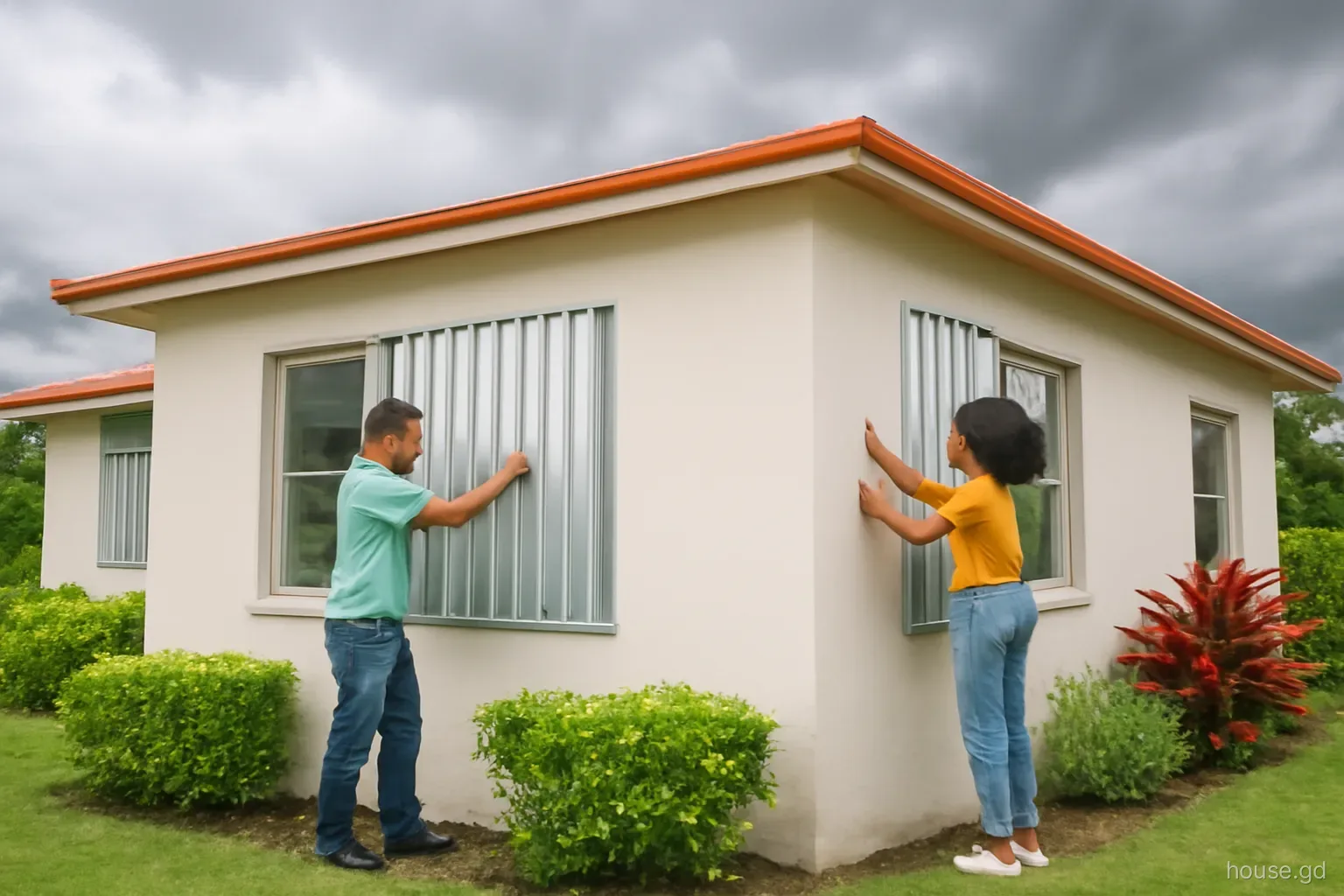
The best time to talk about storms is when you sign the lease, not when a warning is issued. Ask the landlord directly: does the house have shutters or storm panels for every window and door, where are they stored, and who puts them up? In many rentals the landlord or a caretaker does it; in others the tenant is expected to. Either is fine if it is agreed.
Ask about the roof and how it was fixed, whether trees near the house are trimmed before the season, whether gutters and drains are cleared, and whether there is a generator. If the landlord lives abroad, find out who will be their representative on the ground during a storm and how to reach them if phone networks are down.
Write the key points into the lease or an email the landlord confirms: who prepares the house, what happens if it becomes uninhabitable, and how rent is treated during repairs. A clear agreement now prevents arguments when everyone is tired and stressed.
What the landlord usually handles
The structure and roof. Repairing storm damage to the building, roof, windows and fixed installations is normally the landlord's responsibility, funded by their building insurance where they have it.
Shutters and panels. Providing them, and often fitting them, though some leases assign fitting to the tenant.
Pre-season maintenance. Trimming trees, securing loose roofing, clearing drains and gutters, and checking that the cistern and pump are in good order.
Supplied contents. In furnished homes, the landlord's insurance may cover their furniture and appliances, but not the tenant's belongings.
Communication. A good landlord checks on tenants after a storm and arranges inspections and repairs as quickly as contractors allow.
Keeping in touch from abroad. Owners who live overseas should name a local representative with authority to approve emergency repairs, so tenants are not left waiting for a reply across time zones while rain comes through a damaged roof.
What tenants should prepare themselves
Whatever the landlord does, tenants are responsible for their own household's safety and supplies. Gather these early in the season, when shops are calm.
- Drinking water for several days per person, plus extra stored water for washing and flushing.
- Non-perishable food that needs little or no cooking, a manual can opener and food for any pets.
- Flashlights, spare batteries, a battery or wind-up radio and power banks for phones.
- A first aid kit and enough prescription medication for at least a week or two.
- Copies of passports, the lease, insurance policies and other important papers in a waterproof bag, plus digital copies stored online.
- Some cash in small notes, since card machines and ATMs may not work after a storm.
- Fuel in the car, and a plan for where you will go if your home is unsafe.
- Plastic sheeting, tape and bags to protect electronics and documents from water.
Contents insurance: the gap many tenants miss
A landlord's building insurance covers the building, and possibly their own furniture. It does not normally cover the tenant's laptop, clothing, electronics, car or other belongings. Many tenants in Grenada discover this only after a storm or a burglary, when there is nothing to claim against.
Contents or renters' insurance is available from local insurers and brokers, sometimes as part of a wider policy. Ask specifically whether hurricane, windstorm and flood damage are covered, what the deductible is, and whether there is a waiting period at the start of the season or when a named storm is already forecast, since insurers commonly restrict new cover once a storm is approaching.
Keep a simple inventory of your belongings with photographs and receipts for valuable items. It makes any claim easier and is useful anyway when leaving the property at the end of the lease.
When a storm is approaching
Official information comes from the Grenada Meteorological Service and the National Disaster Management Agency, known as NaDMA. Follow their advisories on radio and official channels rather than rumours on social media.
- Confirm with the landlord who is fitting shutters and when, and help if needed.
- Bring in or tie down outdoor furniture, plants, bins and anything that could become a projectile.
- Fill water containers and make sure the cistern or tank is as full as possible.
- Charge phones and power banks, and set the fridge to its coldest setting.
- Move valuables and documents to the safest interior room, raised off the floor and wrapped in plastic.
- If you live in a low-lying area, near the sea or in a house you doubt, find out where the nearest official shelter is and go early if advised.
- Stay indoors during the storm, away from windows, and do not go out during the calm of the eye.
After the storm: rent, repairs and moving out
Once it is safe, check the house for damage, photograph everything and inform the landlord as soon as you can. Avoid fallen power lines and report them. Do not attempt structural repairs yourself, but reasonable steps to limit further damage, such as covering a broken window with plastic, are sensible and help any insurance claim.
If the house is damaged but liveable, the landlord should arrange repairs within a reasonable time, bearing in mind that contractors and materials may be scarce across the island. If it is uninhabitable, many leases provide that rent stops or that either side can end the lease. Where the lease is silent, discuss it calmly with the landlord and put any agreement in writing.
Tenants who move out because of storm damage should agree the return of the deposit and any rent paid in advance. After Hurricane Beryl, many residents of Carriacou and Petite Martinique faced exactly these questions, and the clearest outcomes came where arrangements had been written down beforehand.
Expect disruption to services for days or weeks after a serious storm. Power may be cut deliberately before landfall and restored area by area, public water may be interrupted, and mobile networks can be patchy. This is when stored water, a charged power bank, cash and a well-stocked cupboard prove their worth, and when good relations with neighbours matter most. Checking on older residents nearby is part of how communities in Grenada recover.
Choosing a rental with storms in mind
If you are still house-hunting, hurricane resilience is worth weighing alongside rent and location. Concrete houses with well-fixed roofs, proper shutters and good drainage generally fare better than lightweight structures or houses with large unprotected windows. Homes on exposed ridges catch the strongest winds, while those near the shore or in valleys face storm surge and flooding.
Ask how the building came through past storms, whether the roof has been replaced with hurricane fixings, and whether there is water storage and backup power. Look at neighbouring trees and anything nearby that could fall or fly. A slightly higher rent for a well-built, well-maintained home is often worth paying, especially for tenants with children or older relatives. Ground-floor apartments in low areas deserve particular care: ask whether water has ever entered after heavy rain, not only during hurricanes but in the tropical waves that pass through every rainy season.
Frequently asked questions
When is hurricane season in Grenada?
The Atlantic hurricane season officially runs from 1 June to 30 November, with the most active period usually from August to October. Grenada was long thought to be south of the main hurricane belt, but Ivan in 2004 and Beryl in 2024 showed it can be hit hard.
Who puts up hurricane shutters in a rental?
It depends on the lease. In many rentals the landlord or a caretaker fits them, while in others the tenant is expected to. Agree who is responsible, where the shutters are kept and how they are fitted before the season begins.
Does the landlord's insurance cover tenant belongings in a hurricane?
Generally no. Building insurance covers the structure and sometimes the landlord's furniture, not the tenant's possessions. Tenants who want protection should buy contents insurance and check that it includes windstorm and flood damage.
Do tenants pay rent if a hurricane makes the house uninhabitable?
Many leases say rent stops or the lease can be ended if the property becomes uninhabitable through no fault of the tenant. If the lease is silent, discuss it with the landlord and put any agreement in writing. Legal advice can help in a dispute.
Where can tenants find official hurricane information in Grenada?
The Grenada Meteorological Service issues weather forecasts and warnings, and the National Disaster Management Agency, NaDMA, coordinates preparedness, shelters and response. Follow their advisories on radio and official channels, and register with your embassy if you are a foreign national.