
Many rentals in Grenada begin with a handshake and a two-page lease, sometimes adapted from a template a landlord found online or inherited from a previous tenant. A short lease is not necessarily a bad one, but gaps in it are where disagreements start: who pays to fix the pump, what happens if a storm damages the roof, how much notice either side must give.
Reading the lease carefully, and negotiating before you sign, is far easier than arguing later. This guide walks through the clauses that matter in a typical Grenadian residential lease, what each should say, and the terms that should make a tenant pause.
The basics: parties, property and term
Who the landlord is. The lease should name the owner, or an agent acting for the owner, with an address. If someone else is signing, ask for confirmation that they have authority. A lease signed by a caretaker with no written authority gives you little protection.
What is being let. Describe the property clearly: the address, which unit if it is part of a building, the parking space, the yard, and whether any area such as a storeroom or the downstairs apartment is excluded.
The term. Most long-term leases in Grenada run for six months or a year, with month-to-month arrangements common afterwards. Check the start and end dates and what happens when the term ends: automatic renewal, a new lease or a periodic tenancy.
An inventory. For furnished properties, attach a list of furniture and appliances, with their condition. Without it, disputes over deposits are almost guaranteed.
Rent: amount, currency, due date and increases
The rent clause should state the amount, the currency and when it is due. Rents for expatriate and student housing are often quoted in US dollars, while many local rentals are in EC dollars. Because the currencies are pegged at EC$2.70 to US$1, either is workable, but the lease should be clear which applies and how payment is made: bank transfer, cheque or cash against a receipt.
Look for a late-payment clause and check that any penalty is reasonable. A grace period of a few days is common. If you pay in cash, insist on a written receipt every time; it is the only proof you have paid.
The lease should also say whether and when rent can be increased. On a fixed one-year lease, the rent should normally stay the same until the term ends. If the landlord wants the right to increase rent on renewal, a clause requiring a set period of written notice, such as one or two months, gives you time to decide whether to stay.
Utilities and who pays for what
Utility arrangements cause more friction than almost anything else in Grenadian rentals. The lease should list each service and who pays: electricity from GRENLEC, water from NAWASA, internet and television, cooking gas, garbage collection and, where relevant, estate fees or security services.
If the electricity account stays in the landlord's name and the tenant reimburses the bill, write down how the amount will be shown, for example by sharing a copy of each bill. If two apartments share a meter, the lease must explain how the bill is divided, because sub-meters and estimated splits are a frequent source of argument.
Where water is supplied from a cistern or tank that the landlord fills by truck in the dry season, say who pays for deliveries. If the landlord includes internet in the rent, note the expected speed and what happens if the service fails for an extended period.
Repairs and maintenance: the clause to read twice
A good repairs clause separates what the landlord fixes from what the tenant looks after, and says how quickly urgent problems will be dealt with.
- The landlord should normally be responsible for the structure, roof, plumbing, electrical system, water tanks and pumps, septic system and supplied appliances, except where damage is caused by the tenant.
- The tenant usually handles day-to-day care: keeping the property clean, replacing light bulbs, reporting leaks promptly, and avoiding blockages in drains and toilets.
- Air conditioning servicing should be assigned clearly, since units in salt air need regular cleaning.
- Garden and yard maintenance, including cutting grass and trimming trees near the house, should be allocated to one side.
- There should be a way to report repairs in writing, and an expectation of how quickly urgent issues such as no water, no power or a roof leak will be addressed.
- Watch for clauses that make the tenant responsible for "all repairs", which in a tropical house can include expensive items such as pumps and roofing.
Storms, damage and insurance
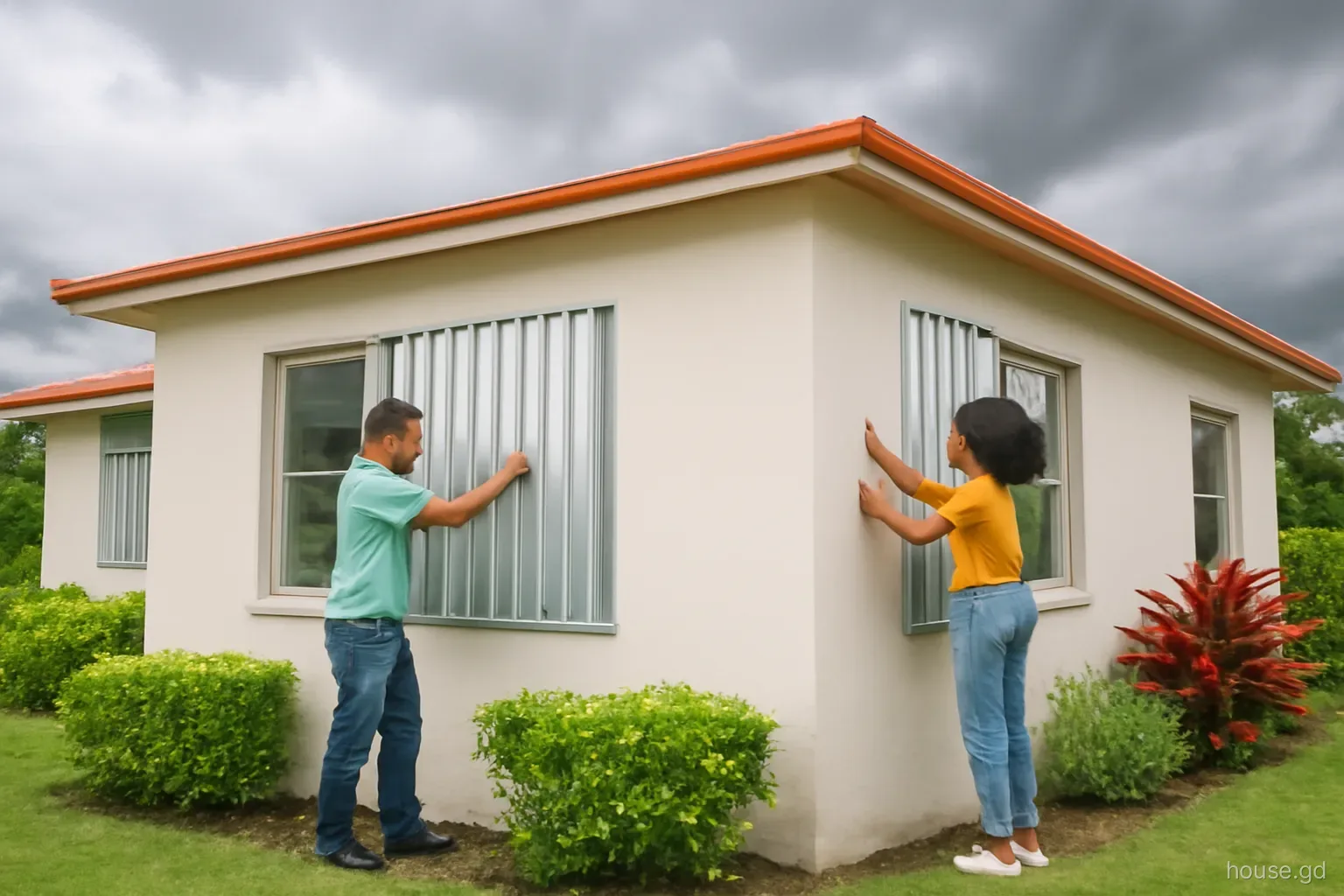
Hurricane season runs from June to November, and a lease in Grenada should address it directly. Who puts up the shutters or hurricane panels when a storm approaches? Who stores them? What happens to the rent if the property becomes uninhabitable after a storm? Many leases are silent on all of this.
A fair clause provides that if the property is made uninhabitable through no fault of the tenant, rent stops until it is repaired, or either side can end the lease. It should also make clear that the landlord's building insurance does not cover the tenant's belongings, so tenants who want protection for their own furniture, electronics and vehicles need their own contents insurance.
Add a line about access: the landlord or a contractor may need to enter quickly after a storm to check damage. A clause allowing reasonable access with notice, and immediate access in an emergency, protects both sides.
Ending the lease: notice, break clauses and renewal
Check how much notice each side must give to end the lease, and whether it can be ended early. For periodic monthly tenancies, one month's written notice is common. For fixed terms, there may be no right to leave early at all, which matters if your job contract could end or you might move for study.
A break clause allowing either party to end the lease after a minimum period with notice gives flexibility. Some employers and students negotiate a clause allowing early termination if their contract or programme ends, with a set notice period.
The lease should also explain what happens at the end: a joint inspection, return of keys, and how and when the deposit will be returned. Note any rules on subletting or taking in lodgers, pets, the number of occupants and alterations such as painting or installing burglar bars. If a clause seems unfair, ask for it to be changed before signing, and keep a signed copy for yourself.
When to get advice
Most tenants never need a lawyer to read a residential lease, but it is worth paying for advice if the lease is long, the rent is high, you are committing for several years, or you are renting a business premises with living space attached. An attorney can explain how a clause would be read under Grenadian law and suggest wording that protects you.
If a dispute arises later, keep everything in writing: emails, messages, receipts and photographs. Smaller claims, such as a withheld deposit, can be taken to the Magistrate's Court, while larger matters go to the High Court. Most disagreements are settled long before that by a calm conversation backed by a clear lease, which is the best reason of all to read it properly at the start.
Clauses to question before signing
Some terms appear regularly in Grenadian leases and deserve a second look, or a polite request for different wording.
- A deposit described as "non-refundable", which turns it into an extra fee.
- A right for the landlord to enter at any time without notice, except in emergencies.
- A blanket ban on guests staying overnight, or limits that would rule out visiting family.
- Automatic renewal for a further year unless notice is given months in advance.
- A requirement to pay the full remaining rent if you leave early, with no duty on the landlord to find a new tenant.
- Responsibility for "all repairs" or for replacing appliances that fail through age.
- Any clause you do not understand. Ask for it to be explained or rewritten in plain words.
Frequently asked questions
Is a written lease required for renting in Grenada?
Verbal tenancies exist, but a written lease is strongly advised. It records the rent, term, deposit, repairs and notice period and is the main evidence if a disagreement arises. Ask for one and keep a signed copy.
How much notice does a landlord have to give in Grenada?
It depends on the lease and the type of tenancy. Monthly tenancies commonly require one month's written notice from either side, while fixed-term leases usually run until their end date. Check what your lease says and seek advice in a dispute.
Can a landlord increase the rent during a lease?
Normally not during a fixed term unless the lease allows it. Increases usually happen on renewal. A clause requiring advance written notice of any increase gives tenants time to decide whether to stay or look elsewhere.
Who pays for repairs in a Grenada rental?
Typically the landlord covers structural repairs, roofing, plumbing, electrics, pumps and supplied appliances, while the tenant handles minor upkeep and damage they cause. The lease should spell this out, since the details vary between properties.
Does the landlord's insurance cover tenant belongings?
No. A landlord's building insurance generally covers the structure and sometimes the landlord's furniture, not the tenant's possessions. Tenants who want cover for their belongings, particularly through hurricane season, should arrange their own contents insurance.