Furniture that looks perfect in a showroom in Miami or London can look tired within a year in a Grenadian villa. Salt carried on the trade winds corrodes metal, humidity encourages mould in fabrics and cupboards, the tropical sun bleaches cushions and cracks plastic, and termites test anything made of untreated softwood. Add the wear of a different set of guests every week, and the fit-out of a rental property becomes a materials problem as much as a design one.
Getting it right saves money twice: once in replacement costs, and again in reviews, because guests notice rust streaks, musty wardrobes and sagging sun loungers. This guide covers what tends to last, what guests in Grenada expect, and how to plan the practical side of furnishing from abroad, including shipping, duty and the realities of buying locally.
Materials that cope with the climate
Hardwoods over softwoods. Teak, iroko and similar dense hardwoods resist rot and termites far better than pine or chipboard, both indoors and outside. Chipboard and MDF furniture swells and delaminates in humid rooms, especially in kitchens and bathrooms.
Marine-grade stainless steel. Ordinary stainless steel and chrome rust near the sea. Grade 316 stainless for door handles, hinges, outdoor fixings, towel rails and light fittings costs more and lasts far longer. Powder-coated aluminium works well for outdoor frames if the coating is good quality.
Synthetic wicker and solution-dyed fabrics. Natural rattan and cotton cushions deteriorate quickly outdoors. All-weather synthetic weave and solution-dyed acrylic fabrics resist fading and mildew and can be hosed down.
Tiles and hard floors. Porcelain tile and polished concrete stay cool and cope with sand and wet feet. Rugs should be washable or easy to dry; thick pile carpets hold moisture.
Ceramic and glass over cheap metal. Lamps, mirrors and decorative pieces with thin metal finishes often pit and corrode. Ceramic, glass, wood and stone age better.
Bedrooms: where reviews are won and lost
Guests forgive a small kitchen but rarely a poor night's sleep. Each bedroom needs a good mattress with waterproof, breathable protectors, which are essential in a rental, plus pillows of varying firmness and quality cotton linen. Buy at least three sets of linen and towels per bed: one in use, one in the laundry and one spare, because drying times stretch in the wet season and a single set wears out fast with frequent washing.
Air-conditioning is expected in every bedroom in most Grenada holiday rentals, and guests check for it. Efficient inverter split units are quieter and cheaper to run than older window units. Pair each with a ceiling fan, which many guests prefer for sleeping and which reduces air-conditioning use. Blackout curtains or solid shutters help with early tropical sunrises.
Wardrobes need ventilation. Louvred doors, a small dehumidifier or moisture absorbers, and leaving doors ajar between guests prevent musty smells and mould on hangers and spare blankets. Provide a luggage rack, enough hangers, a safe for valuables and reading lights on both sides of the bed. Mosquito nets or screens on windows are welcome in rural properties and anywhere close to standing water.
Kitchens and appliances
Guests in villas cook more than hotel guests, especially families and groups staying a week or longer, and they compare kitchens with what they have at home.
- A full-size refrigerator with a good freezer section; groups appreciate a separate drinks fridge.
- A gas or electric hob and oven, microwave, kettle, toaster, coffee maker and blender for rum punch and smoothies.
- Enough plates, glasses and cutlery for the maximum number of guests plus spares; outdoor-safe glassware for the pool area.
- Good knives, chopping boards, a large pot for boiling local produce, a baking tray and basic utensils.
- Sealed containers for dry goods: ants find sugar, flour and crackers within hours in a tropical kitchen.
- A water filter or dispenser if guests should not drink tap or cistern water, with clear instructions.
- Appliances with good warranties and local service support. Salt air shortens the life of electronics, and a brand with no local technician becomes a replacement rather than a repair.
Outdoor spaces and the pool deck
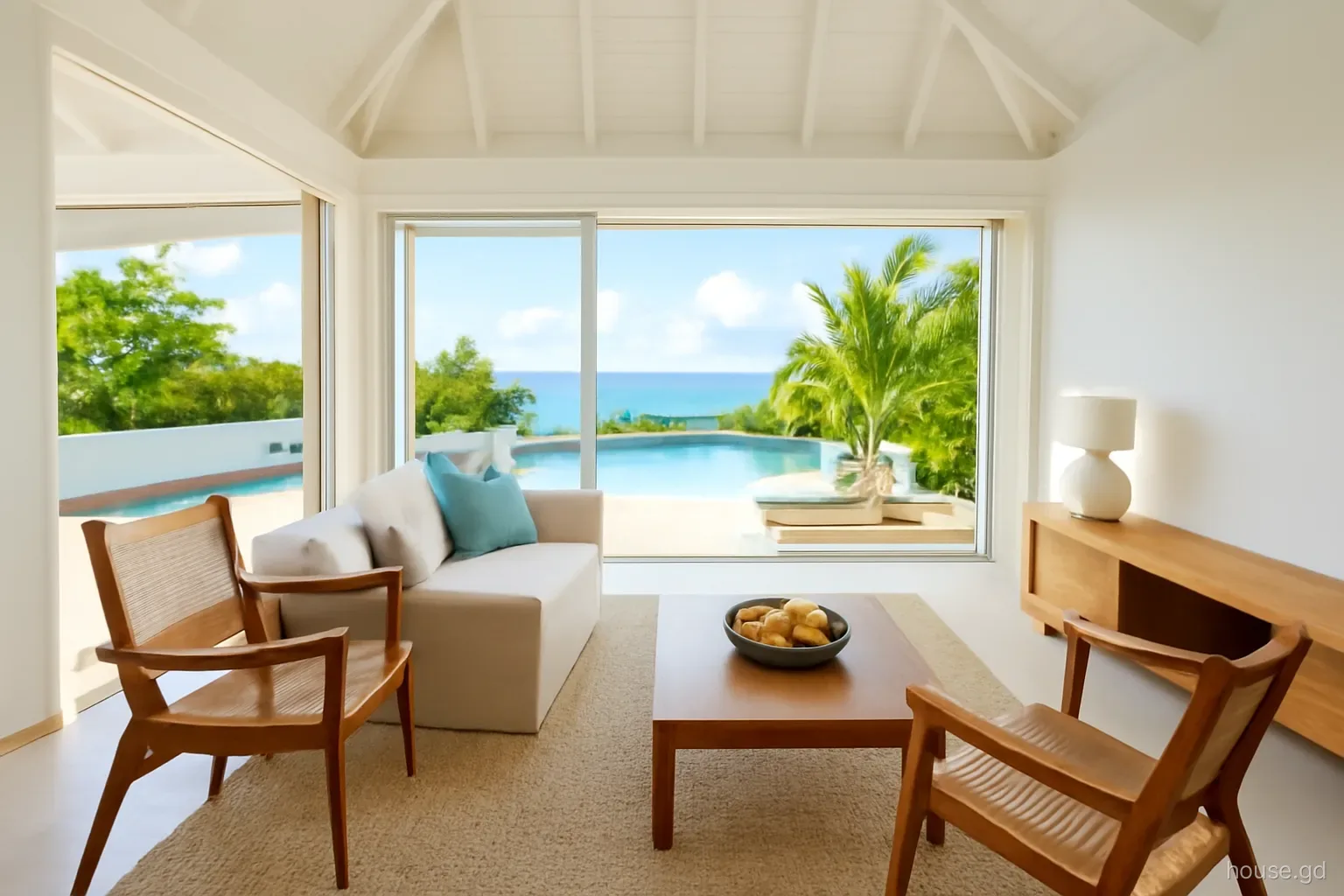
In Grenada, guests spend much of their time outside, and the veranda or pool deck is often the photograph that sells the booking. Outdoor furniture needs to be sturdy, heavy enough not to blow around in squalls, and easy to store or secure when a storm threatens. Sun loungers with removable, quick-drying cushions, shade from umbrellas or a pergola, and a dining table for evening meals outside are the essentials.
Plan storage for storm season from the start. Every item left outside during a hurricane becomes a projectile, so the manager needs a lockable store room or garage large enough to take loungers, umbrellas, plants in pots and barbecue equipment quickly. Choosing stackable or foldable furniture makes that task far easier.
Lighting matters outdoors too. Warm, low lighting along paths and steps helps guests find their way safely after dark, and solar-powered fittings save wiring. On beachfront properties, keep outdoor lighting low and shielded during turtle nesting season, roughly March to October, as bright lights confuse hatchlings heading for the sea.
Buying, shipping and setting up from abroad
Buying locally. Furniture, appliances and household goods are available in Grenada from local retailers, and buying locally makes warranties, delivery and repairs much simpler. Choice is narrower and prices often higher than in large markets because of shipping and duty.
Shipping a container. Some owners furnish a whole villa by shipping a container from the US or UK. That can widen choice, but duties and VAT apply on arrival, clearing goods through customs takes time and paperwork, and a customs broker is usually needed. Check what concessions, if any, apply to your situation before you ship.
Mixing both. A common compromise is to buy bulky items and appliances locally and bring linens, small decor and specialised items in luggage or smaller shipments.
Local craftsmanship. Grenadian carpenters can build solid hardwood beds, tables and shelving to measure, often more durable than imported flat-pack furniture. Allow time, agree the timber and finish in writing, and check that wood is properly seasoned.
Wi-Fi, backup power and the systems guests rely on
Internet. Reliable Wi-Fi is close to non-negotiable, especially for longer stays and guests who work remotely. Choose the best connection available at the address, place access points so the signal reaches bedrooms and the pool deck, and put the router on a small battery backup so short power cuts do not drop the connection.
Power cuts. Outages are usually short on the mainland, but a guest sitting in a dark, hot villa on a holiday evening does not see it that way. A battery backup for lights, fans, the fridge and Wi-Fi, or a generator with a transfer switch, protects reviews as well as food.
Water. A cistern or tanks with a pump, sized for full occupancy, keep showers running through NAWASA interruptions and dry-season scheduling. Guests should never discover the water situation by turning on a dry tap.
Hot water. Guests expect it in every bathroom. Solar water heaters with backup, or heat pumps, keep running costs down; instant shower heads must be properly installed by a licensed electrician.
Security. Good locks, outdoor lighting on sensors, a safe in each bedroom or the main suite and secure shutters for ground-floor openings reassure guests and insurers.
Fit-out mistakes to avoid
Most of these show up within the first year of guests.
- Choosing flat-pack chipboard furniture that swells in humidity.
- Using white upholstery and pale rugs that show sand, sunscreen and red earth from the garden.
- Buying one set of linen per bed.
- Installing chrome bathroom fittings that pit and rust within months near the coast.
- Leaving no lockable storage for owner items, spare linen and storm equipment.
- Skipping a dehumidifier or ventilation for wardrobes and closed rooms.
- Forgetting simple guest needs: beach towels separate from bath towels, a beach umbrella, a cooler and snorkel gear.
- Filling the villa with decorative clutter that takes cleaners extra time at every changeover and gathers dust and mould.
- Choosing appliances from brands with no local service agent, so a minor fault means waiting for parts from abroad.
- Not photographing and listing the full inventory, making it impossible to track breakages or missing items between guests.
Frequently asked questions
What furniture lasts best in Grenada's climate?
Dense hardwoods such as teak, marine-grade 316 stainless steel, good powder-coated aluminium, synthetic all-weather weave and solution-dyed fabrics cope best with salt, sun and humidity. Chipboard, MDF, cheap chrome and natural rattan usually deteriorate quickly, especially near the sea.
Do guests expect air-conditioning in Grenada rentals?
In most holiday rentals, yes, at least in bedrooms. Many guests filter searches for it. Pair efficient inverter units with ceiling fans, which many guests prefer for sleeping and which help keep electricity bills under control.
Is it cheaper to ship furniture to Grenada or buy locally?
It depends on the volume and items. Shipping a container can widen choice, but duties, VAT, freight and clearance costs add up. Buying locally simplifies warranties and repairs. Many owners combine local purchases with smaller shipments of specific items.
How many sets of linen does a rental villa need?
At least three sets of sheets and towels per bed: one in use, one being laundered and one spare. Drying is slower in the wet season, and frequent washing wears linen quickly, so plan to replace it regularly.
How should a rental be prepared for hurricane season?
Have lockable storage for outdoor furniture, shutters or panels ready for every opening, a written checklist for the manager and supplies on hand. Choosing stackable or foldable outdoor furniture makes securing the property much faster when a storm is forecast.
What extras do guests in Grenada appreciate most?
Reliable Wi-Fi, beach towels, a cooler, a beach umbrella, snorkel gear, a well-equipped kitchen, filtered drinking water and clear house information covering the area, emergency numbers and what to do during a power or water cut.