Ask three solar installers in Grenada for a quote and you may get three different kinds of system. One proposes panels and an inverter tied to the GRENLEC grid. Another adds a stack of lithium batteries and a hybrid inverter. A third, especially if the house sits at the end of a long rural lane, suggests going off-grid entirely. All three can be sensible. They solve different problems, and the price difference between them is large.
The deciding questions are simple to state. Do you mainly want lower bills, or do you also want power when the grid is down? How long an outage do you need to ride through: an afternoon of line work, or weeks after a hurricane? And is the grid available at the site at a reasonable connection cost? This piece explains how each type behaves day to day and during an outage, so you can match the design to the problem you actually have.
Grid-tied: the cheapest route to a lower bill
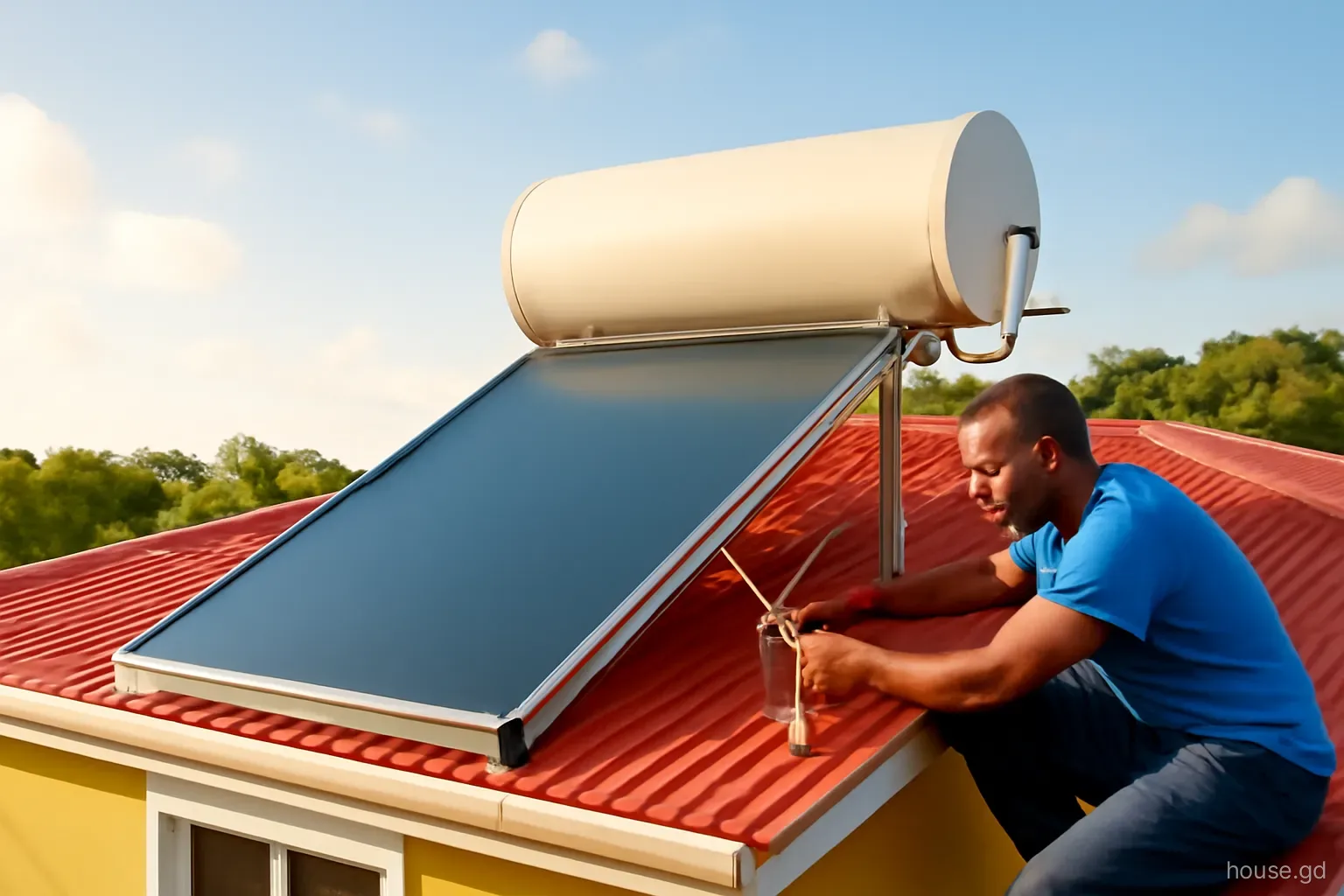
A grid-tied system is panels, a string inverter or microinverters, and a connection to the house wiring and meter. During the day the house draws first from the panels, imports from GRENLEC when the panels fall short, and exports any surplus under the interconnection arrangement in force. At night everything comes from the grid as before.
Because there are no batteries, the cost per kilowatt of panels is the lowest of the three options, and there is little to maintain beyond keeping the glass clean and checking the inverter. For most households whose main aim is a smaller monthly bill, this is the design with the shortest payback.
The catch surprises many owners: when the grid goes down, a grid-tied inverter switches off within seconds, even in bright sunshine. This anti-islanding behaviour is a safety requirement, preventing your system from energising lines that crews are repairing. So a grid-tied house is dark during an outage exactly like its neighbours. If the grid in your area is reliable and you are content with a small generator for rare outages, that may not matter.
Hybrid: lower bills plus backup
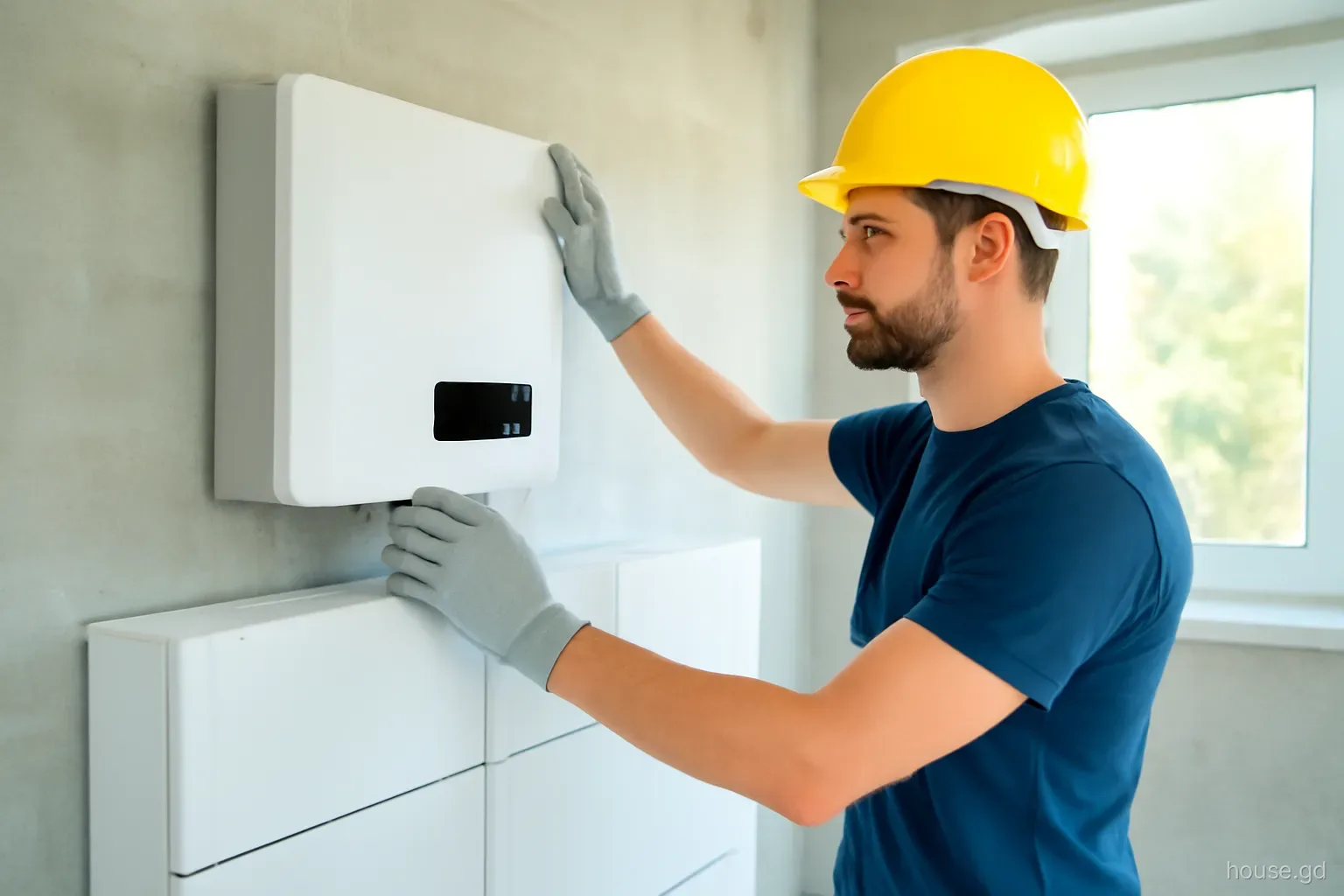
How it works. A hybrid inverter manages panels, batteries and the grid together. In normal times it uses solar first, charges the batteries, and imports or exports as needed. When the grid fails, it disconnects from GRENLEC and keeps powering the house, or a selected part of it, from the batteries and panels.
Critical-loads panel. Most hybrid installations back up a separate sub-panel rather than the whole house. Typically this carries the refrigerator and freezer, lights, Wi-Fi, ceiling fans, the water pump and perhaps one bedroom air-conditioner. Backing up three or four air-conditioners and a water heater multiplies battery cost.
Battery chemistry. Lithium iron phosphate (LiFePO4) has largely replaced lead-acid for home storage. It tolerates deep daily cycling, has a long life measured in thousands of cycles and needs no topping up. It still dislikes heat, so a shaded, ventilated location matters more here than in cooler countries.
Sizing the batteries. Add up the daily kilowatt-hours of the backed-up loads. A fridge, freezer, lights, fans, router and pump might total 5 to 8 kWh a day; adding one bedroom unit overnight can double that. A battery bank of 10 to 15 kWh, recharged each day by the panels, can then run those essentials through a long outage in sunny weather.
The cost trade-off. Batteries add substantially to the price, and on a purely financial basis they usually lengthen payback. Owners choose them for resilience, for keeping food and medicines cold, for working from home and for peace of mind in hurricane season.
Off-grid: when it makes sense, and what it demands
A fully off-grid home has no GRENLEC connection at all. Every unit of electricity must be produced by the panels, stored in batteries for the night and covered by a generator during cloudy spells. That means more panels, more batteries and an inverter sized to start pumps and air-conditioners on its own.
Off-grid can be the rational choice where the grid is genuinely far away, such as a hillside plot in St John or St Mark where bringing poles and a transformer to the site would cost more than a solar system, or a small cottage used occasionally on a remote part of Carriacou. It is also chosen by people who simply want independence.
The trade-off is lifestyle and maintenance. Off-grid households learn to run the washing machine at midday, avoid electric water heating and cooking, and keep a close eye on battery charge during a run of overcast days in the wet season. A generator remains part of the system, so fuel storage and servicing do not disappear. For a full-time family home with air-conditioning, grid-tied or hybrid is usually more practical and cheaper per kilowatt-hour.
What happened after Ivan and Beryl
Grenada's storm history is the strongest argument people make for storage, and it is worth understanding what really helps.
- After Hurricane Ivan in 2004, much of the mainland was without grid power for weeks and some areas for months. Households with generators coped; everyone else waited.
- Hurricane Beryl in July 2024 badly damaged the grid on Carriacou and Petite Martinique, along with roofs and homes. Restoration took a long time on the sister isles.
- Panels themselves survive only if the roof and the mounting survive. An array torn off in the wind can damage the roof and the houses downwind. Engineered fixings into the structure are not optional.
- Batteries, inverters and the critical-loads panel are best located indoors, in a dry, secure room above any flood level, not in an open carport.
- A hybrid system with batteries can keep essentials running for days after a storm, provided the panels and wiring are intact. Many owners also keep a small generator as a second line of defence.
- Some owners remove or secure panels ahead of a major storm warning; whether that is practical depends on the mounting system and the installer's guidance.
Deciding in five steps
Work through these before collecting quotes, and give every installer the same brief so the prices are comparable.
- List your goal plainly: lower bills only, lower bills plus short-outage backup, or full independence.
- Gather twelve months of GRENLEC bills and note the annual kilowatt-hours and the average cost per unit.
- Write down the loads you would want running during an outage and estimate their daily kilowatt-hours.
- Decide how many days of backup matter to you. One evening, three days, and two weeks lead to very different battery sizes and budgets.
- Ask each installer to quote a grid-tied design and a hybrid design for the same array, with the battery size, usable capacity, warranty in years and cycles, and the exact list of backed-up circuits stated in writing.
Rough costs, side by side
Prices move with shipping costs, exchange rates on equipment bought in US dollars and any duty concessions in force, so treat the following as orders of magnitude to check against real quotes. A grid-tied residential system in the Caribbean has commonly been quoted somewhere around US$2 to US$3 per installed watt, so a 4 to 5 kWp array lands in the region of US$8,000 to US$15,000, or roughly EC$22,000 to EC$40,000 at the fixed peg.
Moving to a hybrid design adds the cost of a hybrid inverter, a critical-loads sub-panel and the batteries themselves. Installed lithium storage is usually priced per usable kilowatt-hour, and that figure has fallen over recent years; a 10 to 15 kWh bank can still add as much again as the panels cost, depending on brand and design. An off-grid home of similar comfort typically needs a larger array, a larger bank and a generator, and can cost two to three times a grid-tied system for the same house.
Set those costs against what each buys. Grid-tied buys the fastest bill reduction per dollar. Hybrid buys bill reduction plus resilience. Off-grid buys independence and avoids a costly grid extension, at the price of a more hands-on relationship with your own power supply.
Frequently asked questions
Can batteries be added to a grid-tied system later?
Often, yes. Some owners install a hybrid-ready inverter now and add batteries later, while others fit an AC-coupled battery system alongside an existing inverter. Ask the installer to design with future storage in mind, as changing inverters later adds cost.
How long will a home battery last in Grenada?
Lithium iron phosphate batteries are typically warrantied for around ten years or a stated number of cycles. Actual life depends heavily on temperature, so a cool, shaded, ventilated location and sensible charge settings make a real difference in a tropical climate.
Is a generator cheaper than batteries for backup?
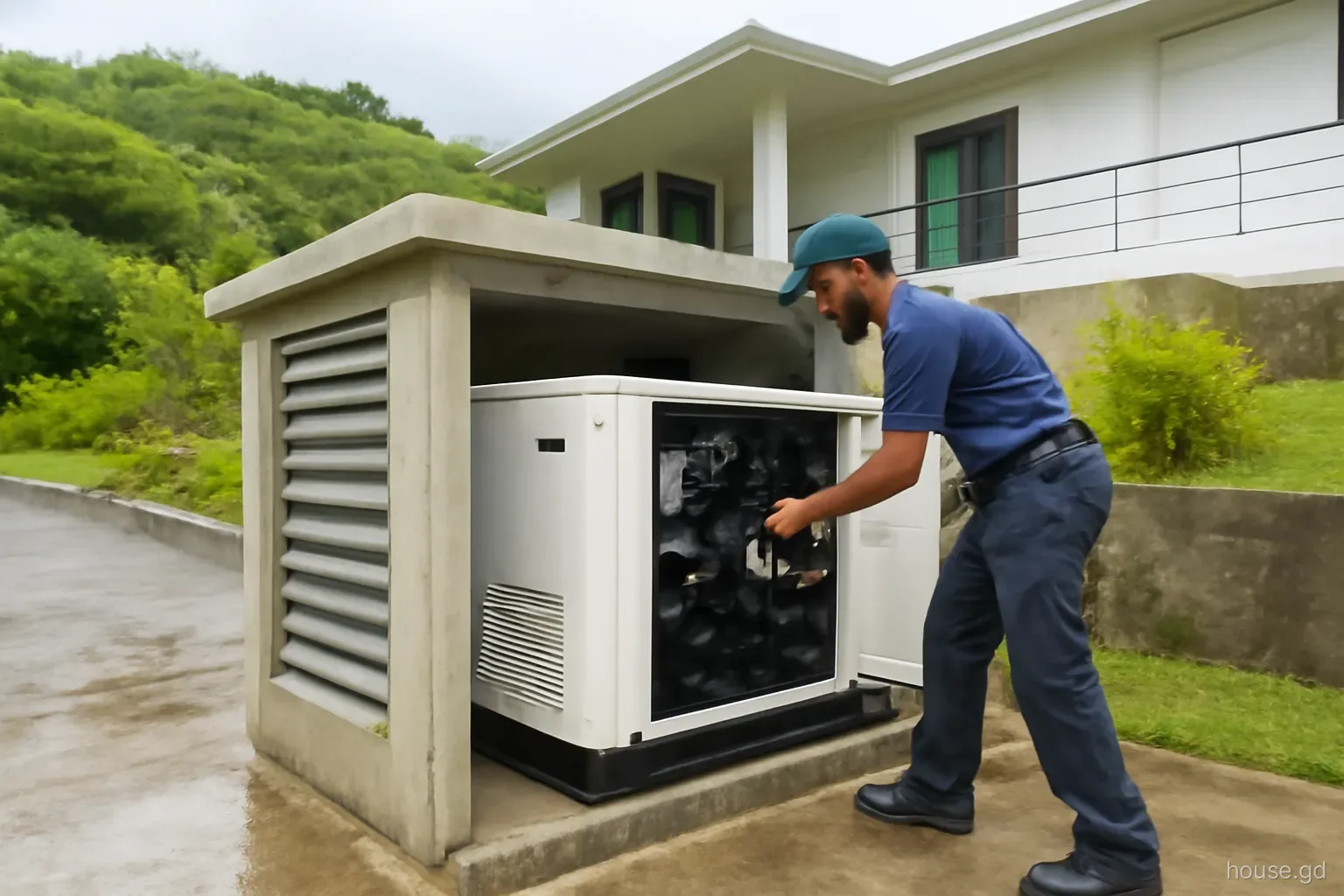
For occasional outages, a generator usually costs less upfront. Batteries cost more but work silently and automatically, need no fuel and also help cut your daily bill. Many Grenada homes combine a modest battery bank with a small generator for long outages.
Will batteries run my air-conditioning all night?
One efficient inverter bedroom unit can be run overnight with a battery of reasonable size, but running several units every night needs a large and expensive bank. Most owners back up one bedroom and rely on fans elsewhere during outages.
Do off-grid homes in Grenada need a generator?
In practice, yes. Even with generous panels and batteries, a stretch of heavy cloud in the wet season can drain storage. A generator, used briefly to recharge batteries, avoids oversizing the whole system for the worst week of the year.
Does a hybrid system still need GRENLEC approval?
If it connects to the grid in any way, including importing power, it falls under the interconnection rules. The installer should handle the application, but confirm the approval is in place before the system is switched on.