
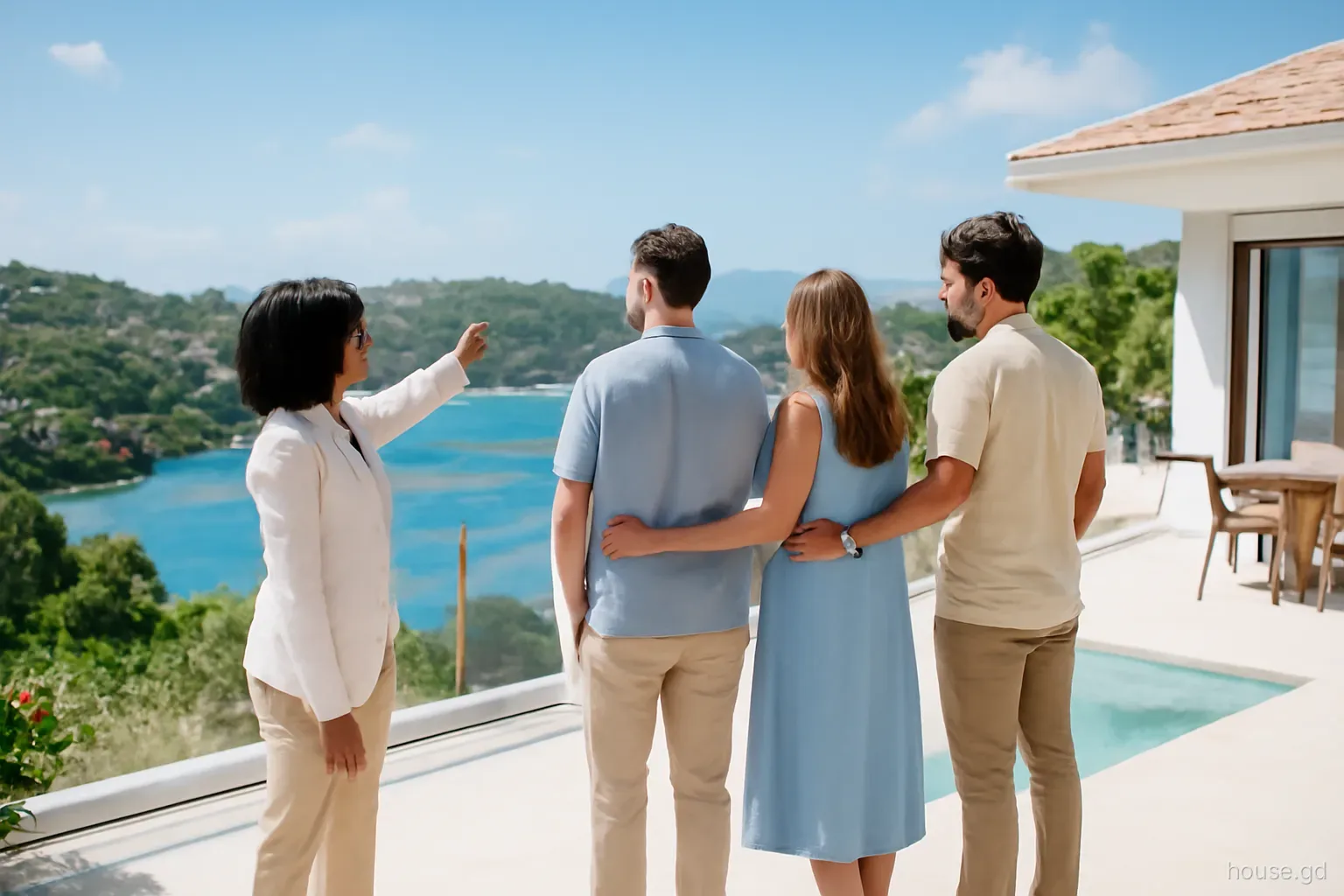
Two buyers stand on the same veranda in Grenada, admiring the same view and agreeing the same price. One is a Grenadian citizen; the other holds only a foreign passport. By the time each has the deed in hand, the foreign buyer will typically have paid tens of thousands of US dollars more, almost all of it in a single line item: the Alien Landholding Licence fee.
This comparison sets out where the costs are the same, where they diverge, and the legitimate situations in which a buyer who is not a citizen is treated differently, such as citizenship by investment purchases or those with a claim to citizenship by descent or marriage. It is a guide to the decision, not legal advice; the rules are applied case by case, and your attorney will confirm what applies to you.
The costs both buyers pay
Many purchase costs are the same regardless of nationality. Both buyers pay stamp duty on the conveyance, commonly around 1% of the price, calculated by the attorney according to the current schedule. Both pay their own attorney, typically a percentage of the price plus VAT. Both pay registration fees at the Deeds and Land Registry and the small disbursements that accompany any transaction.
Both buyers should commission a survey or check survey from a licensed land surveyor and an inspection from an engineer or experienced builder. If either borrows, both face the bank's legal fees, stamp duty on the mortgage and valuation charges, although foreign borrowers often face stricter lending terms.
Once the purchase is complete, annual property tax is assessed on value and use, not nationality. A citizen living in the house as a principal residence may claim owner-occupier relief; a foreign owner who lives there full-time may also qualify, while a holiday-home owner generally does not.
The difference: the Alien Landholding Licence
Who needs it. Under the Aliens Landholding Regulation Act, a person who is not a citizen of Grenada needs a licence to hold land, including a house or apartment. Companies controlled by non-citizens are treated as aliens for this purpose.
The fee. The licence fee is commonly 10% of the value of the land and buildings, paid when the licence is granted. Furniture listed separately in the agreement is generally excluded from that value.
The process. Your attorney prepares the application with supporting documents, typically including police certificates, bank references, identification and the sale agreement. Approval rests with government, and it usually takes a few months.
Why it matters for timing. Completion normally waits until the licence is granted, which affects how long the seller must wait and when you can move in.
A side-by-side example
Take a house agreed at US$350,000, with US$15,000 of furniture listed separately. Both buyers pay stamp duty at roughly 1% (about US$3,500), legal fees at around 2% plus VAT (about US$8,000) and registration and incidentals of a couple of thousand dollars. Add a survey and inspection at, say, US$1,500 to US$3,000. The citizen's total comes to roughly US$15,000 to US$17,000 on top of the price.
The foreign buyer pays all of that plus the licence fee of about 10% of US$335,000, or roughly US$33,500, and possibly extra legal fees for the licence application. The foreign buyer's total costs come to around US$49,000 to US$52,000, or about 14% to 15% of the price, compared with about 4% to 5% for the citizen.
The figures are illustrative. Your attorney's quote, the current stamp duty schedule and the valuation accepted for the licence will determine the actual numbers. The proportion, however, is consistent: for foreigners the licence typically more than doubles the cost of buying.
Situations that change the picture
Citizenship by investment purchases. Buyers acquiring real estate in an approved project under Grenada's citizenship by investment programme have generally been relieved of the licence fee. Programme rules, approved projects and conditions change, so check the current position with the CBI authority and an authorised agent.
Citizenship by descent. People with a Grenadian parent or, in some cases, grandparent may be entitled to citizenship. Once registered, they buy as citizens. The citizenship process takes time and has its own costs, but for a substantial purchase it can save far more than it costs.
Marriage to a Grenadian. A foreign spouse of a Grenadian citizen may be eligible to apply for citizenship after meeting the conditions set by law. Buying jointly before that happens may still require a licence for the foreign spouse's interest; ask your attorney how it applies.
Buying through a company. Using a company does not avoid the licence if non-citizens control it. It may make sense for other reasons, such as estate planning or rental operations, but should not be chosen to avoid the fee.
Regional nationals. Nationals of some Caribbean states may be treated differently under regional arrangements. If you hold a CARICOM or OECS passport, ask your attorney whether any concession applies.
Approaches that do not work
Some buyers look for shortcuts around the licence. These are the common ones, and why they fail or create risk:
- A citizen holding title as a nominee. Putting a property in a Grenadian friend's name leaves you with no legal title, exposed to their death, divorce, debts or change of heart.
- Long leases instead of freehold. Leases beyond certain lengths can themselves require a licence, and lenders and future buyers may treat them warily.
- Inflating the furniture figure. Unrealistic chattel values invite reassessment and penalties, and can delay registration.
- Completing without the licence. Taking possession or registering a deed before the licence is granted exposes the buyer to legal consequences and can jeopardise the purchase.
- Assuming the seller will cover it. The licence fee is the buyer's cost. Some sellers offer price reductions, but the fee itself remains payable by you.
Waiting for the licence: the hidden cost of time
The licence affects more than the bill. Because completion normally waits for approval, a foreign buyer's purchase typically takes longer than a citizen's, often several months from signed agreement to registered deed. During that time the deposit is committed, exchange rates on the buyer's home currency may move, and plans to move or rent out the property are on hold.
Sellers know this. In a competitive situation, a seller may prefer a citizen buyer who can complete quickly, or ask a foreign buyer for a larger deposit or a firmer timetable. Foreign buyers can strengthen their position by having documents ready in advance: police certificates, bank and professional references, certified passport copies and proof of funds.
Some buyers arrange to rent the property from the seller while the licence is pending. That needs a separate written agreement drafted by an attorney, because occupation before completion carries risks for both sides if the licence is delayed or refused.
Deciding whether to wait for citizenship
For buyers who have a realistic claim to citizenship, the question is whether to buy now as a foreigner or wait until citizenship is granted. The saving is clear: 10% of the property value. The risks of waiting are less obvious: the property may sell to someone else, prices may rise, and citizenship applications take months and sometimes longer.
Some buyers agree a purchase with a longer completion date to allow time for citizenship, though sellers may resist a long wait. Others rent for a year while the application proceeds, which has the added benefit of letting them learn the island before committing.
Whichever route you take, get advice from an attorney who handles both property and citizenship matters, and ask the Immigration and Passport Department or the relevant authority about current timelines. A decision based on accurate dates is worth more than one based on hope.
Frequently asked questions
Do Grenadian citizens pay the Alien Landholding Licence fee?
No. Citizens of Grenada do not need an Alien Landholding Licence and do not pay the fee. They pay the other purchase costs, such as stamp duty, legal fees and registration, in the same way as any other buyer.
How much more does a foreigner pay to buy property in Grenada?
Typically around 10% of the value of land and buildings in licence fees, on top of costs that citizens also pay. Total buying costs for a foreigner often reach about 13% to 15% of the price, compared with around 4% to 5% for a citizen.
Can a foreigner avoid the licence by buying through a Grenadian company?
Not if the company is controlled by non-citizens; such companies are treated as aliens and need a licence. A company may still be useful for other reasons, but it should not be set up to avoid the fee.
Is the licence fee waived for citizenship by investment buyers?
Purchases in approved real estate projects under the citizenship by investment programme have generally been exempt from the fee. Programme rules change, so confirm with the CBI authority and an authorised agent before relying on it.
Does a foreigner married to a Grenadian need a licence?
Unless the foreign spouse has become a citizen, a licence is generally needed for their interest in the property. Rules on joint ownership can be applied in different ways, so ask your attorney how they apply to your circumstances.